StyleFrame (formerly Glyf) vs Meshy
In the contest of StyleFrame (formerly Glyf) vs Meshy, which AI 3D Generation tool is the champion? We evaluate pricing, alternatives, upvotes, features, reviews, and more.
If you had to choose between StyleFrame (formerly Glyf) and Meshy, which one would you go for?
When we examine StyleFrame (formerly Glyf) and Meshy, both of which are AI-enabled 3d generation tools, what unique characteristics do we discover? The community has spoken, Meshy leads with more upvotes. Meshy has received 114 upvotes from aitools.fyi users, while StyleFrame (formerly Glyf) has received 6 upvotes.
You don't agree with the result? Cast your vote to help us decide!
StyleFrame (formerly Glyf)
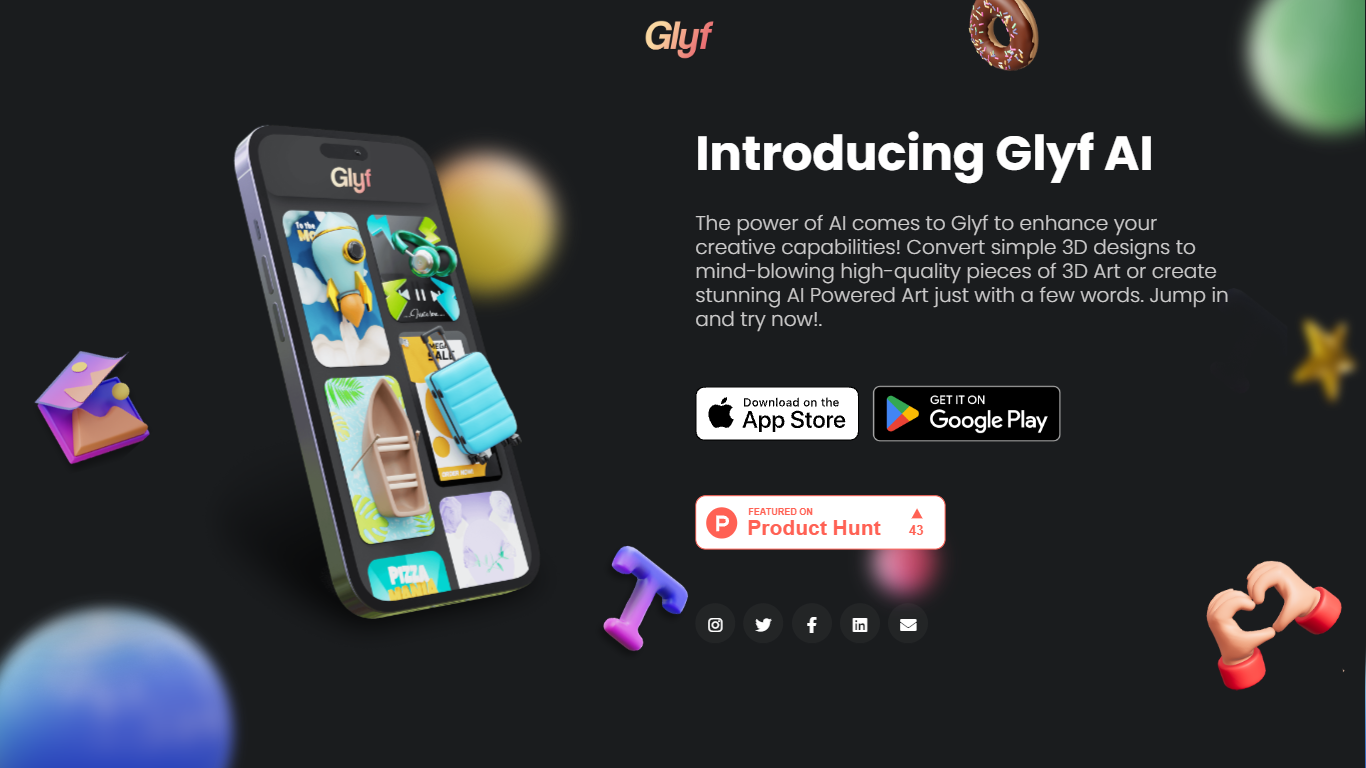

What is StyleFrame (formerly Glyf)?
StyleFrame is a 3D and video generation toolkit for motion designers and animators. It grew out of Glyf, whose original glyf.in domain now hosts unrelated blog content. StyleFrame puts keyframes on a timeline so you can animate with up to 9 frames, transfer motion from reference videos, and run 3D previsualization with style transfer across up to 9 references.
Most AI video tools generate a single clip from one prompt. StyleFrame is built around procedural, timeline-driven control: storyboards, inbetweening, motion references, restyle passes, and frames-to-video workflows sit in one editor. It also ships image tools for create, restyle, edit, background removal, and upscaling, with models including Seedance 2.5, MiniMax H3, and Gemini Omni Flash.
StyleFrame targets motion designers, animators, and studios who need frame-level control rather than one-shot generation. Credit-based plans start at $9 per month for Basic with 1,000 credits, scaling to Studio at $99 per month for 15,000 credits. Enterprise plans offer unlimited output with custom pricing.
Meshy
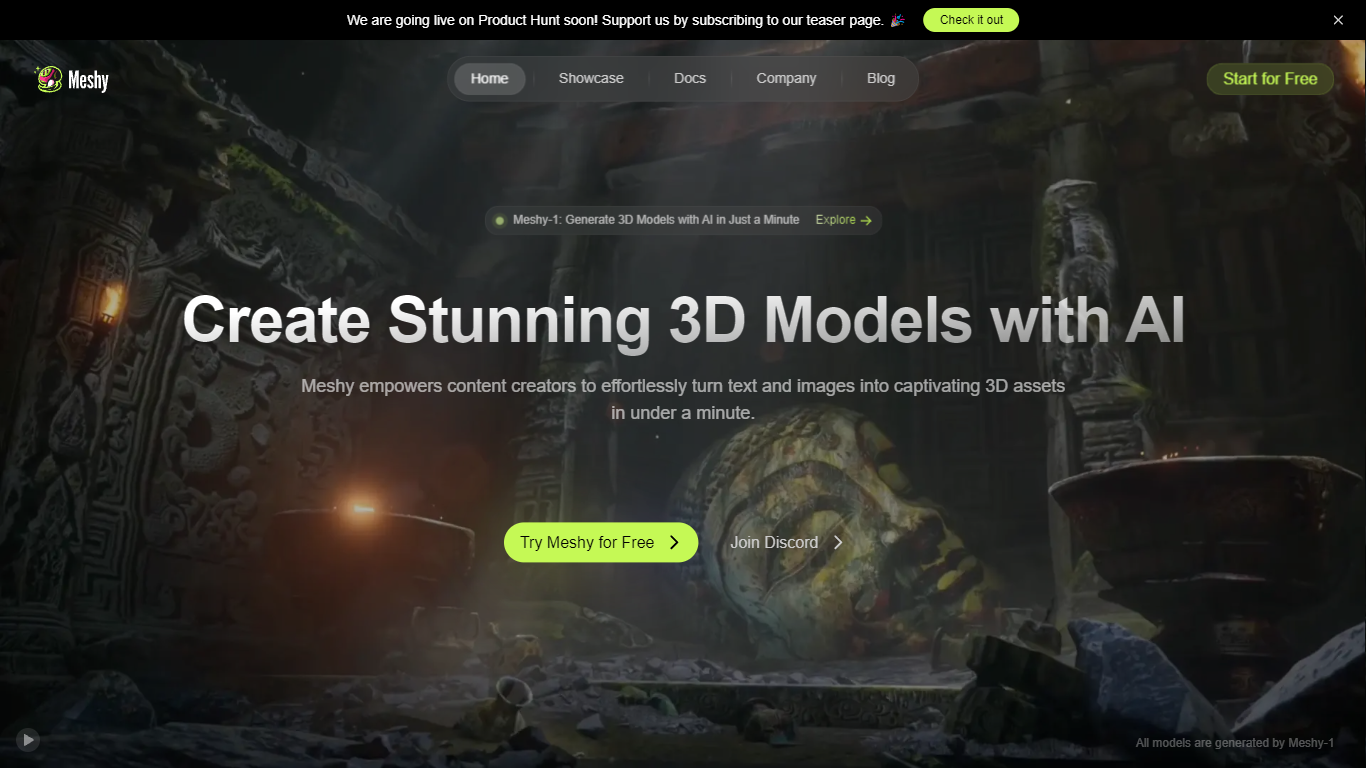
What is Meshy?
Meshy is a 3D generation platform that turns text prompts or reference images into textured 3D models in about a minute. You describe an object, upload a photo, or chat with the built-in 3D Agent, and Meshy returns export-ready meshes with PBR textures. The browser-based workflow targets game developers, 3D artists, and printing hobbyists who need assets without opening Blender first.
Most text-to-3D tools optimize for visuals alone. Meshy trains specifically for printability, exporting watertight, manifold models that pass slicer checks on the first try. It also ships dedicated Image to 3D, Text to 3D, and AI Texture Generator workflows, plus Blender and Unity plugins and a documented API at docs.meshy.ai.
Indie game studios, rapid prototypers, and makers use Meshy to block out characters, props, and printable figurines before refining in a DCC tool. Free users get 100 monthly credits; paid plans unlock private asset ownership, faster queues, and commercial rights without attribution.
StyleFrame (formerly Glyf) Upvotes
Meshy Upvotes
StyleFrame (formerly Glyf) Top Features
Timeline supports up to 9 keyframes for frames-to-video animation
3D-Previz and 2D-to-3D style transfer with up to 9 reference images
Visual effects mode transfers motion from a reference video onto a still image
Basic plan includes 1,000 credits per month at $9 monthly or $7 billed annually
Pro plan includes 5,000 credits; Studio plan includes 15,000 credits
Built-in image create, restyle, edit, background removal, and upscaler tools
Meshy Top Features
Text to 3D supports prompts up to 800 characters across Meshy 4, 5, and 6 model versions
Each text generation costs 20 credits and typically completes in about one minute
Exports 8 formats: FBX, OBJ, GLB, USDZ, STL, BLEND, 3MF, and DXF
Built-in printability check flags non-manifold edges and auto-repairs before slicing
Blender and Unity plugins plus REST API documented at docs.meshy.ai
Free plan includes 100 credits per month with no credit card required
StyleFrame (formerly Glyf) Category
- 3D Generation
Meshy Category
- 3D Generation
StyleFrame (formerly Glyf) Pricing Type
- Paid
Meshy Pricing Type
- Freemium