Google Bard vs ggml.ai
In the battle of Google Bard vs ggml.ai, which AI Large Language Model (LLM) tool comes out on top? We compare reviews, pricing, alternatives, upvotes, features, and more.
Between Google Bard and ggml.ai, which one is superior?
Upon comparing Google Bard with ggml.ai, which are both AI-powered large language model (llm) tools, Interestingly, both tools have managed to secure the same number of upvotes. Be a part of the decision-making process. Your vote could determine the winner.
Don't agree with the result? Cast your vote and be a part of the decision-making process!
Google Bard

What is Google Bard ?
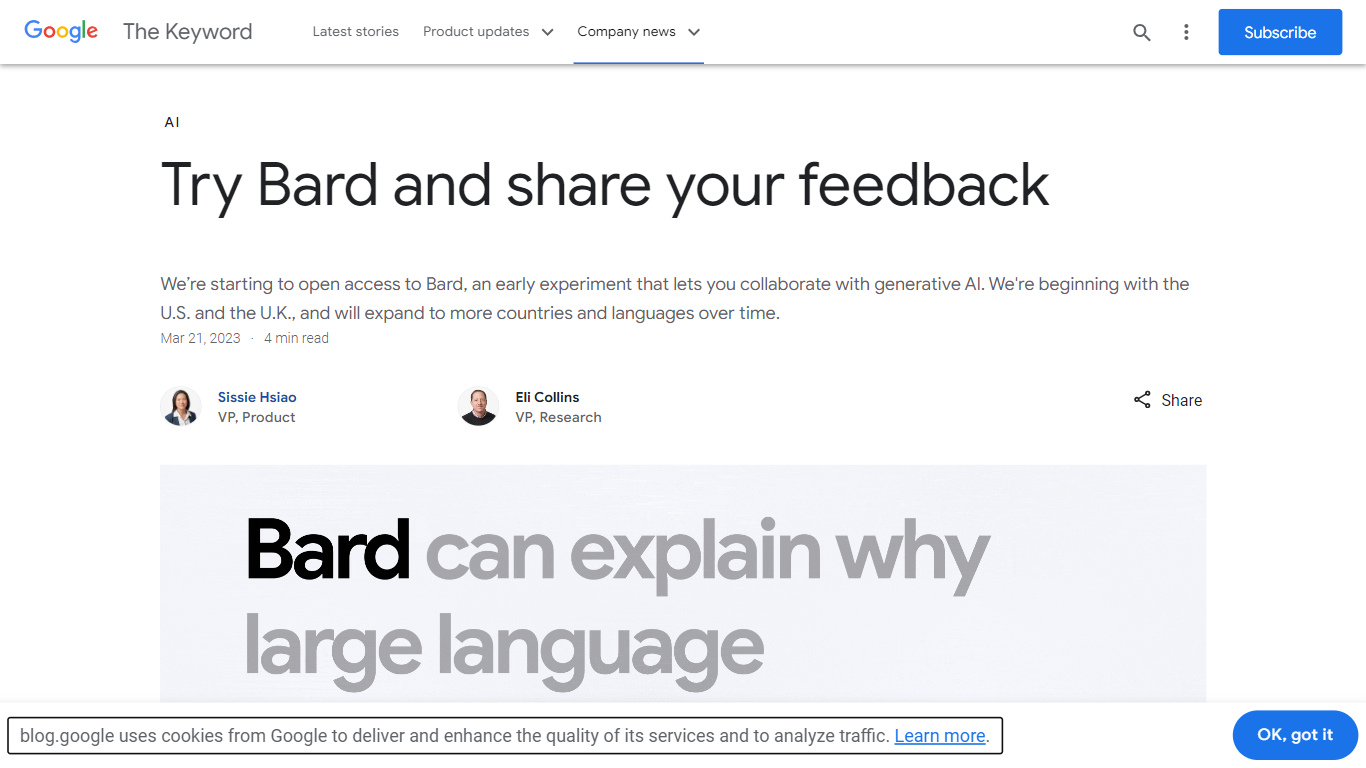
Discover Bard, Google's innovative generative AI tool designed to enhance your creative and collaborative processes. Currently in its experimental phase, Bard invites users in the U.S. and U.K. to experience the future of AI interaction. By signing up for Bard, you'll be at the forefront, providing valuable feedback that helps shape this cutting-edge technology.
Participate in this unique opportunity to collaborate with an AI system that's breaking new ground. Your insight is crucial for the evolution of Bard, as Google continues to integrate AI seamlessly into our daily digital experiences. Don't miss out on the chance to be part of this groundbreaking journey by signing up today!
ggml.ai
What is ggml.ai?
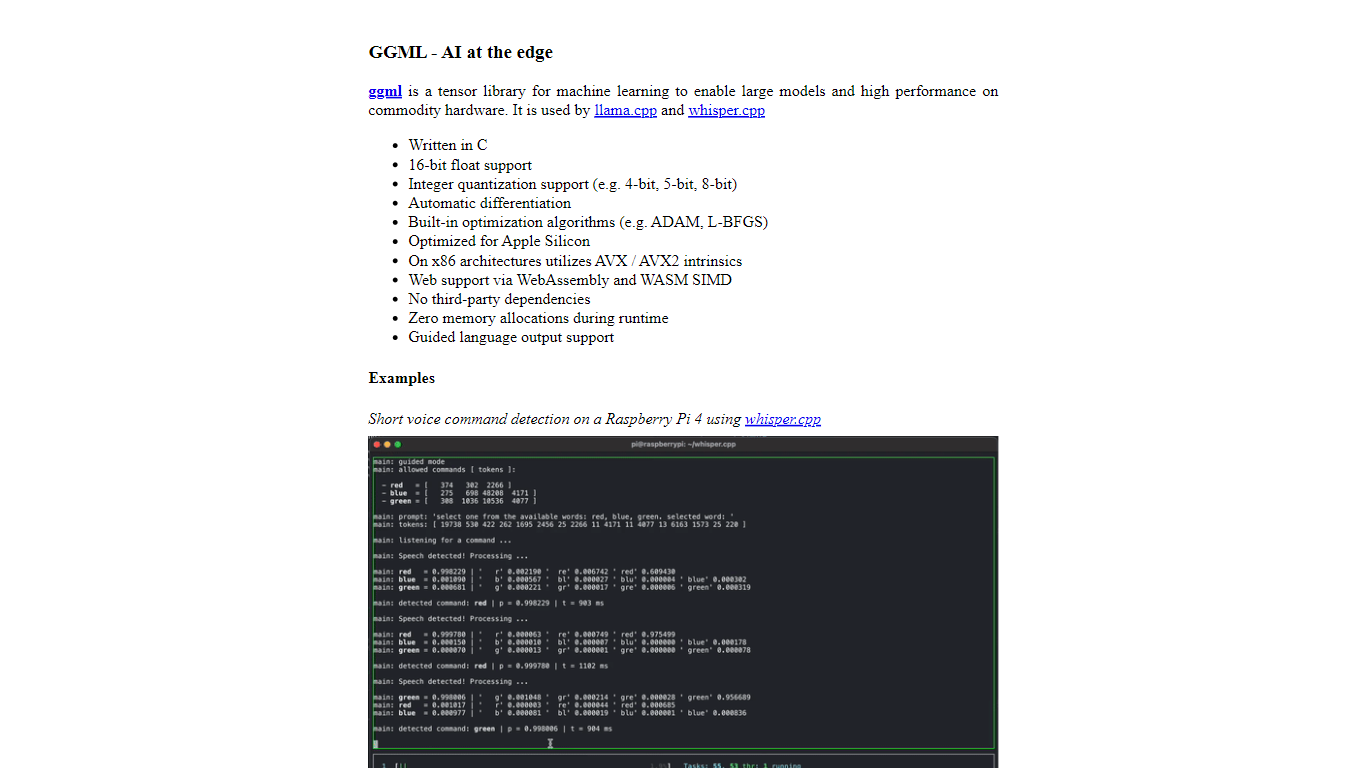
ggml.ai is at the forefront of AI technology, bringing powerful machine learning capabilities directly to the edge with its innovative tensor library. Built for large model support and high performance on common hardware platforms, ggml.ai enables developers to implement advanced AI algorithms without the need for specialized equipment. The platform, written in the efficient C programming language, offers 16-bit float and integer quantization support, along with automatic differentiation and various built-in optimization algorithms like ADAM and L-BFGS. It boasts optimized performance for Apple Silicon and leverages AVX/AVX2 intrinsics on x86 architectures. Web-based applications can also exploit its capabilities via WebAssembly and WASM SIMD support. With its zero runtime memory allocations and absence of third-party dependencies, ggml.ai presents a minimal and efficient solution for on-device inference.
Projects like whisper.cpp and llama.cpp demonstrate the high-performance inference capabilities of ggml.ai, with whisper.cpp providing speech-to-text solutions and llama.cpp focusing on efficient inference of Meta's LLaMA large language model. Moreover, the company welcomes contributions to its codebase and supports an open-core development model through the MIT license. As ggml.ai continues to expand, it seeks talented full-time developers with a shared vision for on-device inference to join their team.
Designed to push the envelope of AI at the edge, ggml.ai is a testament to the spirit of play and innovation in the AI community.
Google Bard Upvotes
ggml.ai Upvotes
Google Bard Top Features
Collaborative AI: Bard enables a collaborative experience with an AI, paving the way for enhanced creativity and productivity.
Early Access: U.S. and U.K. residents can sign up for early access to try Bard and be among the first to explore its capabilities.
User Feedback: Participants have the unique opportunity to share feedback directly influencing Bard's development.
Generative AI Experiment: Bard represents Google's latest experiment in generative artificial intelligence, showcasing their continued innovation.
Exclusive Trial: Experience the unique features of Bard before it becomes widely available and contribute to its evolution.
ggml.ai Top Features
Written in C: Ensures high performance and compatibility across a range of platforms.
Optimization for Apple Silicon: Delivers efficient processing and lower latency on Apple devices.
Support for WebAssembly and WASM SIMD: Facilitates web applications to utilize machine learning capabilities.
No Third-Party Dependencies: Makes for an uncluttered codebase and convenient deployment.
Guided Language Output Support: Enhances human-computer interaction with more intuitive AI-generated responses.
Google Bard Category
- Large Language Model (LLM)
ggml.ai Category
- Large Language Model (LLM)
Google Bard Pricing Type
- Freemium
ggml.ai Pricing Type
- Freemium