GPT 4o vs ggml.ai
Dive into the comparison of GPT 4o vs ggml.ai and discover which AI Large Language Model (LLM) tool stands out. We examine alternatives, upvotes, features, reviews, pricing, and beyond.
In a comparison between GPT 4o and ggml.ai, which one comes out on top?
When we compare GPT 4o and ggml.ai, two exceptional large language model (llm) tools powered by artificial intelligence, and place them side by side, several key similarities and differences come to light. The community has spoken, ggml.ai leads with more upvotes. ggml.ai has received 7 upvotes from aitools.fyi users, while GPT 4o has received 6 upvotes.
You don't agree with the result? Cast your vote to help us decide!
GPT 4o
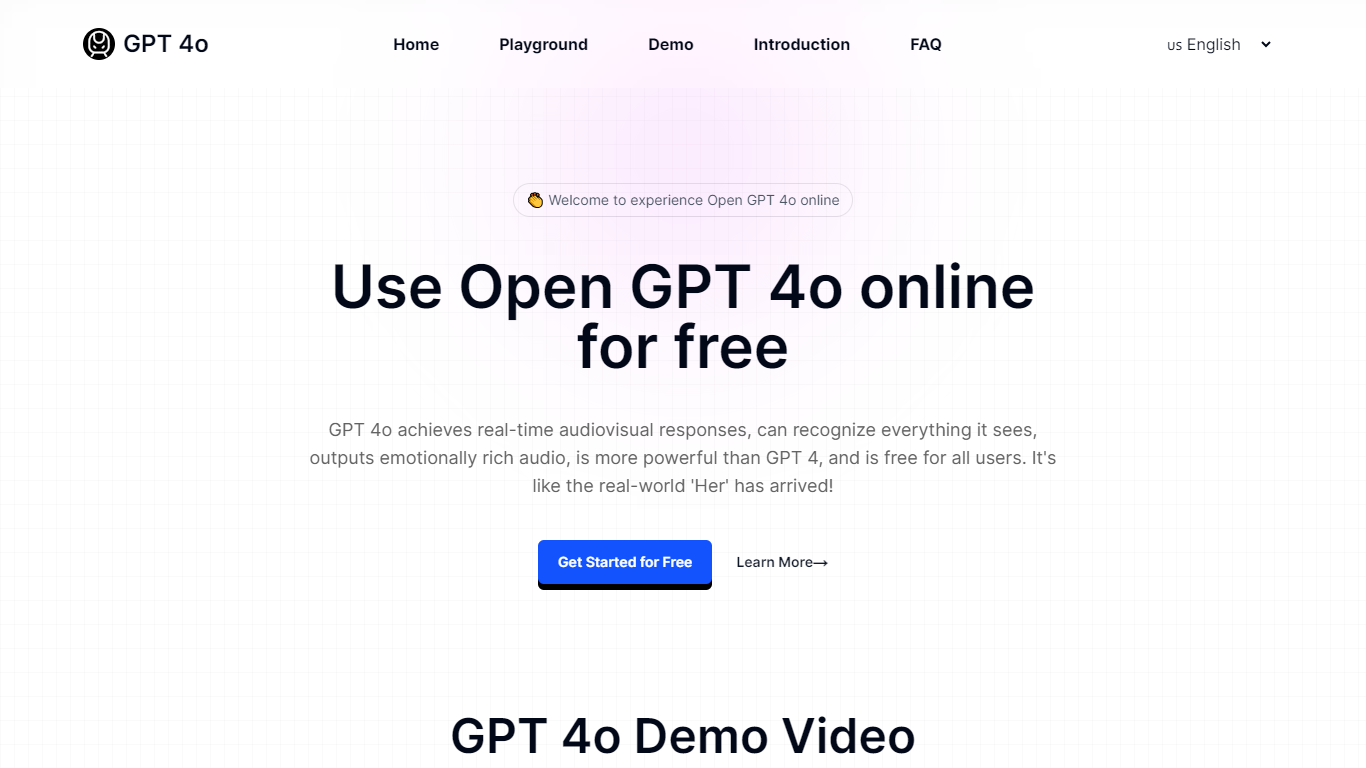

What is GPT 4o ?
Open GPT 4o is the latest innovation in AI technology, building upon the capabilities of previous models, such as GPT-4, to offer a free, advanced, and immersive multimodal experience. GPT 4o stands out with its real-time audiovisual responses, emotional audio outputs, and recognition of everything it sees, creating an interactive experience similar to conversing with a real person.
With its multimodal functionalities, GPT 4o supports combinations of text, audio, and images, allowing for diverse interactions across media types. Notably, GPT 4o is designed to function with super-fast voice response speeds and can handle interruptions naturally, enhancing the fluidity of conversations.
Users can look forward to the rich functionalities of this model, including superior visual capabilities, emotion recognition, output expressions, and support for developers through an improved and cost-effective API. Whether it's virtual assistance, real-time translation, or even a simple chat, GPT 4o offers an unparalleled AI experience for all users.
ggml.ai
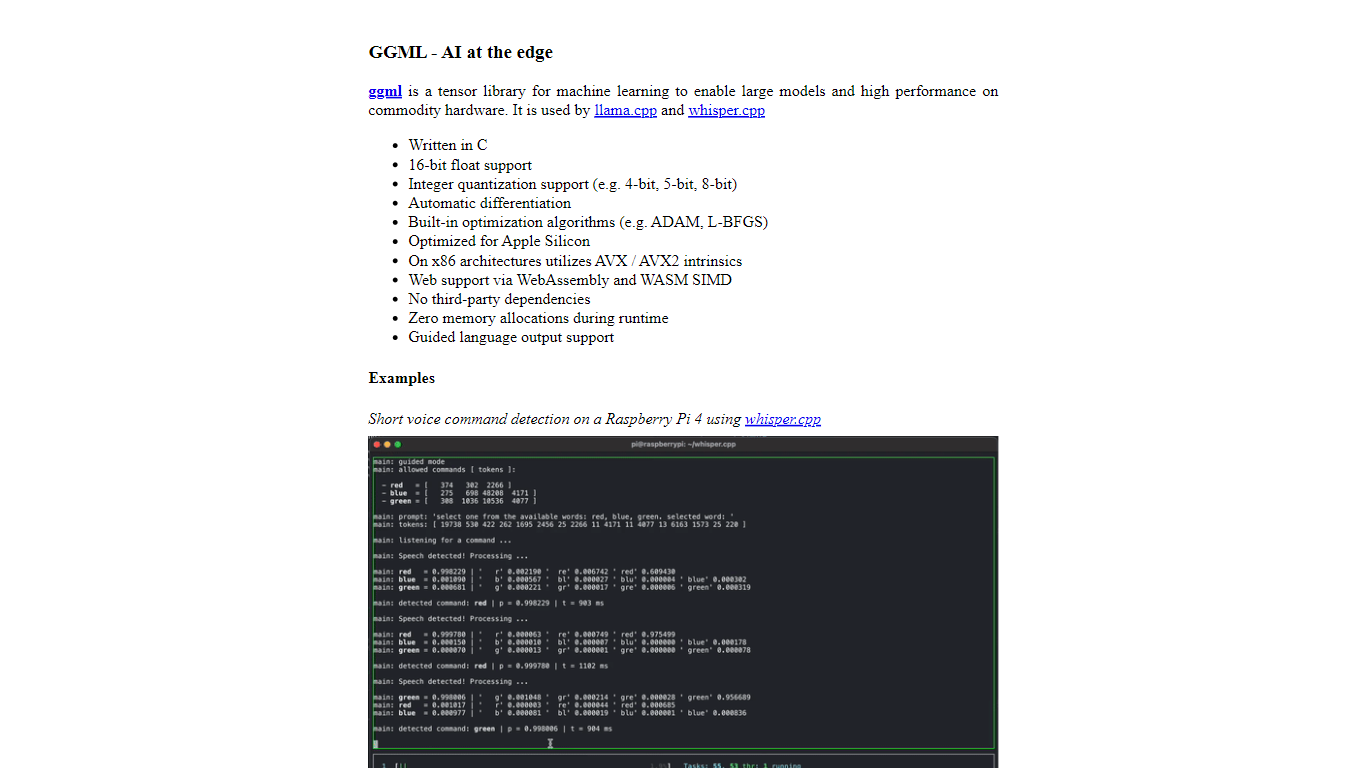
What is ggml.ai?
ggml runs large language and speech models on everyday CPUs and GPUs through a compact C tensor library built for on-device inference. ML engineers and app developers adopt it via llama.cpp and whisper.cpp when they want LLaMA or Whisper workloads without cloud-only dependencies.
Frameworks like PyTorch optimize for training clusters and heavy runtimes. ggml keeps the core library minimal with zero runtime memory allocations, no third-party dependencies, and integer quantization so llama.cpp can serve Meta LLaMA weights on laptops and Apple Silicon.
The ggml.ai company was founded in 2023 by Georgi Gerganov to support the library and was acquired by Hugging Face in 2026. The core ggml project stays MIT licensed with open development on GitHub.
GPT 4o Upvotes
ggml.ai Upvotes
GPT 4o Top Features
Multimodal Capabilities: Handles and generates any combination of text, audio, and images for diverse interactions.
Real-Time Voice Responses: Responds to audio inputs in as little as 232 milliseconds, mimicking human conversation speed.
Emotion Recognition and Output: Can sense and express emotions, including laughter and singing, responding to the tone and background noise accurately.
Superior Visual Capabilities: Recognizes objects, emotions, and text in images and videos, akin to human perception.
Free Access and Improved API: All-inclusive capabilities with a user-friendly, cost-effective API at a 50% discounted rate.
ggml.ai Top Features
Powers llama.cpp for Meta LLaMA inference and whisper.cpp for OpenAI Whisper speech models
Written in C with zero runtime memory allocations during inference
Integer quantization support for smaller models on commodity hardware
No third-party dependencies in the core tensor library
Cross-platform low-level implementation with broad hardware support
MIT licensed open-core library with public development on GitHub
GPT 4o Category
- Large Language Model (LLM)
ggml.ai Category
- Large Language Model (LLM)
GPT 4o Pricing Type
- Freemium
ggml.ai Pricing Type
- Free