Velos (formerly GradientJ) vs ggml.ai
In the clash of Velos (formerly GradientJ) vs ggml.ai, which AI Large Language Model (LLM) tool emerges victorious? We assess reviews, pricing, alternatives, features, upvotes, and more.
When we put Velos (formerly GradientJ) and ggml.ai head to head, which one emerges as the victor?
Let's take a closer look at Velos (formerly GradientJ) and ggml.ai, both of which are AI-driven large language model (llm) tools, and see what sets them apart. The users have made their preference clear, ggml.ai leads in upvotes. The number of upvotes for ggml.ai stands at 7, and for Velos (formerly GradientJ) it's 6.
Does the result make you go "hmm"? Cast your vote and turn that frown upside down!
Velos (formerly GradientJ)
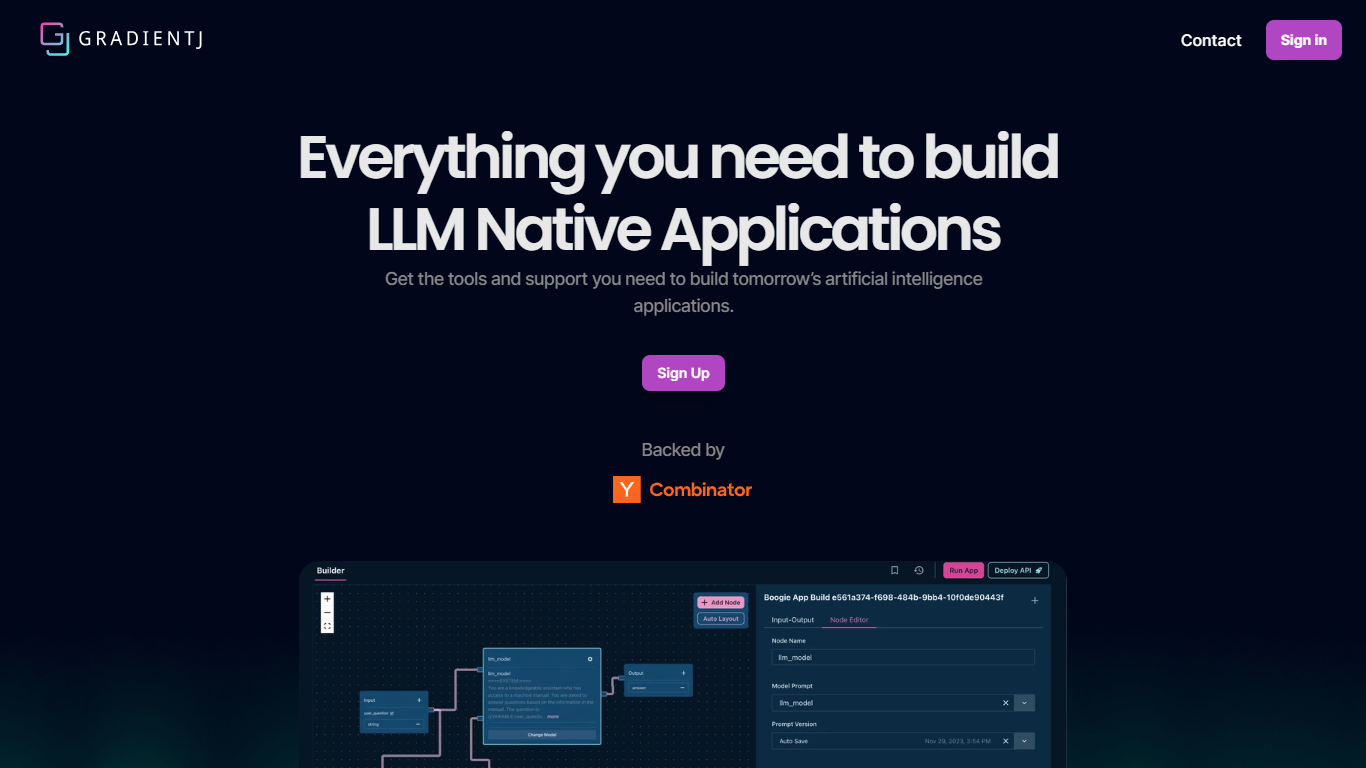

What is Velos (formerly GradientJ)?
Velos is a managed automation platform for back-office teams that want to replace outsourced manual work with software. It targets insurance carriers, MGAs, and finance operations that still rely on BPOs or internal staff for document-heavy workflows like bordereaux, policy servicing, and month-end close.
The company learns your process rules, tests against your real data, and turns recurring work into auditable workflows that combine code with large language models. Velos handles design, deployment, and ongoing management so teams get faster turnaround without adding headcount every time volume spikes.
It is built for organizations handling sensitive, high-volume operations where accuracy matters. Customers include commercial insurance teams, private equity firms, and fractional CFO shops looking to automate multi-hour processes that used to require offshore teams or manual spreadsheets.
ggml.ai
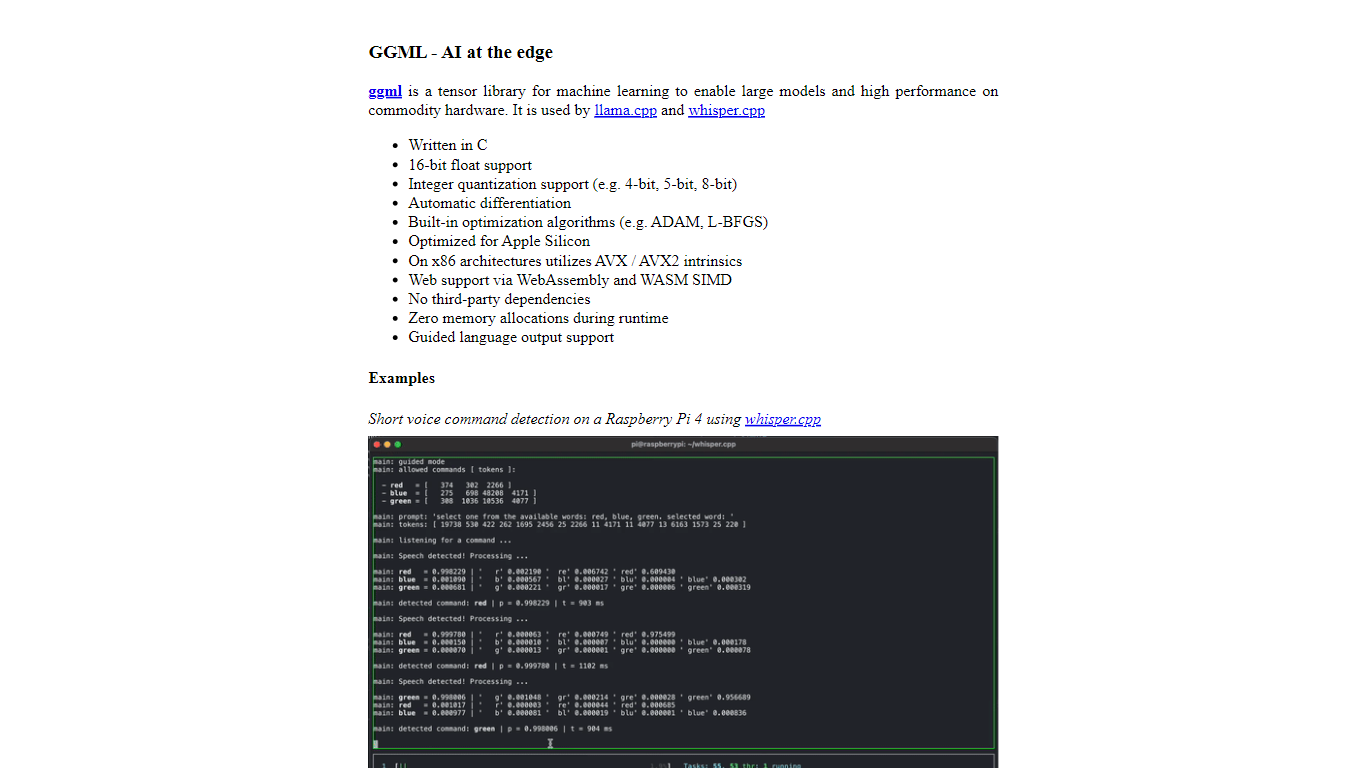
What is ggml.ai?
ggml runs large language and speech models on everyday CPUs and GPUs through a compact C tensor library built for on-device inference. ML engineers and app developers adopt it via llama.cpp and whisper.cpp when they want LLaMA or Whisper workloads without cloud-only dependencies.
Frameworks like PyTorch optimize for training clusters and heavy runtimes. ggml keeps the core library minimal with zero runtime memory allocations, no third-party dependencies, and integer quantization so llama.cpp can serve Meta LLaMA weights on laptops and Apple Silicon.
The ggml.ai company was founded in 2023 by Georgi Gerganov to support the library and was acquired by Hugging Face in 2026. The core ggml project stays MIT licensed with open development on GitHub.
Velos (formerly GradientJ) Upvotes
ggml.ai Upvotes
Velos (formerly GradientJ) Top Features
Turns your SOPs into auditable workflows that mix code with large language models
Automates bordereaux, policy servicing, premium reconciliation, and month-end close
Tests automations against your real data and learns your edge cases before going live
Underwriting support that extracts, enriches, and flags submissions before they reach an underwriter
Post-bind policy checking that catches rating errors and compliance gaps early
Real-time visibility into every workflow outcome and exception as work runs
ggml.ai Top Features
Powers llama.cpp for Meta LLaMA inference and whisper.cpp for OpenAI Whisper speech models
Written in C with zero runtime memory allocations during inference
Integer quantization support for smaller models on commodity hardware
No third-party dependencies in the core tensor library
Cross-platform low-level implementation with broad hardware support
MIT licensed open-core library with public development on GitHub
Velos (formerly GradientJ) Category
- Large Language Model (LLM)
ggml.ai Category
- Large Language Model (LLM)
Velos (formerly GradientJ) Pricing Type
- Paid
ggml.ai Pricing Type
- Free