GuestLab vs Semantic Scholar
In the contest of GuestLab vs Semantic Scholar, which AI Research tool is the champion? We evaluate pricing, alternatives, upvotes, features, reviews, and more.
If you had to choose between GuestLab and Semantic Scholar, which one would you go for?
When we examine GuestLab and Semantic Scholar, both of which are AI-enabled research tools, what unique characteristics do we discover? Semantic Scholar is the clear winner in terms of upvotes. Semantic Scholar has 18 upvotes, and GuestLab has 6 upvotes.
Don't agree with the result? Cast your vote and be a part of the decision-making process!
GuestLab

What is GuestLab?
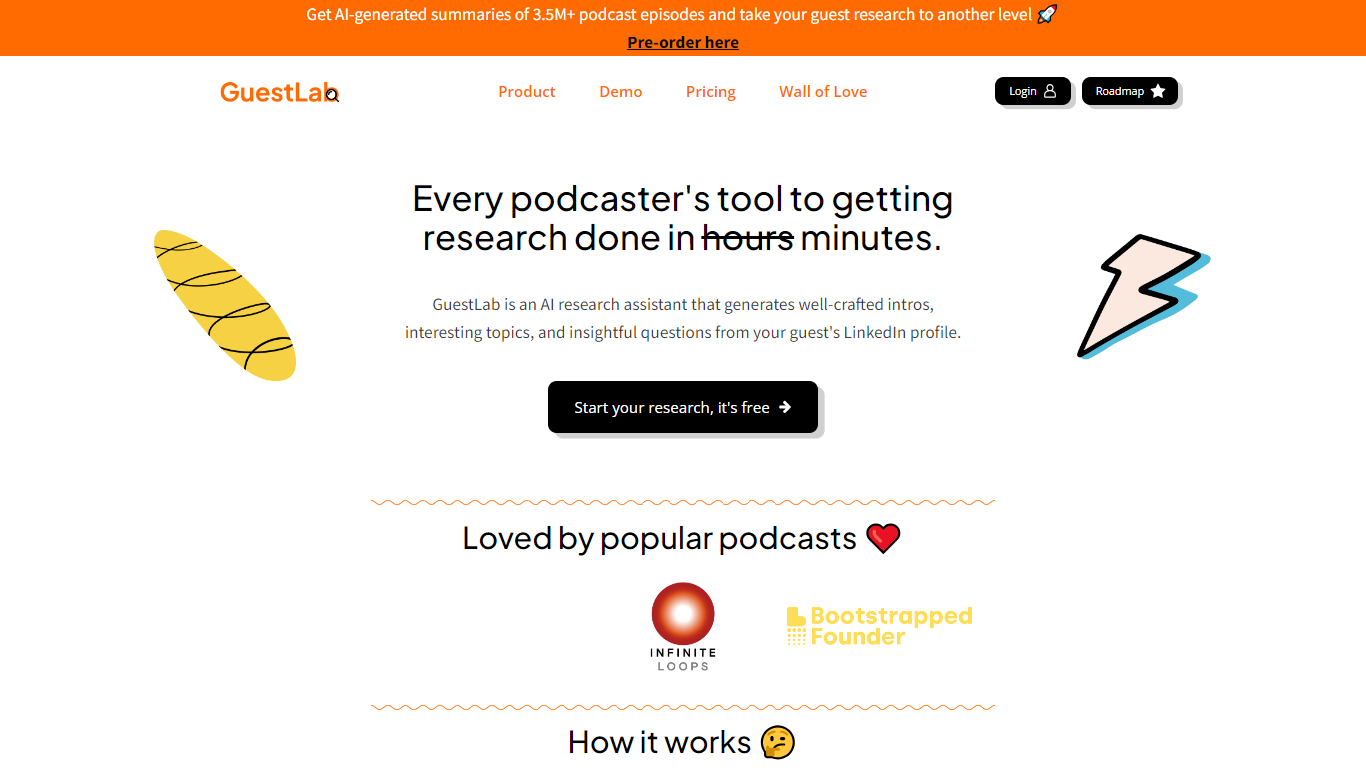
GuestLab is a cutting-edge AI-driven research assistant designed to transform the way podcast hosts prepare for their episodes. It provides a seamless and efficient research experience, generating AI-crafted summaries from over 3.5 million podcast episodes. With GuestLab, podcast hosts can leverage AI to create engaging intros, uncover interesting topics, and formulate insightful questions based on a guest's LinkedIn profile.
Say goodbye to the lengthy research process, as GuestLab can significantly shorten the time spent on preparation, allowing hosts to focus on delivering compelling interviews.
The tool is a valuable asset for both novice and professional podcasters, offering tiered subscription plans suitable for individuals and agencies. Guests' online presence is transformed into valuable conversation starters, ensuring every episode is enriched with deep and thought-provoking content.
Semantic Scholar
What is Semantic Scholar?
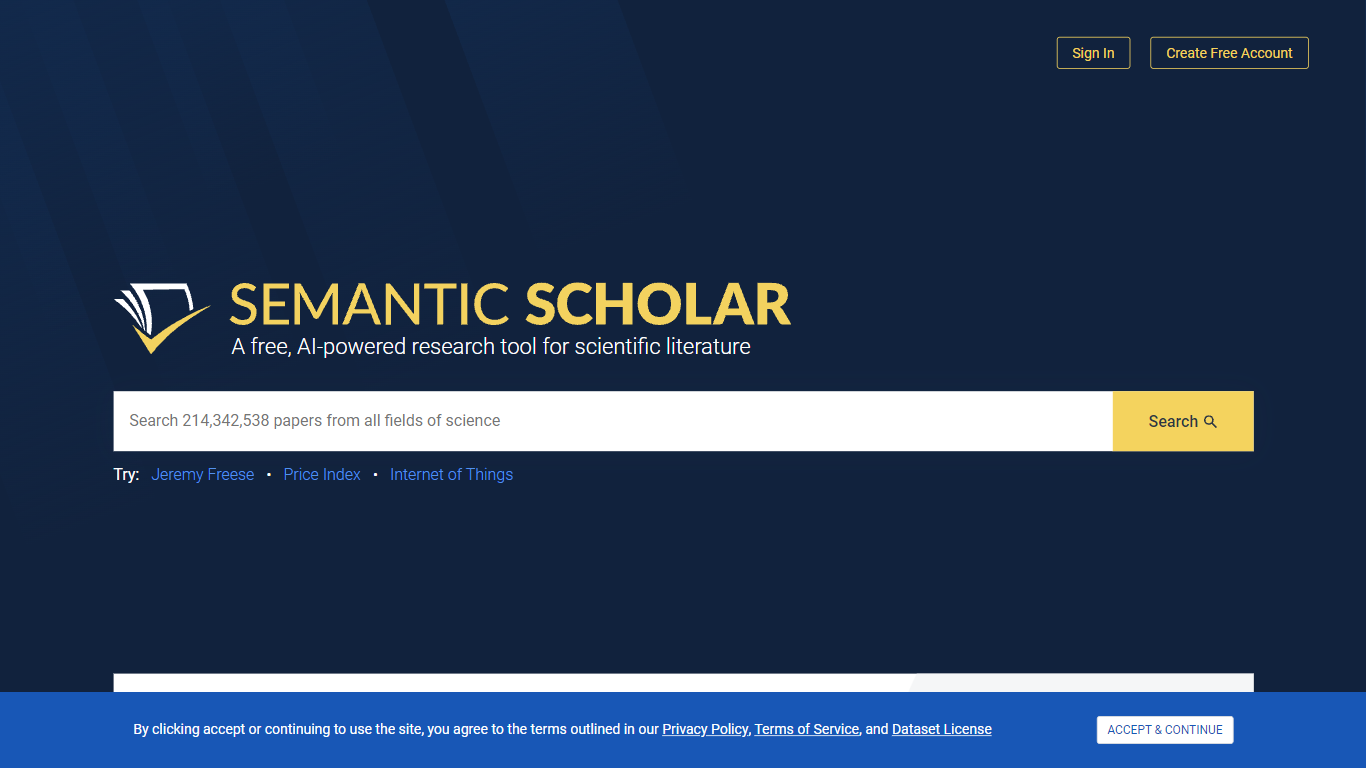
Semantic Scholar searches more than 236 million academic papers across every scientific field and surfaces citations, authors, and related work from one free interface. Built by the Allen Institute for AI (Ai2), it extracts meaning from papers so you can scan abstracts, follow citation chains, and open PDFs without jumping between databases.
Google Scholar indexes broadly but leaves connection-finding to you. Semantic Scholar adds AI-classified paper metadata, a Semantic Reader beta for in-browser annotation, and a public Academic Graph API with 214 million papers and 2.49 billion citations for developers. The S2AG and S2ORC datasets are also published as open JSON archives for NLP research.
Graduate students, faculty, librarians, and research engineers use it for literature reviews, citation tracking, and building scholarly apps. The API is free with optional keys for higher rate limits, and the platform partners with 50+ publishers to keep the index current.
GuestLab Upvotes
Semantic Scholar Upvotes
GuestLab Top Features
AI-Driven Research: Quickly generates intros, topics, and questions using guest's LinkedIn profiles.
Time-Saving: Accelerates guest research, allowing hosts to focus more on interviewing.
Deep Insights: Uncovers hidden topics and angles about the guest for a richer interview.
Thought-Provoking Questions: Transforms insights into engaging questions for lively podcast episodes.
Flexible Subscription Plans: Offers different levels of service to fit the needs of both new and professional podcasters.
Semantic Scholar Top Features
Search 236,851,843 papers indexed across all fields of science from one homepage
Semantic Reader beta adds in-browser annotations and contextual overlays on select papers
Academic Graph API covers 214 million papers, 2.49 billion citations, and 79 million authors
S2AG and S2ORC datasets ship as free JSON archives for NLP and text mining projects
Paper recommendations surface related studies based on citation and content similarity
Partners with 50+ publishers and scholarly societies to ingest new academic content
GuestLab Category
- Research
Semantic Scholar Category
- Research
GuestLab Pricing Type
- Freemium
Semantic Scholar Pricing Type
- Free