Informly vs Semantic Scholar
In the contest of Informly vs Semantic Scholar, which AI Research tool is the champion? We evaluate pricing, alternatives, upvotes, features, reviews, and more.
If you had to choose between Informly and Semantic Scholar, which one would you go for?
When we examine Informly and Semantic Scholar, both of which are AI-enabled research tools, what unique characteristics do we discover? The upvote count favors Semantic Scholar, making it the clear winner. Semantic Scholar has been upvoted 18 times by aitools.fyi users, and Informly has been upvoted 6 times.
You don't agree with the result? Cast your vote to help us decide!
Informly

What is Informly?
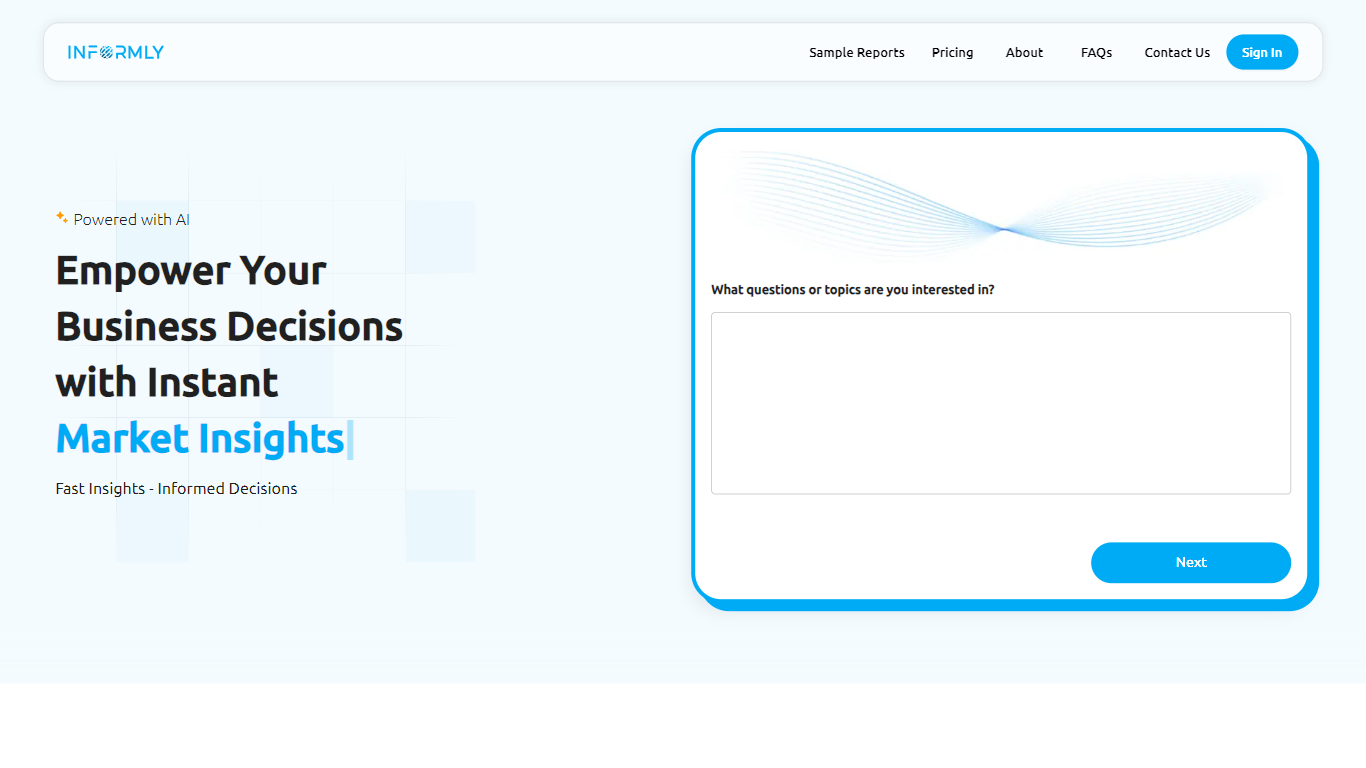
Informly turns a short question wizard into full market research reports pulled from public web data. You specify your industry, topic, or competitive angle, and the platform returns 10+ page PDFs with charts, citations, and strategic takeaways. Delivery runs 2-24 hours on Informly's site, a fraction of the four-week timelines typical agencies quote.
Where generic AI chat tools leave you assembling sources yourself, Informly structures output around fixed research modules: industry overviews, competitor landscapes, consumer demographics, regulatory context, and more. Reports refresh with live web data each time you generate one, and Informly's methodology adds human fact-checking on top of automated collection from industry databases, government statistics, and news sources.
Founders, strategists, analysts, and consultants use Informly when they need credible market intelligence without commissioning a traditional research firm. The founding team includes veterans from Euromonitor International, Gartner, Intuit, and Webjet. Sample reports on the site cover topics like UK sustainable pet food, Australian premium dog food growth, and cocoa sustainability in global confectionery.
Semantic Scholar
What is Semantic Scholar?
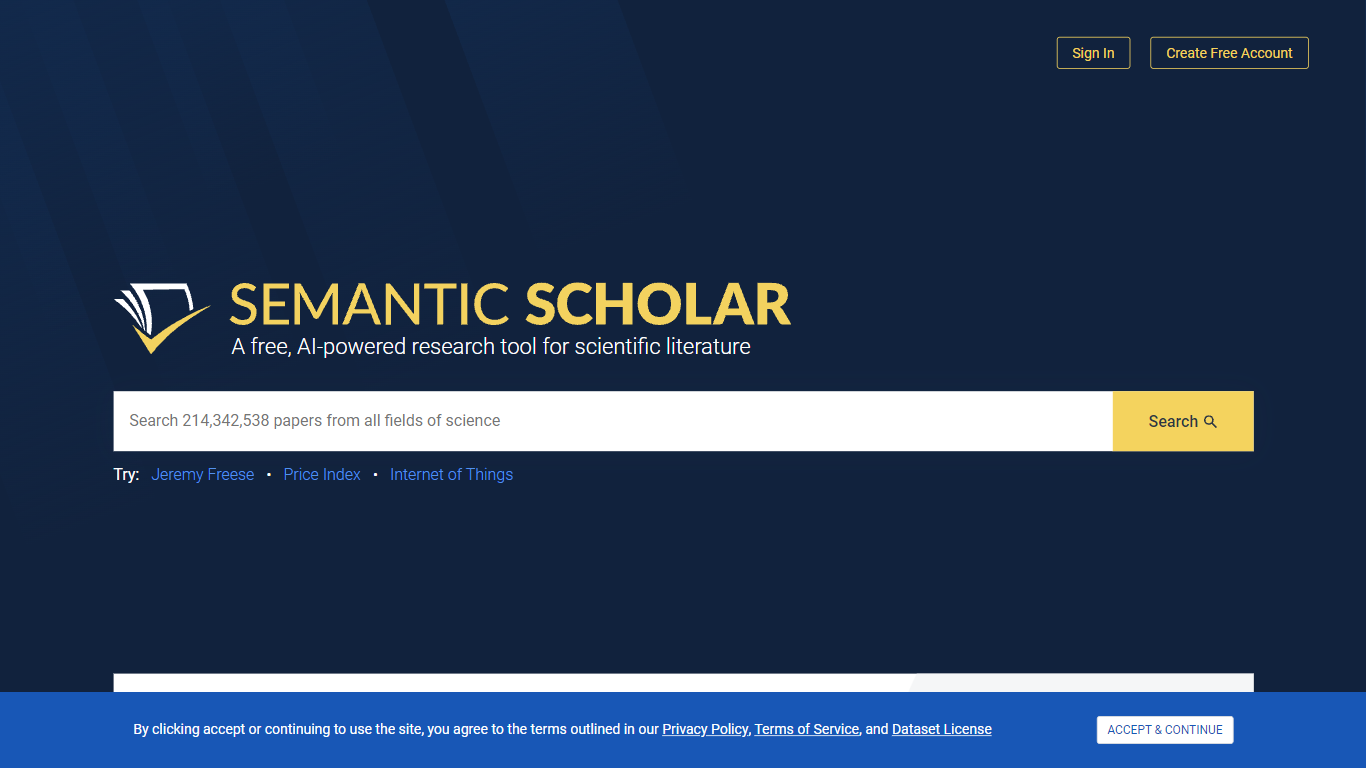
Semantic Scholar searches more than 236 million academic papers across every scientific field and surfaces citations, authors, and related work from one free interface. Built by the Allen Institute for AI (Ai2), it extracts meaning from papers so you can scan abstracts, follow citation chains, and open PDFs without jumping between databases.
Google Scholar indexes broadly but leaves connection-finding to you. Semantic Scholar adds AI-classified paper metadata, a Semantic Reader beta for in-browser annotation, and a public Academic Graph API with 214 million papers and 2.49 billion citations for developers. The S2AG and S2ORC datasets are also published as open JSON archives for NLP research.
Graduate students, faculty, librarians, and research engineers use it for literature reviews, citation tracking, and building scholarly apps. The API is free with optional keys for higher rate limits, and the platform partners with 50+ publishers to keep the index current.
Informly Upvotes
Semantic Scholar Upvotes
Informly Top Features
Single market research reports start at $29 with no subscription required
Each report runs 10+ pages with graphs, charts, and cited data sources
Starter plan includes up to 3 full reports per month at $39 per month billed annually
Pro plan covers up to 20 full reports per month at $179 per month billed annually
Delivery in 2-24 hours versus the four-week average Informly cites for traditional agencies
Report wizard covers 14+ angles including competitive landscape, buyer journeys, and regulatory environment
Edit generated reports in the dashboard before downloading as PDF
Semantic Scholar Top Features
Search 236,851,843 papers indexed across all fields of science from one homepage
Semantic Reader beta adds in-browser annotations and contextual overlays on select papers
Academic Graph API covers 214 million papers, 2.49 billion citations, and 79 million authors
S2AG and S2ORC datasets ship as free JSON archives for NLP and text mining projects
Paper recommendations surface related studies based on citation and content similarity
Partners with 50+ publishers and scholarly societies to ingest new academic content
Informly Category
- Research
Semantic Scholar Category
- Research
Informly Pricing Type
- Paid
Semantic Scholar Pricing Type
- Free