Kaedim vs Text-To-4D
In the contest of Kaedim vs Text-To-4D, which AI 3D Generation tool is the champion? We evaluate pricing, alternatives, upvotes, features, reviews, and more.
If you had to choose between Kaedim and Text-To-4D, which one would you go for?
When we examine Kaedim and Text-To-4D, both of which are AI-enabled 3d generation tools, what unique characteristics do we discover? The upvote count favors Text-To-4D, making it the clear winner. The number of upvotes for Text-To-4D stands at 26, and for Kaedim it's 6.
Feeling rebellious? Cast your vote and shake things up!
Kaedim

What is Kaedim?
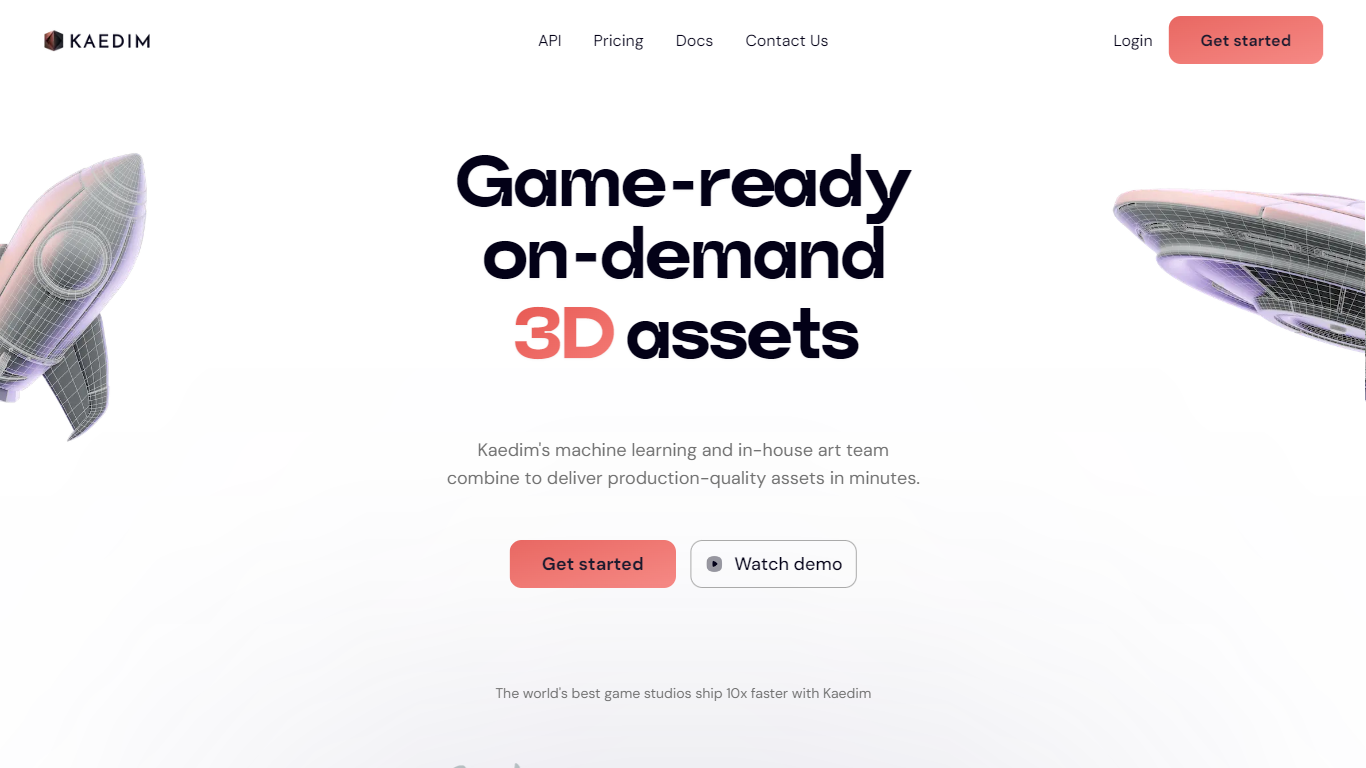
Kaedim handles 3D generation for studios and brands that need production-ready assets from sketches, reference packs, product photos, and creative briefs. Upload your inputs, review staged models in a shared workspace, mark up changes, and approve assets before they ship to your engine or CAD handoff.
Instant mesh generators spit out geometry you still have to fix. Kaedim pairs proprietary 3D automation with expert artist assurance, style-guide alignment, and a review loop (look, mark up, compare, revise, approve) built for milestone-driven teams. Myth Studio reported about 4 hours per asset versus a 40-hour market average in a published case study.
Game studios use Kaedim for props, environments, and characters that match art bibles. Product teams resolve proportion and volume before CAD commits. E-commerce and marketing groups turn concepts into reusable product CGI without a physical shoot. ISO27001 certification, per-project data isolation, and a policy that your IP is not used to train shared models target confidential pre-release work.
Text-To-4D
What is Text-To-4D?
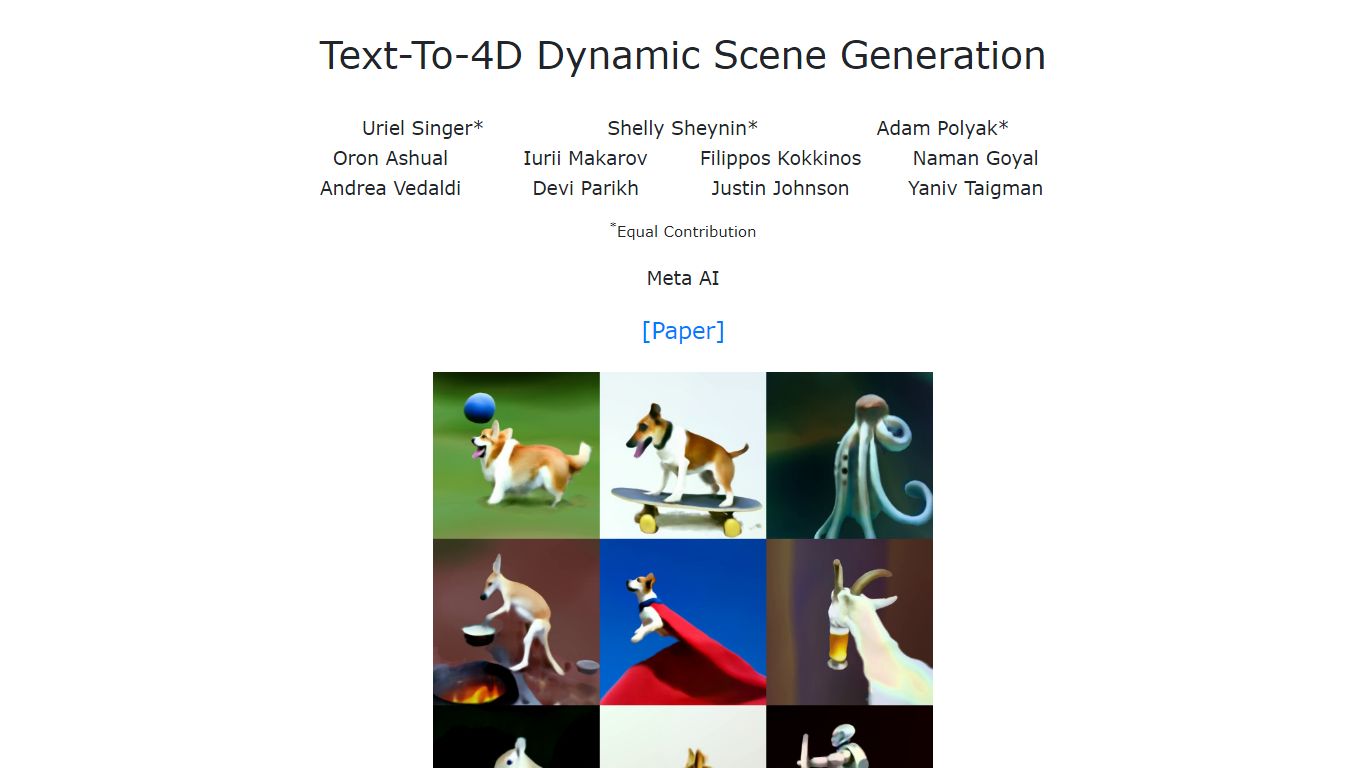
Text-To-4D is a Meta AI research project (MAV3D) that generates three-dimensional dynamic scenes from text descriptions. The method uses a 4D dynamic Neural Radiance Field optimized for appearance, density, and motion consistency by querying a text-to-video diffusion model.
Unlike static 3D generators that output a single mesh, Text-To-4D produces scenes you can view from any camera angle and composite into other 3D environments. The approach needs no 3D or 4D training data; the underlying text-to-video model trains only on text-image pairs and unlabeled videos.
The project page hosts demo samples for text-to-4D prompts like "a corgi playing with a ball" and image-to-4D conversions from still photos. It is a research showcase, not a commercial product with a public API or signup. Researchers and 3D artists interested in NeRF-based dynamic scene generation can explore the paper and sample outputs on the site.
Kaedim Upvotes
Text-To-4D Upvotes
Kaedim Top Features
Turnaround in hours for work that FAQ states normally takes days or weeks
Myth Studio case study cites about 4 hours per asset versus a 40-hour market average
Custom pipeline delivered within 48 hours of onboarding per FAQ
Review, markup, iterate, and approve workflow with most revisions returned in minutes
ISO27001 certified with encryption in transit and at rest
Supports games, product design, and e-commerce CGI use cases from one platform
Automated retopology and game-ready mesh delivery cited in Azra Games case study
Text-To-4D Top Features
Generates 3D dynamic scenes from text prompts via MAV3D (Make-A-Video3D)
4D dynamic NeRF optimized for appearance, density, and motion consistency
View generated scenes from any camera location and angle
Image-to-4D mode converts still photos into dynamic video scenes
Trained only on text-image pairs and unlabeled videos, no 3D/4D data required
Published research paper on arXiv (2301.11280) with interactive demo samples
Kaedim Category
- 3D Generation
Text-To-4D Category
- 3D Generation
Kaedim Pricing Type
- Paid
Text-To-4D Pricing Type
- Free