Respan (formerly Keywords AI) vs ggml.ai
In the contest of Respan (formerly Keywords AI) vs ggml.ai, which AI Large Language Model (LLM) tool is the champion? We evaluate pricing, alternatives, upvotes, features, reviews, and more.
If you had to choose between Respan (formerly Keywords AI) and ggml.ai, which one would you go for?
When we examine Respan (formerly Keywords AI) and ggml.ai, both of which are AI-enabled large language model (llm) tools, what unique characteristics do we discover? The upvote count favors ggml.ai, making it the clear winner. ggml.ai has garnered 7 upvotes, and Respan (formerly Keywords AI) has garnered 6 upvotes.
Does the result make you go "hmm"? Cast your vote and turn that frown upside down!
Respan (formerly Keywords AI)
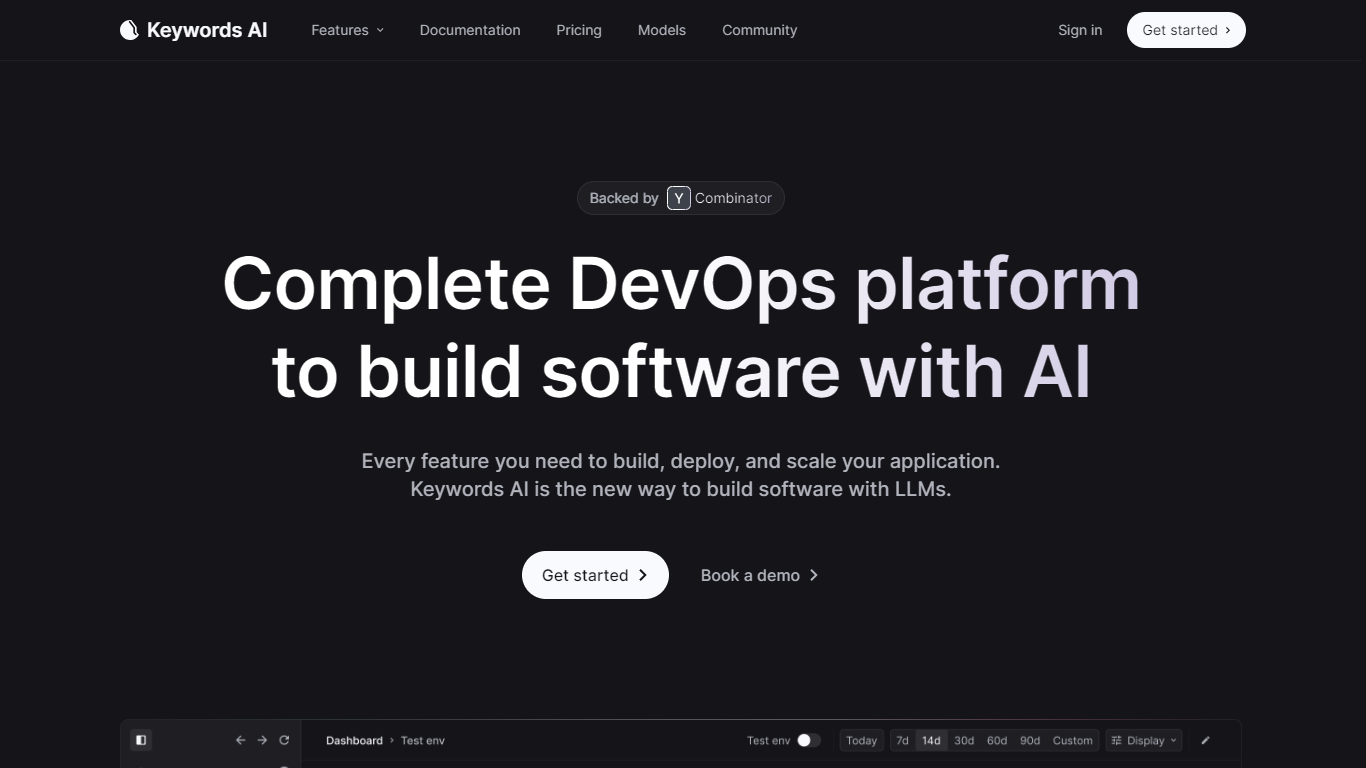

What is Respan (formerly Keywords AI)?
Respan is an LLM engineering platform for teams shipping production AI agents and applications. Route model traffic through one gateway, trace every call in detail, run evals on offline datasets and live traffic, and monitor cost, latency, and errors from a single dashboard.
The product grew out of Keywords AI, a Y Combinator Winter 2024 company founded by engineers from the University of Illinois. What started as LLM routing expanded into full observability after customers asked for visibility into how agents behaved in production. Respan now positions itself around the loop from tracing to evaluation to iteration.
It fits ML engineers, platform teams, and AI product builders who need gateway failover, prompt version testing, production quality scoring, and spend controls without stitching together separate tools. Customers cited on the site include teams at Retell AI, Mem0, Lovable, and Gumloop.
ggml.ai
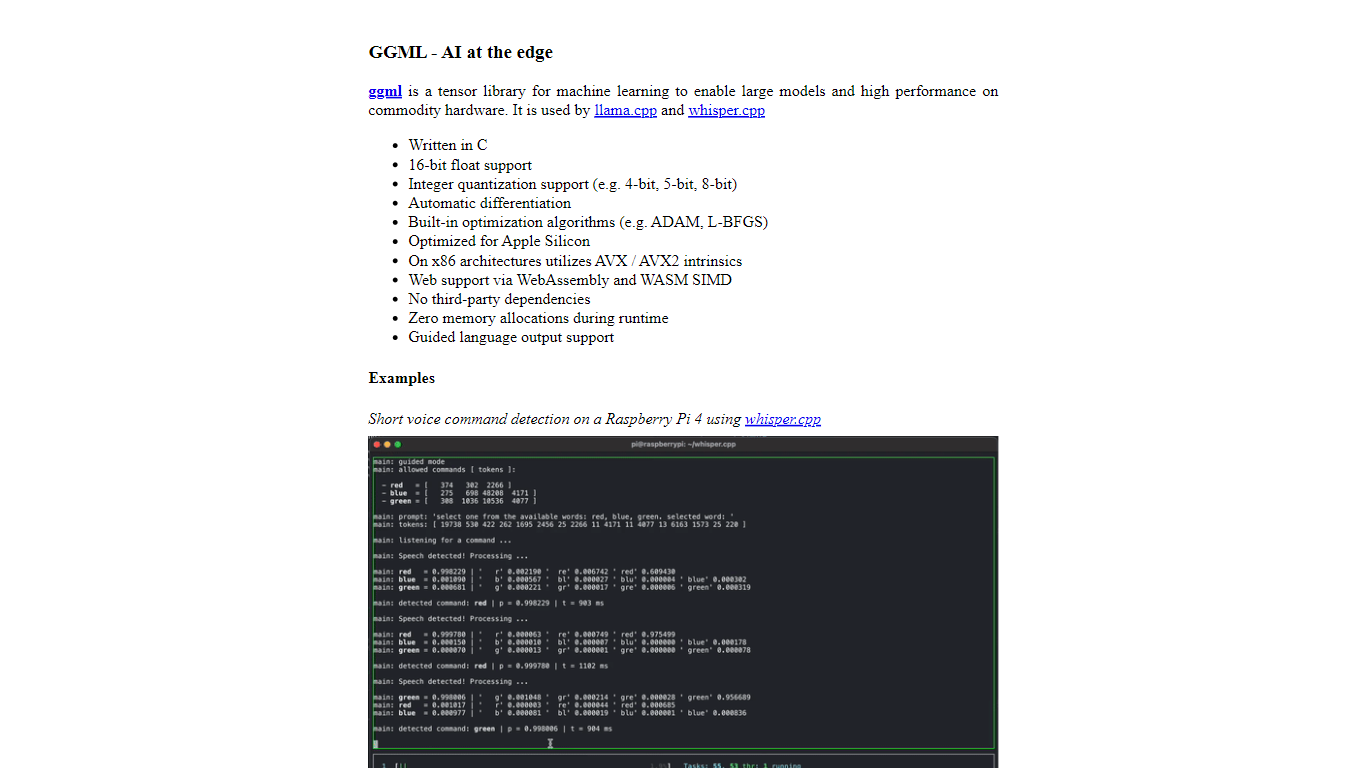
What is ggml.ai?
ggml runs large language and speech models on everyday CPUs and GPUs through a compact C tensor library built for on-device inference. ML engineers and app developers adopt it via llama.cpp and whisper.cpp when they want LLaMA or Whisper workloads without cloud-only dependencies.
Frameworks like PyTorch optimize for training clusters and heavy runtimes. ggml keeps the core library minimal with zero runtime memory allocations, no third-party dependencies, and integer quantization so llama.cpp can serve Meta LLaMA weights on laptops and Apple Silicon.
The ggml.ai company was founded in 2023 by Georgi Gerganov to support the library and was acquired by Hugging Face in 2026. The core ggml project stays MIT licensed with open development on GitHub.
Respan (formerly Keywords AI) Upvotes
ggml.ai Upvotes
Respan (formerly Keywords AI) Top Features
One endpoint reaches 1,000+ models; switch providers by changing a single model name
Automatic fallbacks move to the next model when one errors or rate-limits
Response caching serves repeat prompts instantly and cuts cost on duplicates
Budgets and rate limits per API key, customer, or org with warn and block thresholds
Trace trees capture every LLM call, tool run, retrieval, and agent turn with cost and latency
Evaluators combine LLM judges, code checks, and human review into one weighted score
Alerts reach Slack, email, or webhooks when cost, errors, latency, or tokens cross limits
ggml.ai Top Features
Powers llama.cpp for Meta LLaMA inference and whisper.cpp for OpenAI Whisper speech models
Written in C with zero runtime memory allocations during inference
Integer quantization support for smaller models on commodity hardware
No third-party dependencies in the core tensor library
Cross-platform low-level implementation with broad hardware support
MIT licensed open-core library with public development on GitHub
Respan (formerly Keywords AI) Category
- Large Language Model (LLM)
ggml.ai Category
- Large Language Model (LLM)
Respan (formerly Keywords AI) Pricing Type
- Freemium
ggml.ai Pricing Type
- Free