MosaicML vs ggml.ai
Dive into the comparison of MosaicML vs ggml.ai and discover which AI Large Language Model (LLM) tool stands out. We examine alternatives, upvotes, features, reviews, pricing, and beyond.
In a comparison between MosaicML and ggml.ai, which one comes out on top?
When we compare MosaicML and ggml.ai, two exceptional large language model (llm) tools powered by artificial intelligence, and place them side by side, several key similarities and differences come to light. Neither tool takes the lead, as they both have the same upvote count. Every vote counts! Cast yours and contribute to the decision of the winner.
Think we got it wrong? Cast your vote and show us who's boss!
MosaicML
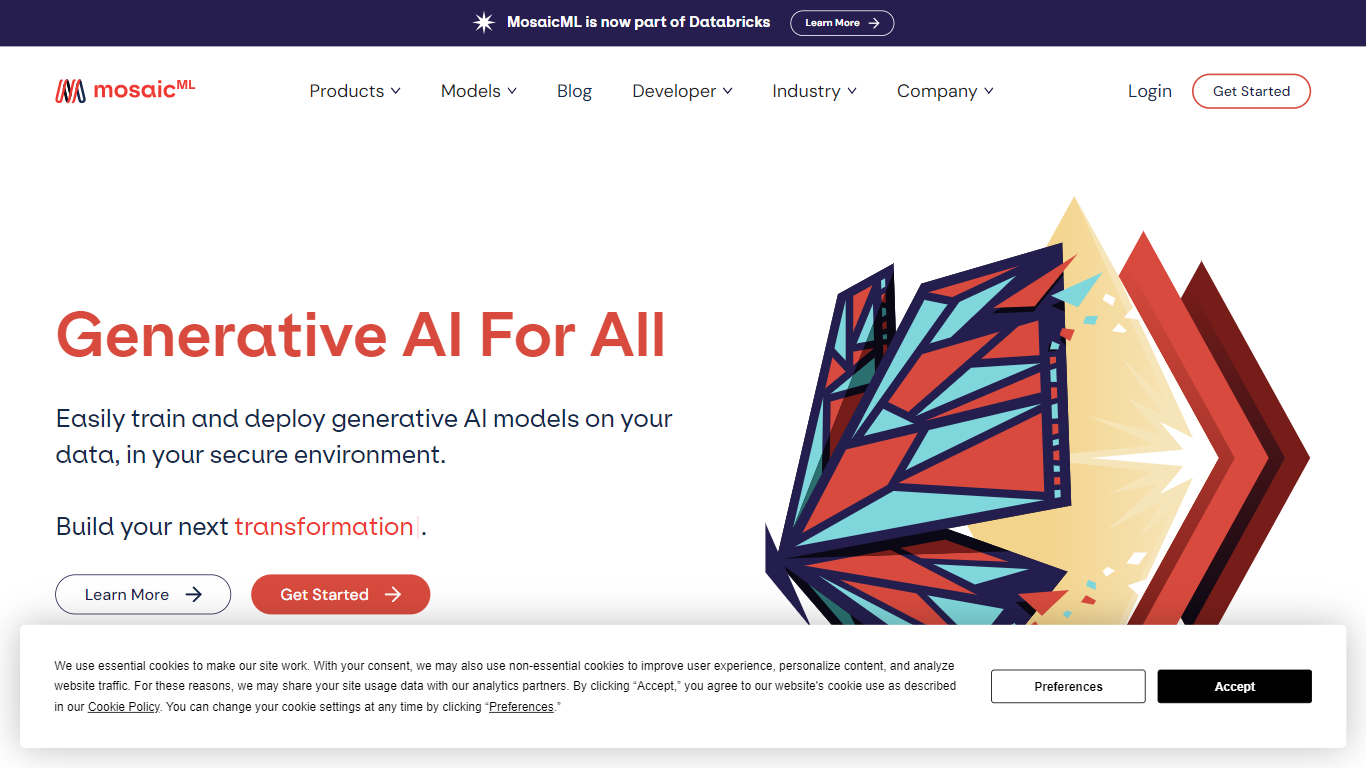

What is MosaicML?
MosaicML provides a robust platform designed to train and deploy large language models and other generative AI models effortlessly and securely within your own environment. Catering to industries from startups to life sciences and federal services, MosaicML brings cutting-edge AI within reach. Users can easily train AI models at scale utilizing a single command and deploy them in a private cloud while retaining full ownership of the model, including its weights. MosaicML stands out for its commitment to data privacy, enterprise-grade security, and complete model ownership. Moreover, with optimizations for efficiency and compatibility with various tools and cloud environments, MosaicML democratizes access to transformative AI capabilities while minimizing the technical challenges associated with large-scale AI model management.
ggml.ai
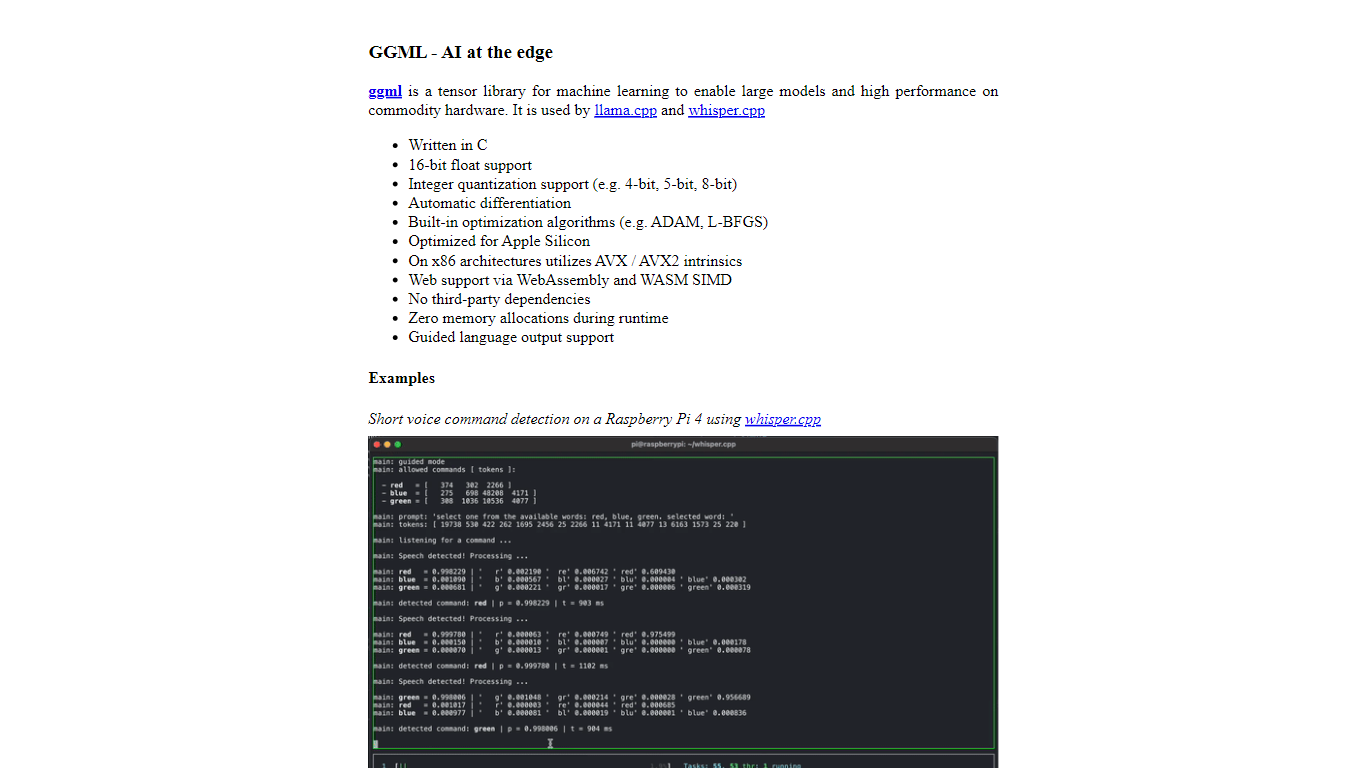
What is ggml.ai?
ggml runs large language and speech models on everyday CPUs and GPUs through a compact C tensor library built for on-device inference. ML engineers and app developers adopt it via llama.cpp and whisper.cpp when they want LLaMA or Whisper workloads without cloud-only dependencies.
Frameworks like PyTorch optimize for training clusters and heavy runtimes. ggml keeps the core library minimal with zero runtime memory allocations, no third-party dependencies, and integer quantization so llama.cpp can serve Meta LLaMA weights on laptops and Apple Silicon.
The ggml.ai company was founded in 2023 by Georgi Gerganov to support the library and was acquired by Hugging Face in 2026. The core ggml project stays MIT licensed with open development on GitHub.
MosaicML Upvotes
ggml.ai Upvotes
MosaicML Top Features
Train Large AI Models Easily: Train large AI models at scale with a simple command.
Deploy in Private Clouds: Deploy AI models securely within your private cloud.
Full Model Ownership: Retain complete control over your model including the weights.
Cross-Cloud Capability: Train and deploy AI models across different cloud environments.
Optimized for Efficiency: Leverage the platform's efficiency optimizations for better performance.
ggml.ai Top Features
Powers llama.cpp for Meta LLaMA inference and whisper.cpp for OpenAI Whisper speech models
Written in C with zero runtime memory allocations during inference
Integer quantization support for smaller models on commodity hardware
No third-party dependencies in the core tensor library
Cross-platform low-level implementation with broad hardware support
MIT licensed open-core library with public development on GitHub
MosaicML Category
- Large Language Model (LLM)
ggml.ai Category
- Large Language Model (LLM)
MosaicML Pricing Type
- Freemium
ggml.ai Pricing Type
- Free