Orca vs Stellaris AI
In the clash of Orca vs Stellaris AI, which AI Large Language Model (LLM) tool emerges victorious? We assess reviews, pricing, alternatives, features, upvotes, and more.
When we put Orca and Stellaris AI head to head, which one emerges as the victor?
Let's take a closer look at Orca and Stellaris AI, both of which are AI-driven large language model (llm) tools, and see what sets them apart. The upvote count is neck and neck for both Orca and Stellaris AI. Your vote matters! Help us decide the winner among aitools.fyi users by casting your vote.
Disagree with the result? Upvote your favorite tool and help it win!
Orca

What is Orca?
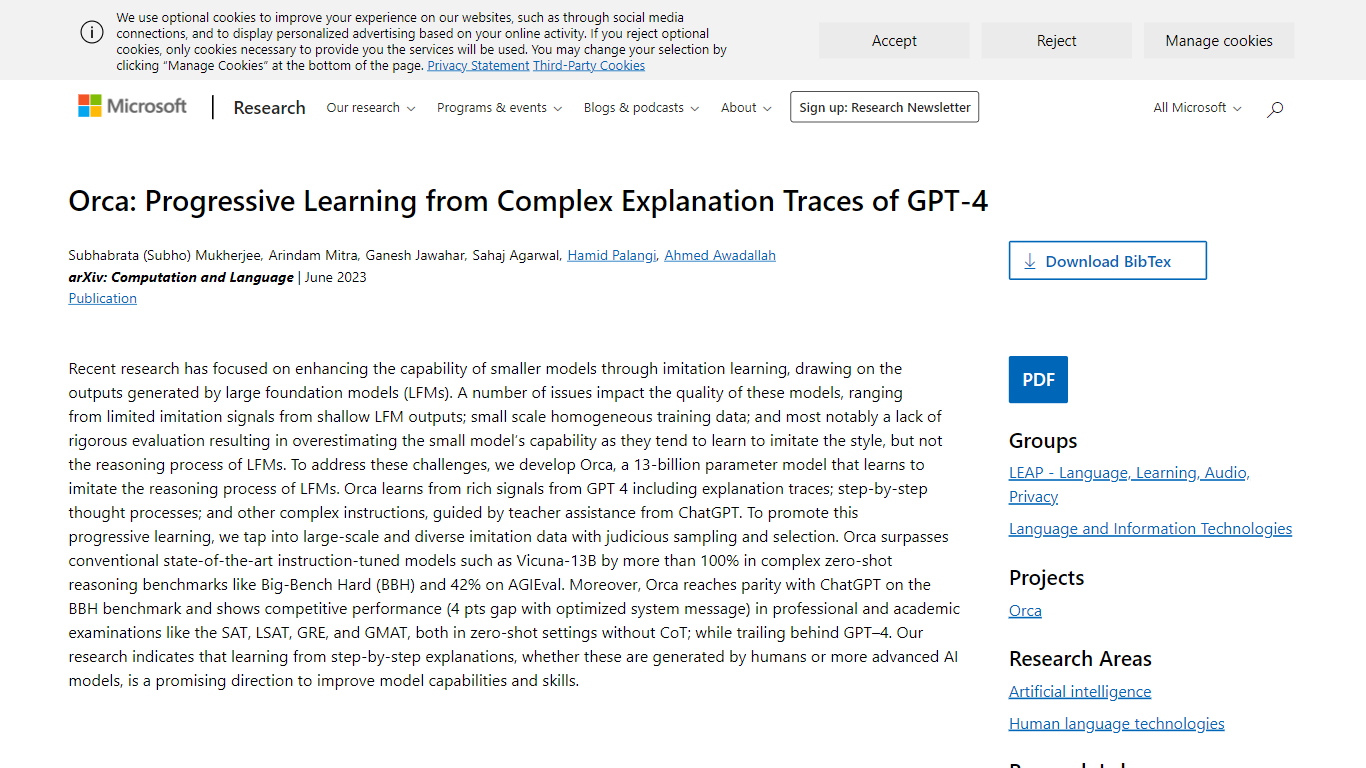
Orca is an AI model with 13 billion parameters designed to learn the reasoning process of large foundation models like GPT-4. It achieves this by imitating detailed explanation traces and step-by-step thought processes rather than just mimicking output styles.
What sets Orca apart is its use of rich explanation traces generated by GPT-4 and teacher guidance from ChatGPT, enabling it to progressively improve its reasoning capabilities. This approach allows Orca to surpass many instruction-tuned models on complex zero-shot reasoning benchmarks.
Orca is trained on large-scale, diverse imitation data with careful sampling to enhance learning quality. It performs competitively on professional and academic exams such as the SAT, LSAT, GRE, and GMAT without requiring chain-of-thought prompting.
The model addresses challenges common in small model training, including limited learning signals and lack of rigorous evaluation, by focusing on learning the reasoning process. Microsoft Research continues to develop Orca through projects like Orca 2 and domain-specialized variants such as Orca-Math.
Orca is part of Microsoft's broader AI research ecosystem, which emphasizes responsible AI development, transparency, and practical applications integrating insights from large language models.
Stellaris AI
What is Stellaris AI?
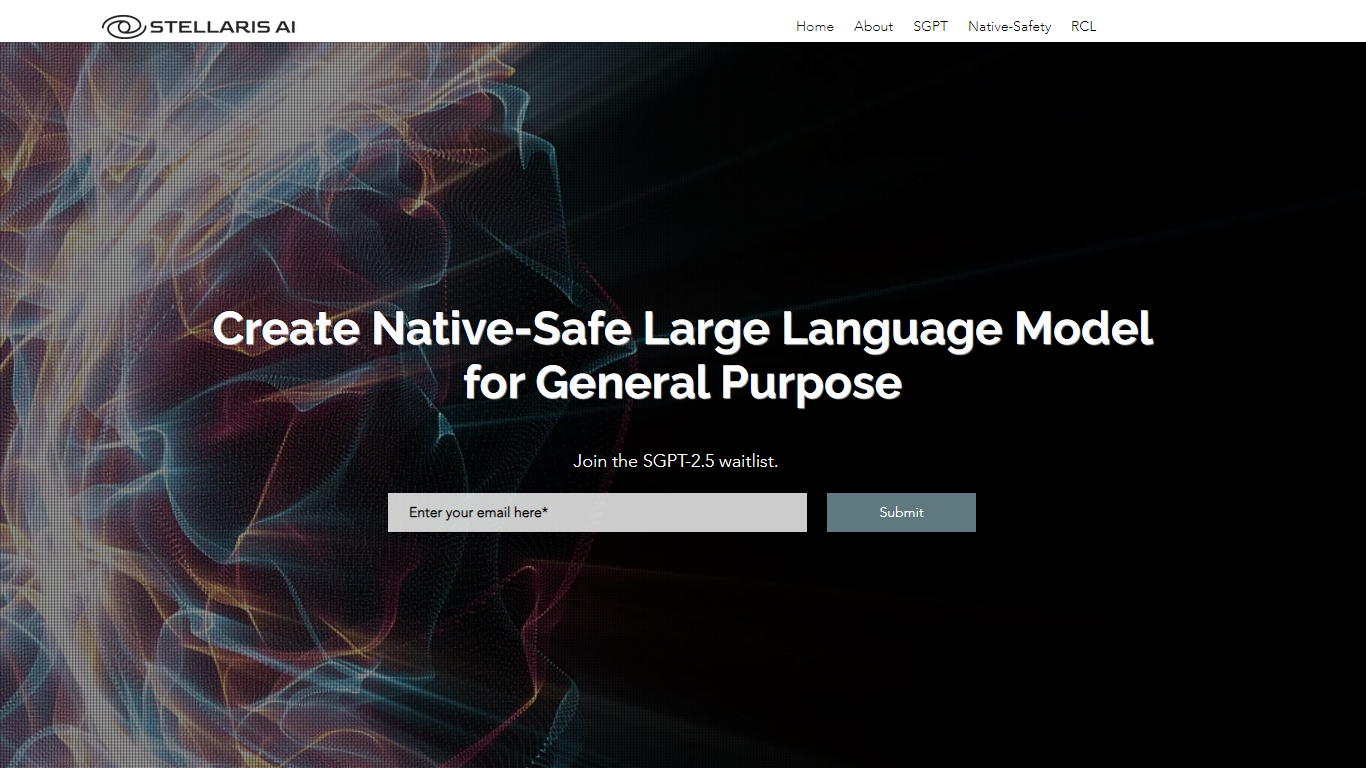
Stellaris AI builds large language models marketed around native safety and human-like reasoning for real-world tasks. Its flagship SGPT line targets text and code generation, knowledge Q&A, logical reasoning, and analytics at a scale the company describes as hundreds of billions of parameters. The public site centers on a waitlist for SGPT-4.5 rather than a self-serve chat product you can open today.
Where many LLM labs bolt safety filters on after training, Stellaris AI frames safety as part of the model stack through strict source referencing and harm minimization in the architecture. It also highlights Real-time Context Learning (RCL) for adapting answers with live knowledge, a combination aimed at teams that want cited outputs instead of unchecked generation.
Researchers, enterprise AI teams, and early adopters join the SGPT-4.5 waitlist for first access. The company cites 10+ years of research and three core product pillars: Stellaris GPT, Native Safety, and RCL.
Orca Upvotes
Stellaris AI Upvotes
Orca Top Features
🧠 Learns reasoning steps from GPT-4 explanations to improve understanding
📊 Surpasses Vicuna-13B by over 100% on Big-Bench Hard zero-shot reasoning benchmark
📚 Trains on large-scale, diverse imitation data with careful sampling
🔍 Uses teacher guidance from ChatGPT for enhanced learning quality
⚙️ Supports progressive learning enabling continuous model improvement
Stellaris AI Top Features
SGPT models described at 100B+ parameters for text, code, and reasoning tasks
Native Safety framework with strict source referencing and harm minimization
Real-time Context Learning (RCL) for live knowledge integration
Three product pillars: Stellaris GPT, Native Safety, and RCL
SGPT-4.5 waitlist open for early access signups on the homepage
Orca Category
- Large Language Model (LLM)
Stellaris AI Category
- Large Language Model (LLM)
Orca Pricing Type
- Freemium
Stellaris AI Pricing Type
- Freemium