Packmind vs Hexowatch
In the face-off between Packmind vs Hexowatch, which AI Automation tool takes the crown? We scrutinize features, alternatives, upvotes, reviews, pricing, and more.
In a face-off between Packmind and Hexowatch, which one takes the crown?
If we were to analyze Packmind and Hexowatch, both of which are AI-powered automation tools, what would we find? There's no clear winner in terms of upvotes, as both tools have received the same number. Every vote counts! Cast yours and contribute to the decision of the winner.
Don't agree with the result? Cast your vote and be a part of the decision-making process!
Packmind

What is Packmind?
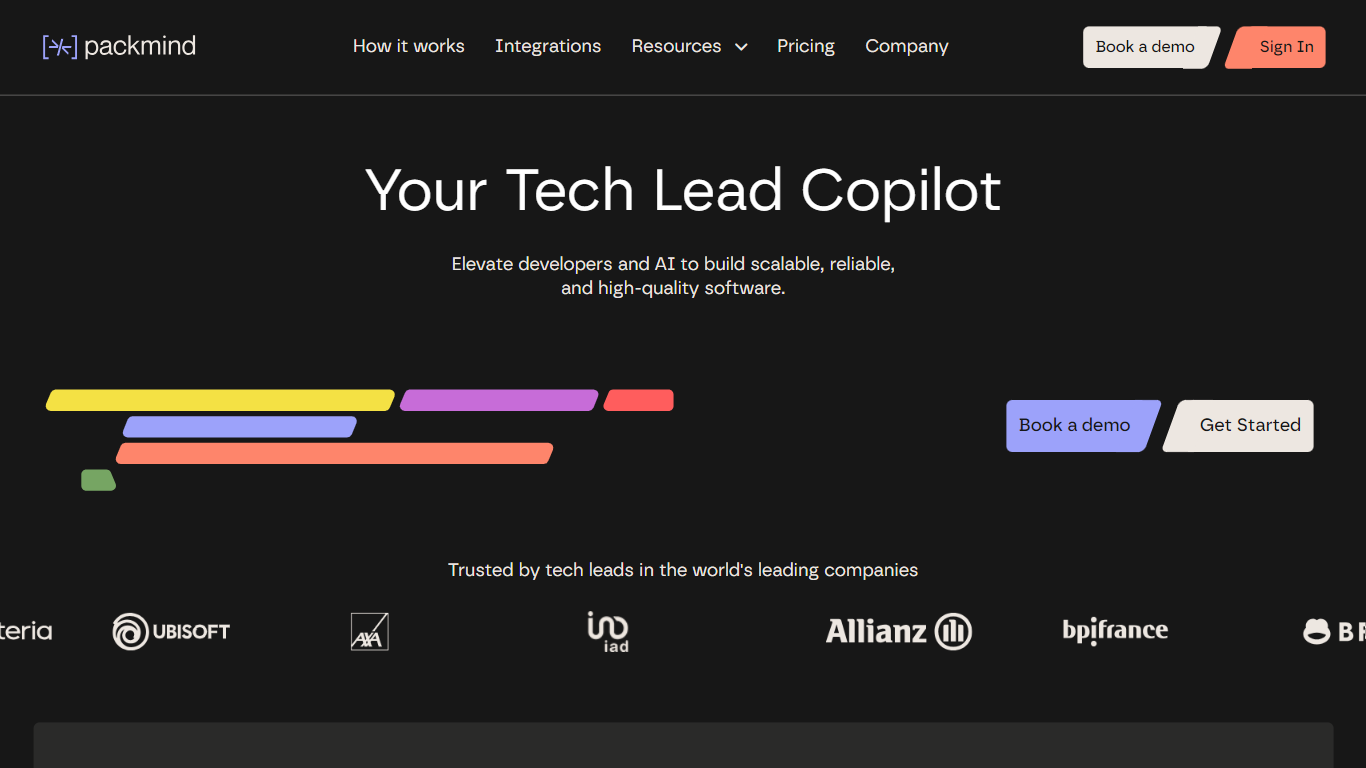
Packmind captures and governs your engineering playbook so AI coding agents across your repositories follow your team's standards instead of guessing from generic training data. It turns scattered decisions, patterns, and conventions into a versioned playbook, then distributes that context to assistants like Copilot, Cursor, Claude Code, and Gemini Code Assist.
Where generic assistants guess from training data, Packmind feeds them your team's rules. Its CLI can open pull requests that update copilot-instructions.md, AGENTS.md, and Cursor rules files, and its MCP server lets developers capture standards while coding. Violations show up in the IDE, CLI, or pre-commit with optional auto-fix before review.
Engineering leaders and platform teams use Packmind to scale agentic coding without losing consistency. The open source edition is free with unlimited developers and repositories; enterprise tiers add RBAC, SSO, SCIM, and audit trails. SOC 2 Type II certified since 2024, with public cloud or self-hosted Kubernetes deployment including air-gapped options.
Hexowatch

What is Hexowatch?
Hexowatch alerts you when a public webpage changes in ways you define. It supports 13 monitor types, from full-page visual screenshots and HTML element values to keywords, source code edits, tech stack swaps, uptime checks, WHOIS records, sitemaps, API responses, backlinks, and RSS feeds. Every detection saves an archived snapshot you can compare later. The workflow is fully automated once you set a URL and alert rules.
Most uptime tools only confirm a URL still loads. Hexowatch is built around catching targeted edits on a live page. You can watch a price field, flag when a keyword appears, or get notified when a competitor publishes a new sitemap entry. That focus on granular change detection sets it apart from simple ping monitors and basic HTML diff trackers.
The product comes from Hexact, the company behind Hexomatic, and runs entirely in the browser with no extension or proxy setup. Hexowatch says more than 150,000 businesses use it for competitor tracking, compliance archiving, inventory restock alerts, and SEO backlink checks. eCommerce teams, agencies, and compliance officers are the most common buyers.
Plans scale by check volume and alert frequency. Pro starts at $24.17 per month on annual billing with 4,500 monthly checks and 15-minute intervals, while Business+ adds API access and 25,000 checks at $99 per month.
Packmind Upvotes
Hexowatch Upvotes
Packmind Top Features
Open source core is free with unlimited developers and repositories on GitHub and GitLab
CLI syncs standards to copilot-instructions.md, AGENTS.md, and Cursor rules via pull request
Imports standards from ADRs or Git docs, or captures rules via MCP while you code
Flags violations in VS Code, JetBrains, Visual Studio, CLI, or pre-commit with auto-fix
Distributes playbook context to Copilot, Cursor, Claude Code, Gemini Code Assist, and Junie
SOC 2 Type II certified since 2024 with cloud or self-hosted Kubernetes deployment
Hexowatch Top Features
13 monitoring modes spanning visual diffs, HTML fields, keywords, source code, tech stack, and WHOIS records
Pro plan includes 4,500 checks per month with intervals as fast as every 15 minutes
Business tier adds server location selection and third-party integrations from $45.83 per month
Every detected change stores an archived snapshot for compliance and legal review
Sitemap monitor scans entire sites for newly published or removed pages on a 3 to 6 hour cycle
Packmind Category
- Automation
Hexowatch Category
- Automation
Packmind Pricing Type
- Freemium
Hexowatch Pricing Type
- Paid