Packmind vs Swif
Explore the showdown between Packmind vs Swif and find out which AI Automation tool wins. We analyze upvotes, features, reviews, pricing, alternatives, and more.
When comparing Packmind and Swif, which one rises above the other?
When we contrast Packmind with Swif, both of which are exceptional AI-operated automation tools, and place them side by side, we can spot several crucial similarities and divergences. Neither tool takes the lead, as they both have the same upvote count. Since other aitools.fyi users could decide the winner, the ball is in your court now to cast your vote and help us determine the winner.
Don't agree with the result? Cast your vote and be a part of the decision-making process!
Packmind
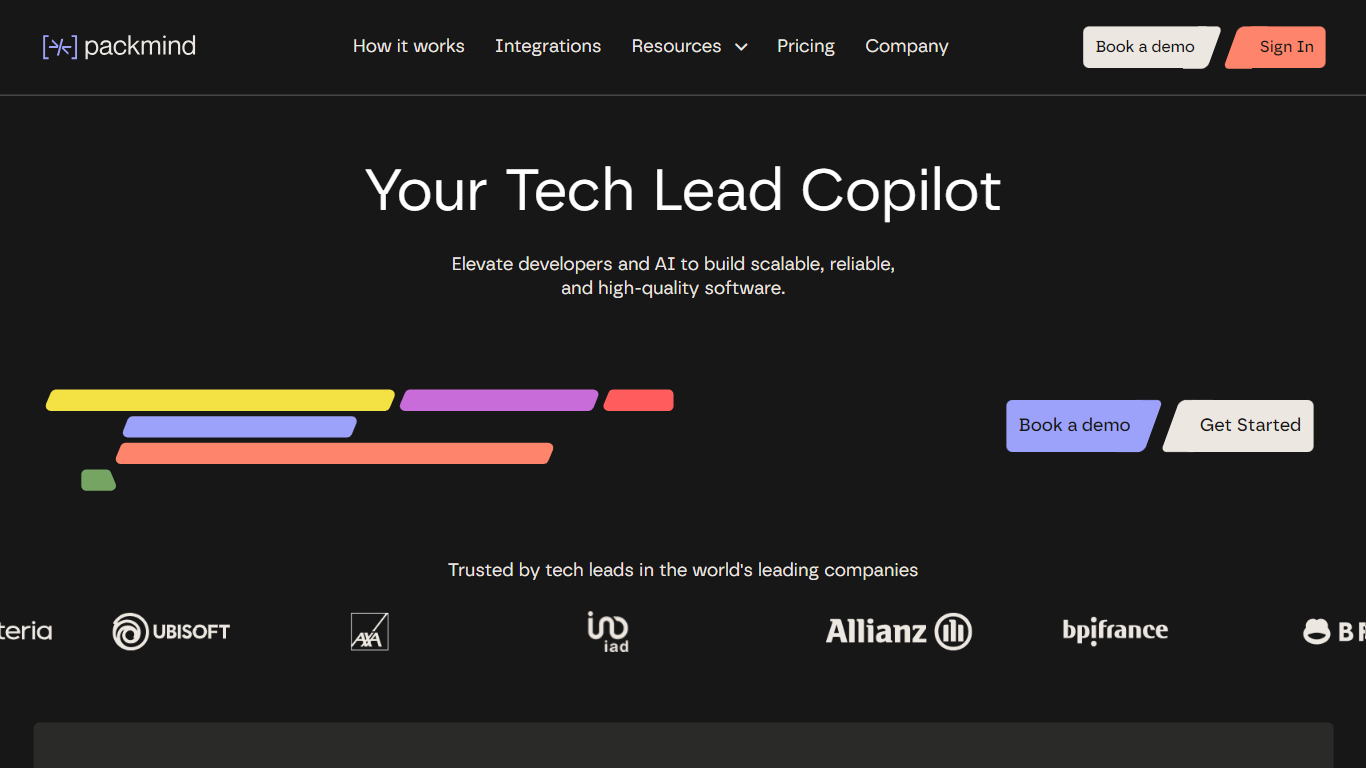

What is Packmind?
Packmind captures and governs your engineering playbook so AI coding agents across your repositories follow your team's standards instead of guessing from generic training data. It turns scattered decisions, patterns, and conventions into a versioned playbook, then distributes that context to assistants like Copilot, Cursor, Claude Code, and Gemini Code Assist.
Where generic assistants guess from training data, Packmind feeds them your team's rules. Its CLI can open pull requests that update copilot-instructions.md, AGENTS.md, and Cursor rules files, and its MCP server lets developers capture standards while coding. Violations show up in the IDE, CLI, or pre-commit with optional auto-fix before review.
Engineering leaders and platform teams use Packmind to scale agentic coding without losing consistency. The open source edition is free with unlimited developers and repositories; enterprise tiers add RBAC, SSO, SCIM, and audit trails. SOC 2 Type II certified since 2024, with public cloud or self-hosted Kubernetes deployment including air-gapped options.
Swif
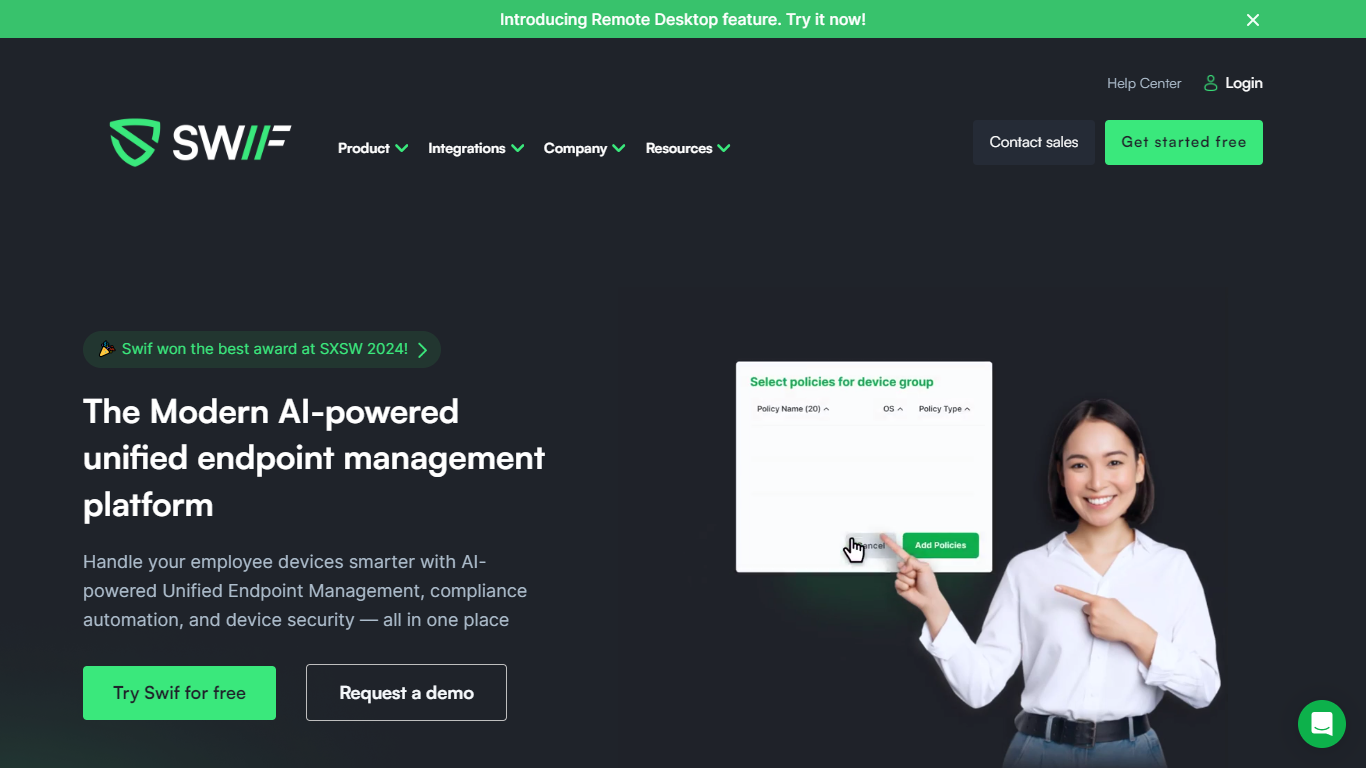
What is Swif?
Swif is a unified endpoint management (UEM) and mobile device management (MDM) platform built for IT and security teams. It manages macOS, Windows, Linux, iOS, iPadOS, and Android devices from one console, with compliance automation and Shadow IT discovery built in.
The platform handles zero-touch enrollment through Apple Business Manager, Windows Autopilot, and Android Enterprise, fleet-wide app deployment and patching, and remote support through live terminal and remote desktop. Compliance controls map to SOC 2, ISO 27001, HIPAA, NIST, CIS, and NIS 2, with evidence that syncs to GRC tools like Vanta, Drata, and Thoropass.
Swif also detects unsanctioned SaaS and AI tools across browsers and endpoints, flags unauthorized usage, and can coach or block based on policy rules. Integrations cover Okta, Google Workspace, Azure AD, Slack, and Deel. A free tier covers up to five employees, with per-seat paid plans and custom enterprise pricing for larger teams.
Packmind Upvotes
Swif Upvotes
Packmind Top Features
Open source core is free with unlimited developers and repositories on GitHub and GitLab
CLI syncs standards to copilot-instructions.md, AGENTS.md, and Cursor rules via pull request
Imports standards from ADRs or Git docs, or captures rules via MCP while you code
Flags violations in VS Code, JetBrains, Visual Studio, CLI, or pre-commit with auto-fix
Distributes playbook context to Copilot, Cursor, Claude Code, Gemini Code Assist, and Junie
SOC 2 Type II certified since 2024 with cloud or self-hosted Kubernetes deployment
Swif Top Features
Manage macOS, Windows, Linux, iOS, and Android endpoints from a single console
Zero-touch device enrollment via Apple Business Manager, Windows Autopilot, and Android Enterprise
Automated compliance mapping and evidence export for SOC 2, ISO 27001, HIPAA, and NIS 2
Real-time Shadow IT and unsanctioned AI tool detection across browsers and devices
Integrations with Okta, Google Workspace, Azure AD, Vanta, Drata, and Slack
Packmind Category
- Automation
Swif Category
- Automation
Packmind Pricing Type
- Freemium
Swif Pricing Type
- Freemium