Pythia vs Gopher
In the contest of Pythia vs Gopher, which AI Large Language Model (LLM) tool is the champion? We evaluate pricing, alternatives, upvotes, features, reviews, and more.
If you had to choose between Pythia and Gopher, which one would you go for?
When we examine Pythia and Gopher, both of which are AI-enabled large language model (llm) tools, what unique characteristics do we discover? Both tools are equally favored, as indicated by the identical upvote count. Join the aitools.fyi users in deciding the winner by casting your vote.
Does the result make you go "hmm"? Cast your vote and turn that frown upside down!
Pythia

What is Pythia?
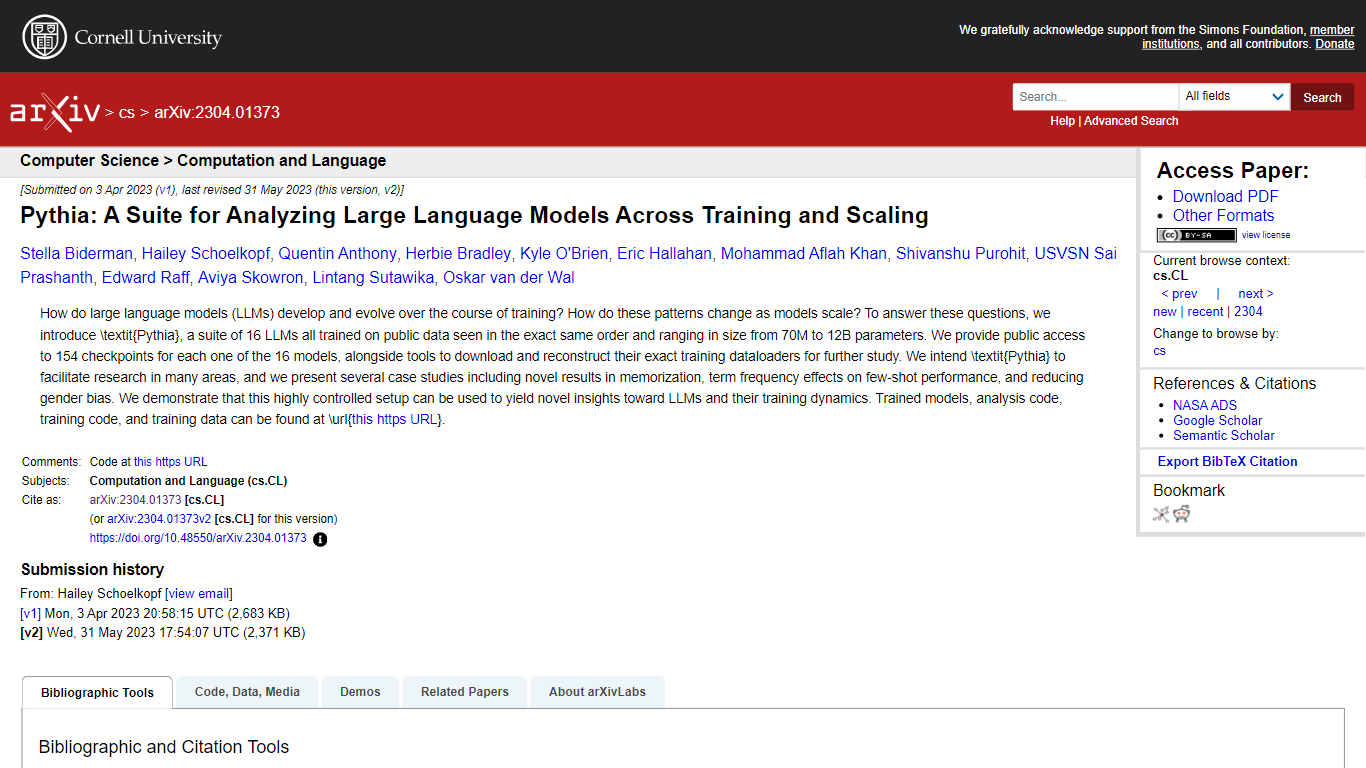
Pythia is an extensive suite designed to analyze the development and scaling of large language models (LLMs). It comprises 16 models, each trained with public data in a consistent order, featuring sizes ranging from 70 million to 12 billion parameters. The project provides public access to 154 checkpoints per model, as well as tools to reproduce training data loaders for in-depth research. Pythia aims to aid various research domains with case studies on topics like memorization, the impact of term frequency on few-shot learning, and strategies for mitigating gender bias. This carefully controlled environment offers unique insights into the training dynamics of LLMs. The suite includes trained models, analysis code, training code, and data, all accessible via its GitHub repository.
Gopher
What is Gopher?
Discover the cutting-edge advancements in artificial intelligence with DeepMind's exploration of language processing capabilities in AI. At the heart of this exploration is Gopher, a 280-billion-parameter language model designed to understand and generate human-like text. Language serves as the core of human intelligence, enabling us to express thoughts, create memories, and foster understanding.
Realizing its importance, DeepMind's interdisciplinary teams have endeavored to drive the development of language models like Gopher, balancing innovation with ethical considerations and safety. Learn how these language models are advancing AI research by enhancing performance in tasks ranging from reading comprehension to fact-checking while identifying limitations such as logical reasoning challenges. Attention is also given to the potential ethical and social risks associated with large language models, including the propagation of biases and misinformation, and the steps being taken to mitigate these risks.
Pythia Upvotes
Gopher Upvotes
Pythia Top Features
Suite for Analysis:** A comprehensive set of tools for conducting research on LLM training and scaling.
Size Variety:** LLMs ranging from 70M to 12B parameters, providing insights across different model scales.
Public Checkpoints:** Access to 154 checkpoints for each of the 16 LLMs.
Research Facilitation:** Tools and code for reconstructing training dataloaders to promote further study in the field.
Case Studies:** Presentation of case studies including findings in memorization, few-shot performance, and bias reduction.
Gopher Top Features
Advanced Language Modeling: Gopher represents a significant leap in large-scale language models with a focus on understanding and generating human-like text.
Ethical and Social Considerations: A proactive approach to identifying and managing risks associated with AI language processing.
Performance Evaluation: Gopher demonstrates remarkable progress across numerous tasks, advancing closer to human expert performance.
Interdisciplinary Research: Collaboration among experts from various backgrounds to tackle challenges inherent in language model training.
Innovative Research Papers: Release of three papers encompassing the Gopher model study, ethical and social risks, and a new architecture for improved efficiency.
Pythia Category
- Large Language Model (LLM)
Gopher Category
- Large Language Model (LLM)
Pythia Pricing Type
- Freemium
Gopher Pricing Type
- Freemium