Rick.ai vs Pencil
Dive into the comparison of Rick.ai vs Pencil and discover which AI E-commerce tool stands out. We examine alternatives, upvotes, features, reviews, pricing, and beyond.
In a comparison between Rick.ai and Pencil, which one comes out on top?
When we compare Rick.ai and Pencil, two exceptional e-commerce tools powered by artificial intelligence, and place them side by side, several key similarities and differences come to light. Interestingly, both tools have managed to secure the same number of upvotes. Be a part of the decision-making process. Your vote could determine the winner.
Want to flip the script? Upvote your favorite tool and change the game!
Rick.ai

What is Rick.ai?
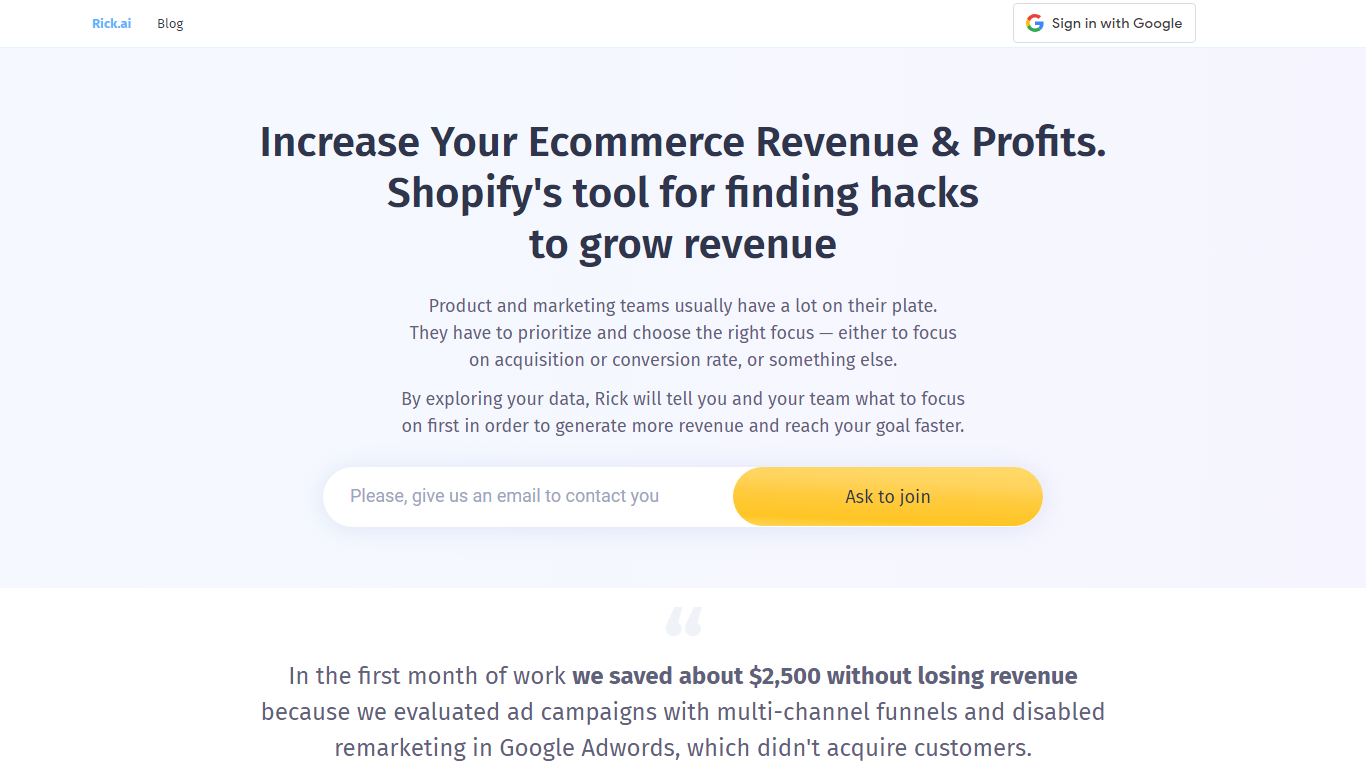
Rick.ai connects Shopify orders with Google Analytics, Google Ads, and Facebook and Instagram ad spend so e-commerce teams see profit by channel instead of scattered dashboards. It flags broken tracking, builds autofunnels, and highlights where revenue leaks before you waste another dollar on ads.
Standard analytics count sessions. Rick attributes conversions to users, which matters when shoppers browse on mobile and buy on desktop days later. You can slice campaigns by any UTM tag, spot unprofitable remarketing, and inspect microconversions from product page through checkout on each device type.
CEOs, CMOs, and growth marketers running Shopify stores use Rick when spreadsheets and GA exports slow decisions. Setup pulls historical Shopify payments and ad costs in minutes, then surfaces 40+ segment groupings by country, cohort, landing page, and product category with email alerts when a key metric shifts.
Pencil
What is Pencil?
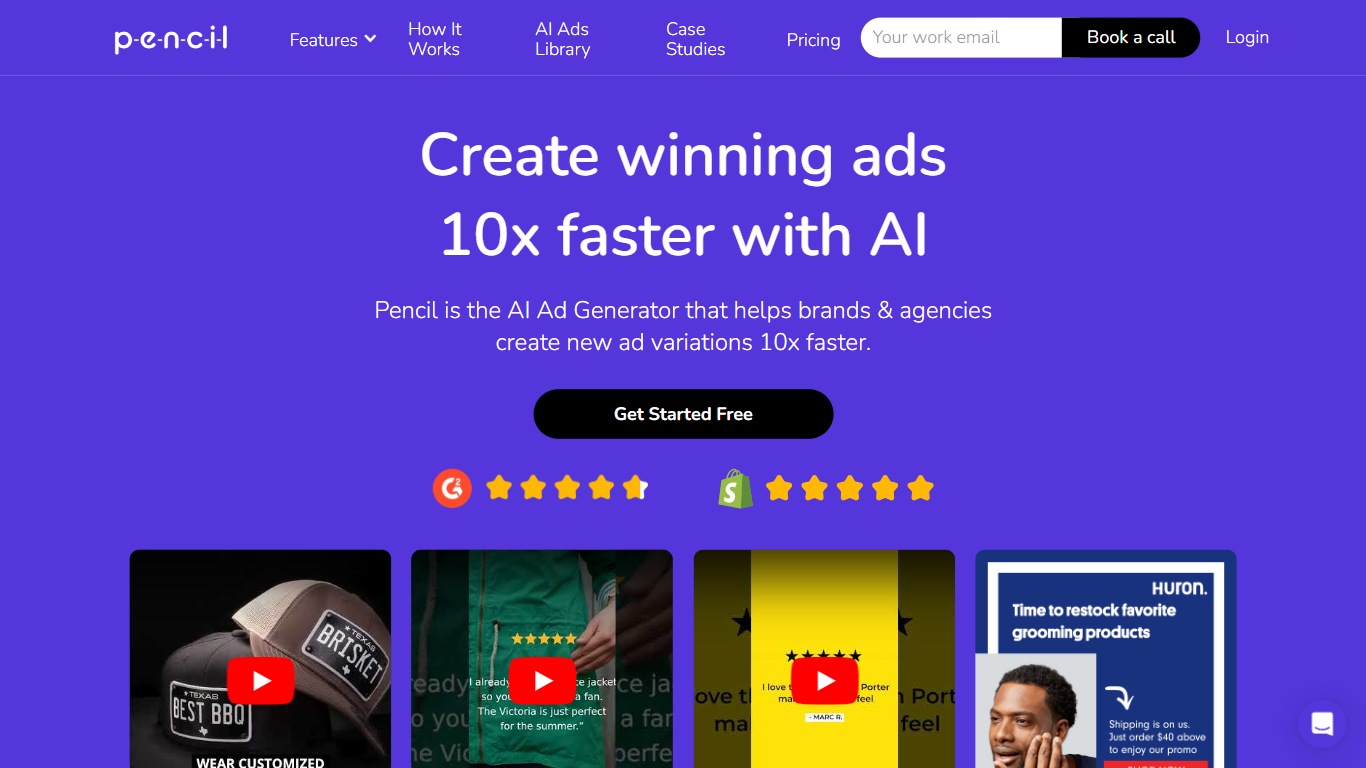
Pencil pulls OpenAI, Google, Adobe, Runway, and Bria models into one workspace where marketing teams generate images, video, and ad copy, then push finished creatives to Meta, Google, TikTok, and LinkedIn. It covers brief-to-launch workflows for e-commerce brands and enterprises that need governed AI production instead of juggling separate generator apps.
Single-vendor creative suites lock you into one model family. Pencil acts as an orchestration layer with enterprise controls like SOC 2 Type II, a no-train data policy, and IP indemnification, so procurement can approve one platform while teams swap models as releases ship.
Global brands like L'Oréal and Unilever use it to cut asset production costs and scale variants across markets. Solo founders start on Core with 50 monthly generations, while growth teams move to higher tiers for unlimited workspaces and direct product team access.
Rick.ai Upvotes
Pencil Upvotes
Rick.ai Top Features
No-code integrations with Shopify, Google Analytics, Google Ads, and Meta ads
User-based conversion tracking instead of session-only GA counts
40+ report groupings by device, landing page, cohort, and country
Autofunnels show microconversion drops across product, cart, and checkout steps
UTM-level attribution flags unprofitable PPC and remarketing campaigns
Email alerts when metrics change with recommended next actions
Pencil Top Features
Core plan includes 50 AI generations per month and ad launch to Facebook, Instagram, TikTok, YouTube, Google Display, DV360, and LinkedIn
Growth plan at $55 per month includes 250 generations and unlimited workspaces
Aggregates models from OpenAI, Google, Adobe, Runway, and Bria in one orchestration layer
In-browser editor scales one brief into thousands of creative variations
Enterprise controls include SOC 2 Type II, no-train policy, and full IP indemnification
Workflow agents cover briefing, generation, approval, and direct launch to ad platforms
Rick.ai Category
- E-commerce
Pencil Category
- E-commerce
Rick.ai Pricing Type
- Freemium
Pencil Pricing Type
- Paid