RLAMA vs Gopher
In the clash of RLAMA vs Gopher, which AI Large Language Model (LLM) tool emerges victorious? We assess reviews, pricing, alternatives, features, upvotes, and more.
When we put RLAMA and Gopher head to head, which one emerges as the victor?
Let's take a closer look at RLAMA and Gopher, both of which are AI-driven large language model (llm) tools, and see what sets them apart. Both tools are equally favored, as indicated by the identical upvote count. Every vote counts! Cast yours and contribute to the decision of the winner.
Not your cup of tea? Upvote your preferred tool and stir things up!
RLAMA
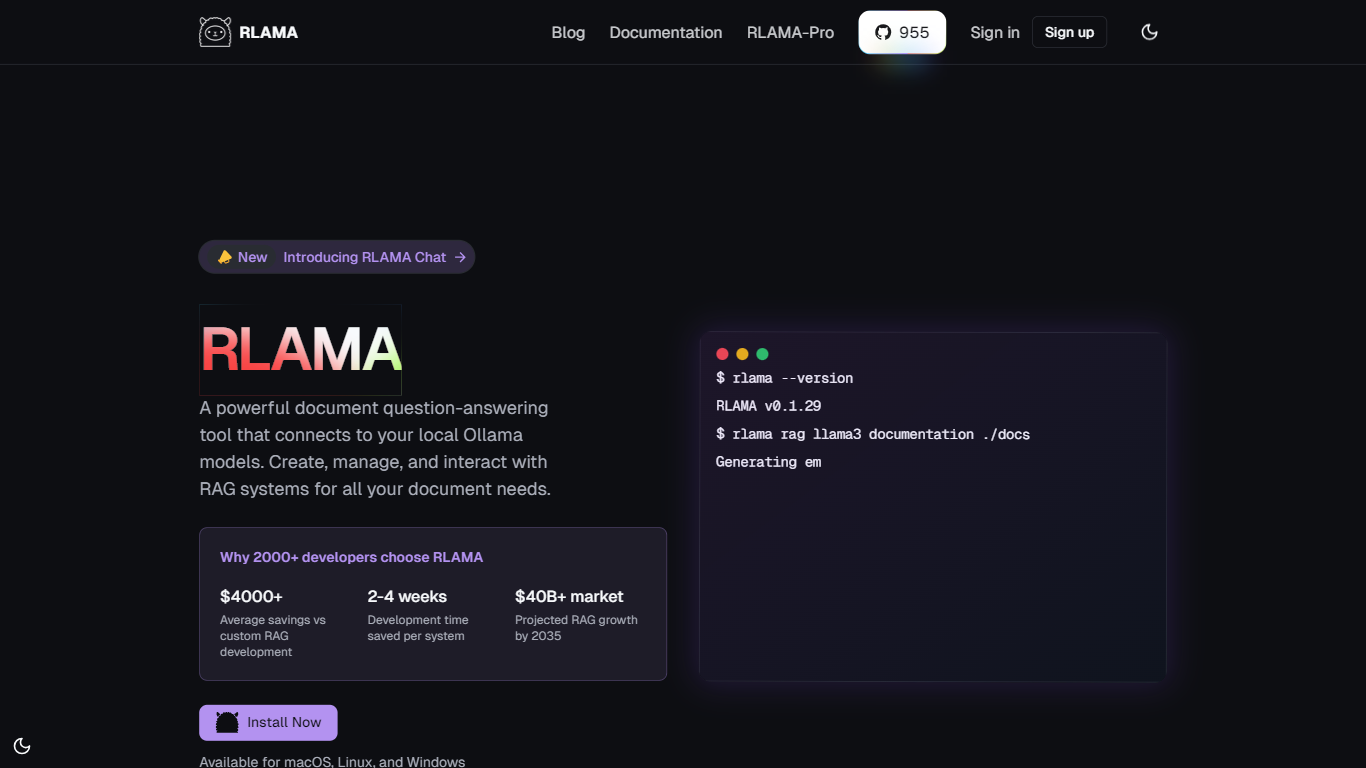

What is RLAMA?
RLAMA builds local RAG systems and multi-agent crews from your terminal on macOS, Linux, or Windows. You index folders of PDFs, Markdown, and code files, then query them through Ollama, OpenAI, or Hugging Face models without sending data to external servers. The open-source project also includes a visual RAG builder on rlama.dev.
Most RAG tools stop at document Q&A. RLAMA adds agent roles, tool wiring, and crew workflows so one terminal session can chain researchers, writers, and coders through sequential or parallel steps. Directory watching keeps RAG indexes fresh when files change, and an HTTP API exposes the same systems to other apps.
Developers building private knowledge bases, research teams indexing papers, and engineers who want offline document search use RLAMA for local embeddings and chunking. The project maintainers note active development is paused, but the open-source CLI and docs remain available for install.
Gopher
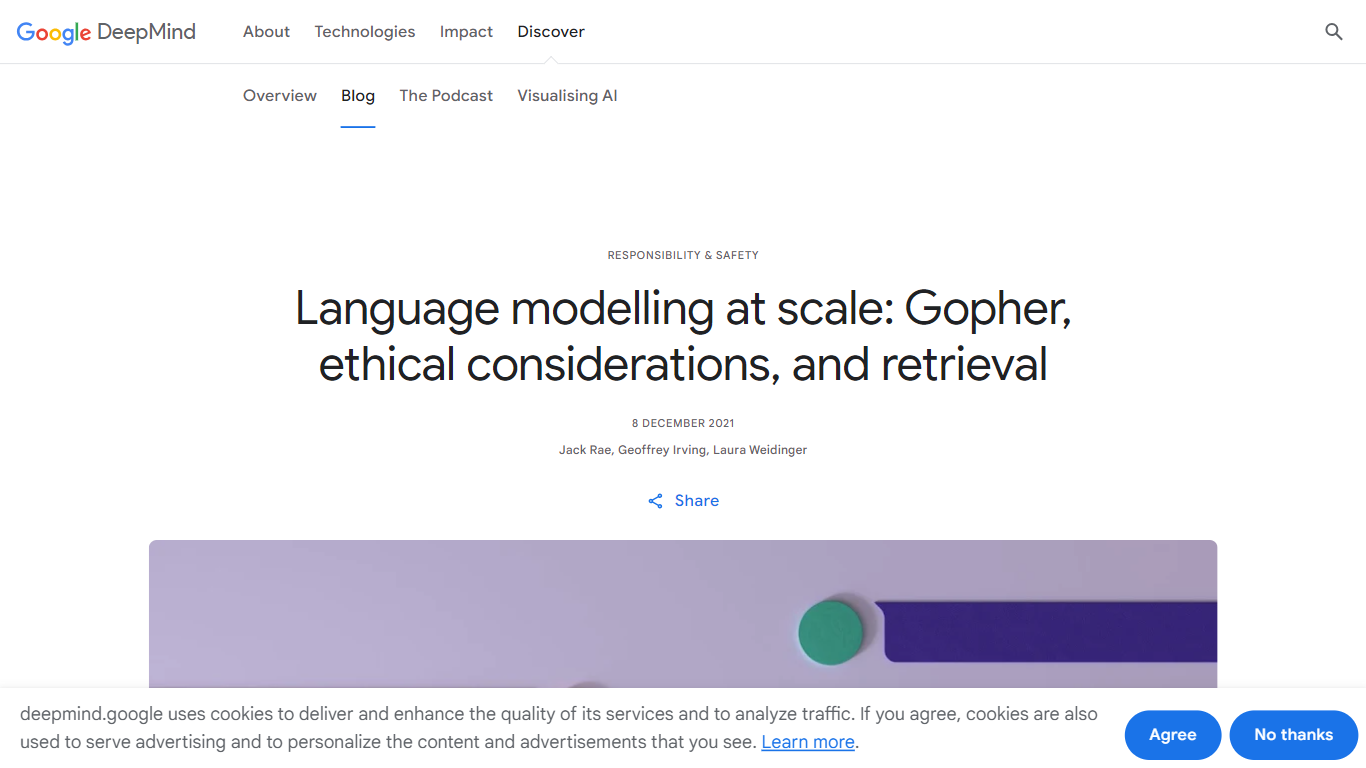
What is Gopher?
Gopher is a 280-billion-parameter transformer language model Google DeepMind announced in December 2021. DeepMind trained a family of models from 44 million to 280 billion parameters to study how scale affects text prediction, reading comprehension, fact-checking, and toxic-language detection.
Compared with general-purpose chatbots, Gopher was a research release, not a public app. DeepMind paired the model paper with an ethics taxonomy covering 21 risks across six themes and a separate Retrieval-Enhanced Transformer (RETRO) architecture that pulls passages from an internet-scale index to cut training cost and trace outputs back to sources.
The blog post targets AI researchers studying scaling laws, safety taxonomies, and retrieval-augmented language models. Gopher beat prior models on several Massive Multitask Language Understanding (MMLU) categories but still struggled with logical reasoning, common-sense questions, repetition, stereotypical bias, and confidently wrong answers in dialogue tests.
RLAMA Upvotes
Gopher Upvotes
RLAMA Top Features
CLI creates RAG indexes from folders with hybrid chunking defaults of 1000 tokens and 200 overlap
Supports 30+ file types including PDF, DOCX, Markdown, and common code extensions
Agent and crew commands assign roles like researcher, writer, and coder with RAG or web search tools
100% local processing option with Ollama so documents never leave your machine
Visual RAG builder on rlama.dev configures models, sources, and chunking without typing commands
Directory watch commands auto-index new files added to a watched folder
HTTP API server exposes RAG systems to other applications on a custom port
Gopher Top Features
280-billion-parameter transformer model, the largest in a series scaling from 44 million parameters
Stronger reading comprehension, fact-checking, and toxic-language detection as model size grows
MMLU benchmark gains across humanities, science, medicine, and general knowledge categories
Dialogue tests where Gopher cited Wikipedia correctly on cell biology without dialogue fine-tuning
Companion ethics paper mapping 21 large language model risks across six thematic areas
RETRO retrieval architecture matches transformer quality with an order of magnitude fewer parameters
RLAMA Category
- Large Language Model (LLM)
Gopher Category
- Large Language Model (LLM)
RLAMA Pricing Type
- Freemium
Gopher Pricing Type
- Free