RLAMA vs GPT-4
When comparing RLAMA vs GPT-4, which AI Large Language Model (LLM) tool shines brighter? We look at pricing, alternatives, upvotes, features, reviews, and more.
In a comparison between RLAMA and GPT-4, which one comes out on top?
When we put RLAMA and GPT-4 side by side, both being AI-powered large language model (llm) tools, In the race for upvotes, GPT-4 takes the trophy. The number of upvotes for GPT-4 stands at 7, and for RLAMA it's 6.
Want to flip the script? Upvote your favorite tool and change the game!
RLAMA

What is RLAMA?
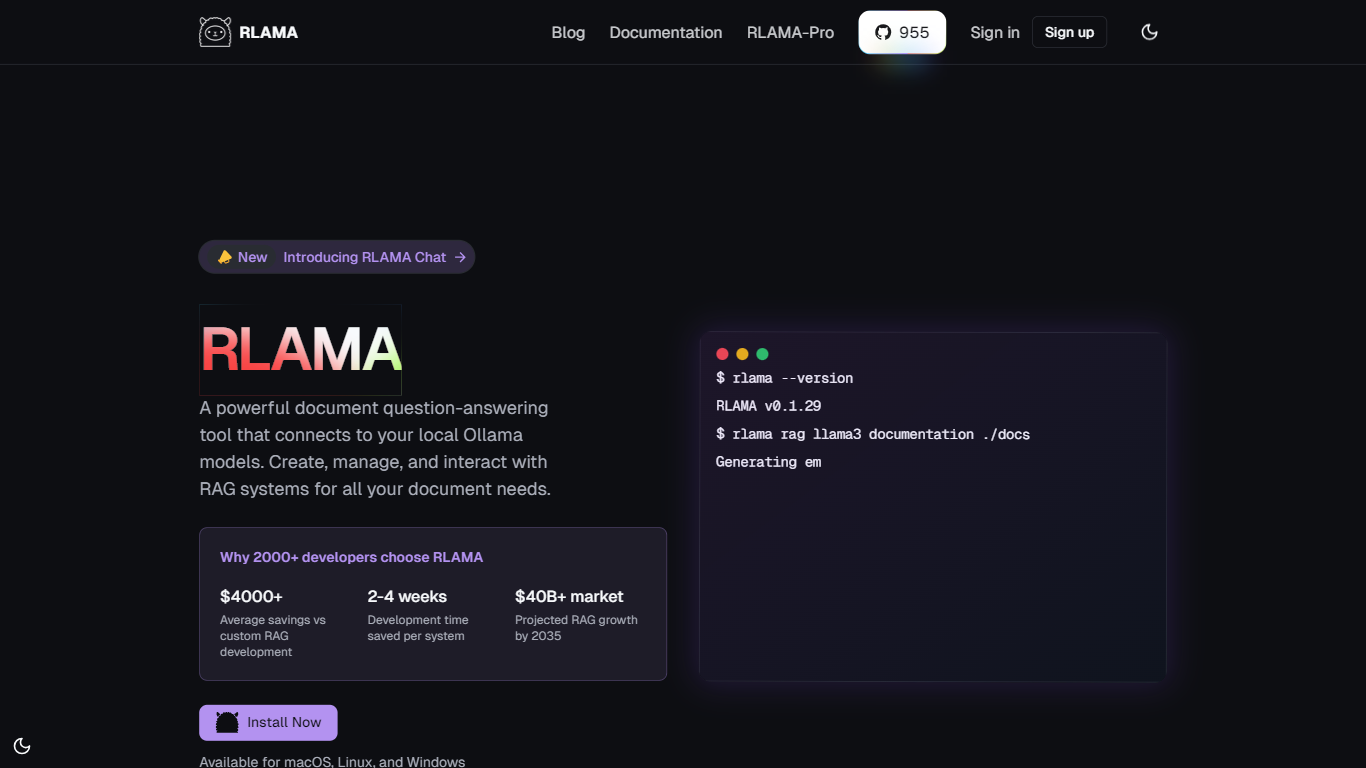
RLAMA builds local RAG systems and multi-agent crews from your terminal on macOS, Linux, or Windows. You index folders of PDFs, Markdown, and code files, then query them through Ollama, OpenAI, or Hugging Face models without sending data to external servers. The open-source project also includes a visual RAG builder on rlama.dev.
Most RAG tools stop at document Q&A. RLAMA adds agent roles, tool wiring, and crew workflows so one terminal session can chain researchers, writers, and coders through sequential or parallel steps. Directory watching keeps RAG indexes fresh when files change, and an HTTP API exposes the same systems to other apps.
Developers building private knowledge bases, research teams indexing papers, and engineers who want offline document search use RLAMA for local embeddings and chunking. The project maintainers note active development is paused, but the open-source CLI and docs remain available for install.
GPT-4
What is GPT-4?
GPT-4 is the latest milestone in OpenAI’s effort in scaling up deep learning.
GPT-4 is a large multimodal model (accepting image and text inputs, emitting text outputs) that, while less capable than humans in many real-world scenarios, exhibits human-level performance on various professional and academic benchmarks. For example, it passes a simulated bar exam with a score around the top 10% of test takers; in contrast, GPT-3.5’s score was around the bottom 10%. We’ve spent 6 months iteratively aligning GPT-4 using lessons from our adversarial testing program as well as ChatGPT, resulting in our best-ever results (though far from perfect) on factuality, steerability, and refusing to go outside of guardrails.
GPT-4 is more creative and collaborative than ever before. It can generate, edit, and iterate with users on creative and technical writing tasks, such as composing songs, writing screenplays, or learning a user’s writing style.
RLAMA Upvotes
GPT-4 Upvotes
RLAMA Top Features
CLI creates RAG indexes from folders with hybrid chunking defaults of 1000 tokens and 200 overlap
Supports 30+ file types including PDF, DOCX, Markdown, and common code extensions
Agent and crew commands assign roles like researcher, writer, and coder with RAG or web search tools
100% local processing option with Ollama so documents never leave your machine
Visual RAG builder on rlama.dev configures models, sources, and chunking without typing commands
Directory watch commands auto-index new files added to a watched folder
HTTP API server exposes RAG systems to other applications on a custom port
GPT-4 Top Features
No top features listedRLAMA Category
- Large Language Model (LLM)
GPT-4 Category
- Large Language Model (LLM)
RLAMA Pricing Type
- Freemium
GPT-4 Pricing Type
- Freemium