Taylor vs PSEUDO.AI
In the battle of Taylor vs PSEUDO.AI, which AI Developer tool comes out on top? We compare reviews, pricing, alternatives, upvotes, features, and more.
Between Taylor and PSEUDO.AI, which one is superior?
Upon comparing Taylor with PSEUDO.AI, which are both AI-powered developer tools, The community has spoken, PSEUDO.AI leads with more upvotes. PSEUDO.AI has attracted 7 upvotes from aitools.fyi users, and Taylor has attracted 6 upvotes.
You don't agree with the result? Cast your vote to help us decide!
Taylor

What is Taylor?
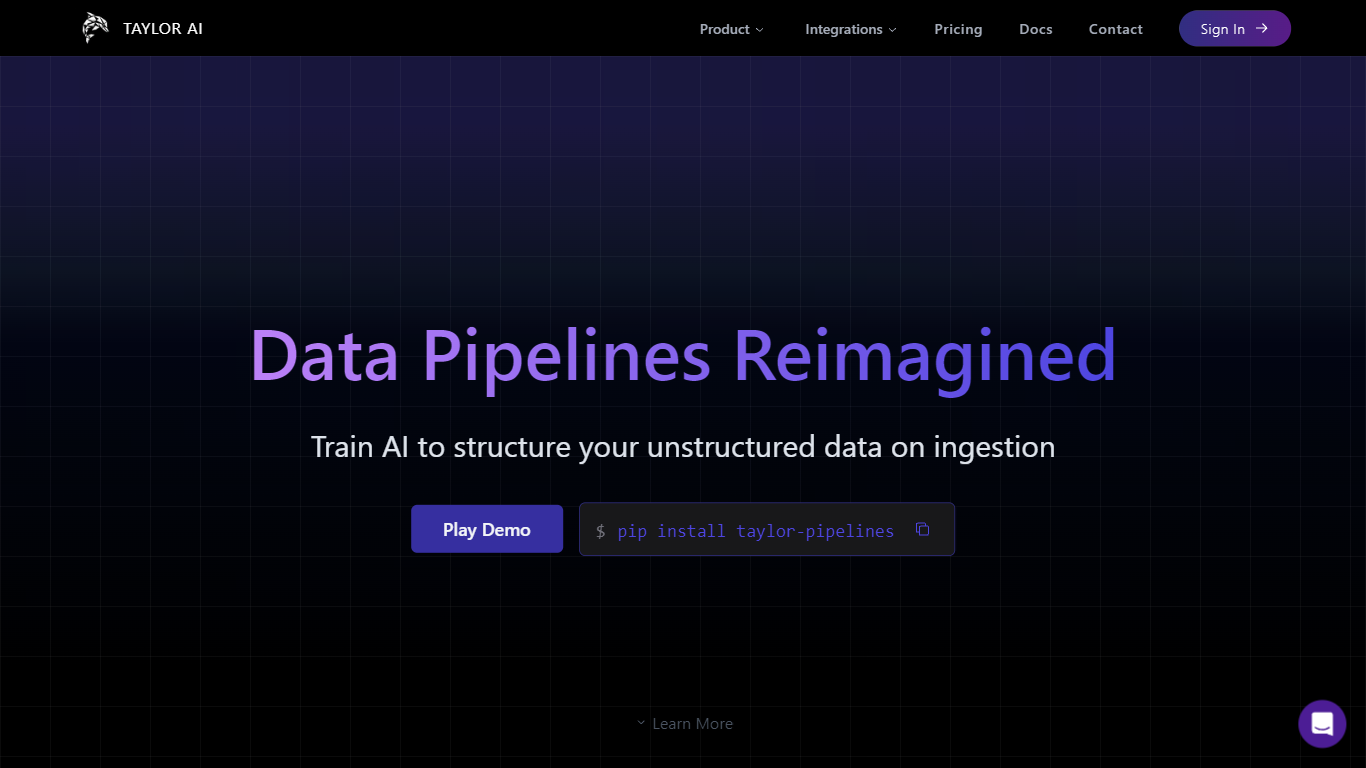
Taylor gives developers a production API for classifying and enriching unstructured text without running their own model stack. You send free-text records and Taylor returns labels from a taxonomy you define, using a classification ensemble tuned for deterministic results rather than open-ended LLM replies.
General-purpose LLMs work for one-off tagging but get expensive and inconsistent at volume. Taylor focuses on high-throughput text classification: batch parallel processing, drift monitoring, and private classifiers trained on taxonomies like IAB ad categories, O*NET occupation codes, NAICS industry classes, and legal clause types. The company also ships taylor-pipelines for building S3 data pipelines with a hosted UI.
Taylor was founded in 2023 in San Francisco and is backed by Y Combinator, General Catalyst, FoundersX, and Gaingels. The product targets government agencies, law firms, and private teams that need SOC2-compliant text enrichment through an API or spreadsheet workflow. Sign-in uses Google or GitHub, and support contact is [email protected].
PSEUDO.AI
What is PSEUDO.AI?
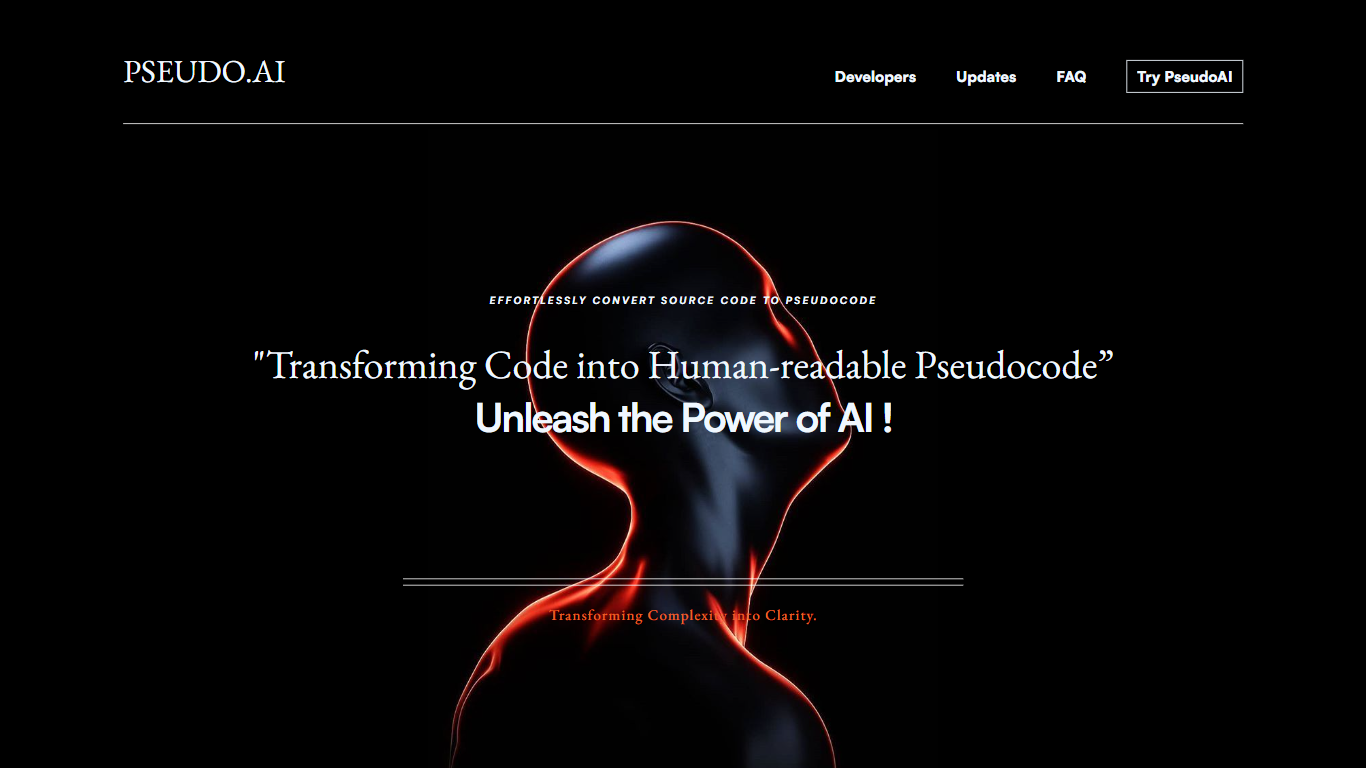
PSEUDO.AI turns source code into human-readable pseudocode in your browser. You enter a prompt or code snippet, pick a language, and the app returns plain-language steps that read like structured pseudocode rather than raw syntax. It runs on the web at pseudoai.vercel.app with no install, and targets teams who need to explain implementation details to people who do not read code daily.
Most code explainers summarize what a snippet does in prose. PSEUDO.AI keeps the output closer to pseudocode structure, which makes handoffs to designers, product owners, or junior developers easier to scan. The trade-off is focus: it is built for pseudocode conversion, not debugging, testing, or repo-wide documentation. That narrow scope is the point when the goal is shared comprehension, not a full IDE workflow.
Software developers use it to translate tricky logic before code reviews or stakeholder meetings. Computer science students and instructors lean on it when a textbook example needs a readable walkthrough. Product managers and mentors who sit in technical discussions but do not write production code get a format they can follow without parsing braces and semicolons.
Taylor Upvotes
PSEUDO.AI Upvotes
Taylor Top Features
Text classification API that accepts custom taxonomies such as IAB tags, O*NET codes, and NAICS classes
Batch processing mode for high-volume parallel classification jobs
Monitoring alerts for accuracy drift, failures, and performance issues
taylor-pipelines library for streaming unstructured data from Amazon S3 into hosted workflows
Configurable score thresholds and max label counts per classification request
SOC2-compliant security with API and spreadsheet implementation options
PSEUDO.AI Top Features
Choose from 12 languages on the converter page, including C, C++, C#, Java, Python 3, JavaScript, Node.js, PHP, Kotlin, Swift, and SQL.
Runs entirely in the browser at pseudoai.vercel.app with no downloads required, per the homepage FAQ.
Uses an OpenAI-trained GPT model to generate pseudocode from your code input, according to the site FAQ.
Three-step workflow on the converter: enter a prompt or topic, pick a language, then click GO and copy the output.
Homepage FAQ lists Java, Python, C++, and JavaScript among supported languages, with a broader list on the live converter.
Taylor Category
- Developer
PSEUDO.AI Category
- Developer
Taylor Pricing Type
- Freemium
PSEUDO.AI Pricing Type
- Free