TextLayer vs Semantic Scholar
When comparing TextLayer vs Semantic Scholar, which AI Research tool shines brighter? We look at pricing, alternatives, upvotes, features, reviews, and more.
Between TextLayer and Semantic Scholar, which one is superior?
When we put TextLayer and Semantic Scholar side by side, both being AI-powered research tools, Semantic Scholar is the clear winner in terms of upvotes. The number of upvotes for Semantic Scholar stands at 18, and for TextLayer it's 6.
Think we got it wrong? Cast your vote and show us who's boss!
TextLayer
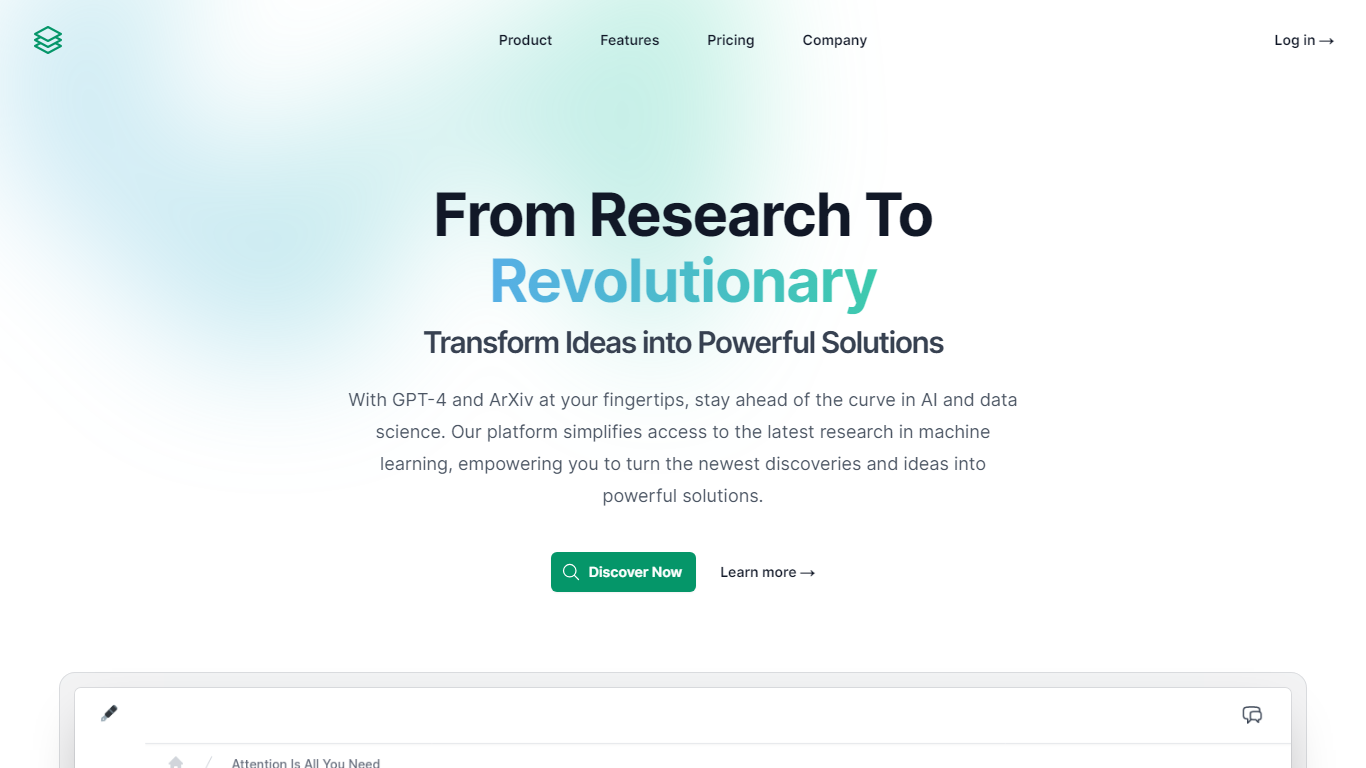

What is TextLayer?
Immerse yourself in the frontier of Artificial Intelligence with TextLayer, the go-to platform for AI and data science professionals. TextLayer equips you with the power of GPT-4 and immediate access to ArXiv—the hub for cutting-edge machine learning research. This web-based platform revolutionizes how research is conducted, transforming the latest AI insights into viable, robust solutions.
At TextLayer, innovation is accelerated. The platform provides tailored recommendations, AI-generated insights, and exhaustive implementation guidance to power up your data science projects. Users can benefit from the platform's ability to simplify complex research papers into concise, easy-to-understand summaries, complete with responsive Q&A sessions for in-depth exploration.
TextLayer's trusted environment caters to your specific research needs. Whether you're at the start of your AI journey or a seasoned researcher seeking advanced tools, TextLayer's flexible pricing plans provide the freedom to choose the level of support you need. From the free Explorer plan offering GPT-4 generated summaries to the Trailblazer subscription with unlimited interaction capabilities, TextLayer is also a pioneer in keeping its users at the vanguard of AI innovation.
Semantic Scholar
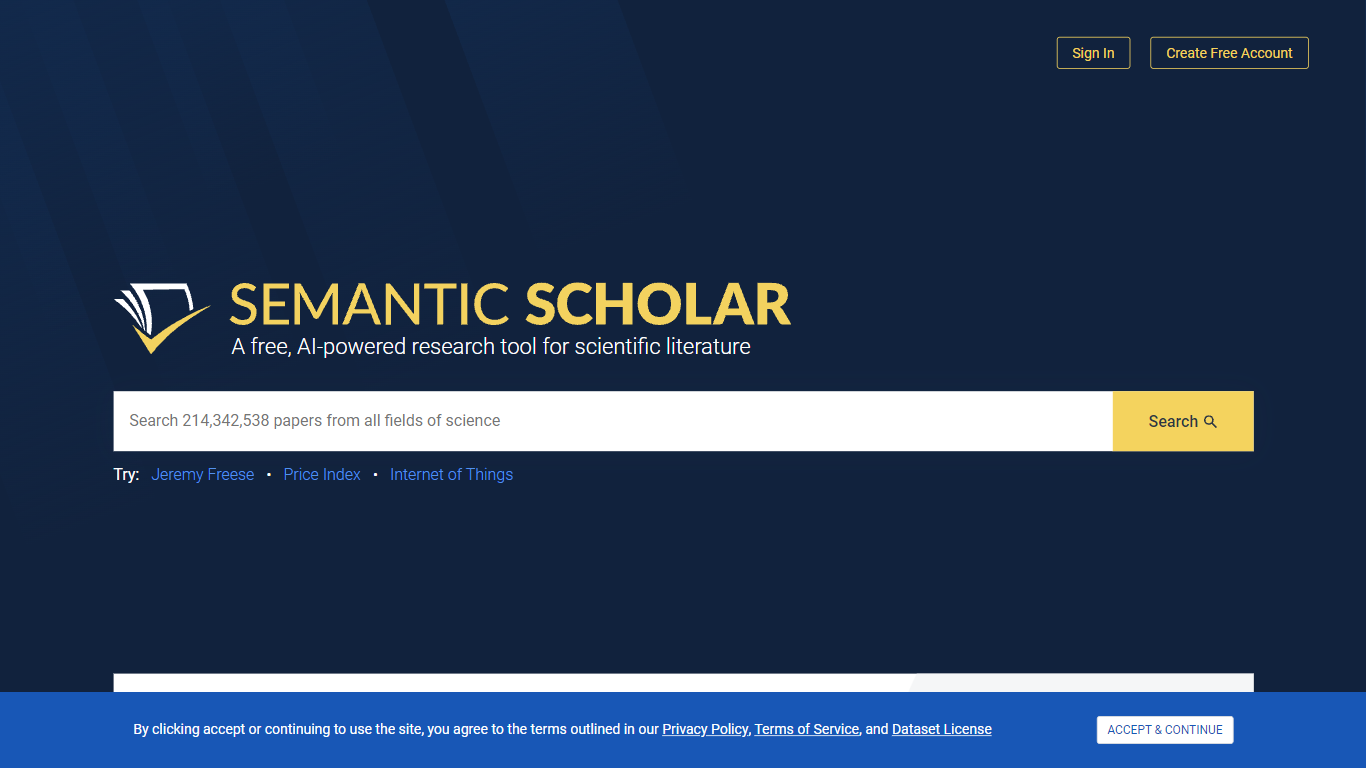
What is Semantic Scholar?
Semantic Scholar searches more than 236 million academic papers across every scientific field and surfaces citations, authors, and related work from one free interface. Built by the Allen Institute for AI (Ai2), it extracts meaning from papers so you can scan abstracts, follow citation chains, and open PDFs without jumping between databases.
Google Scholar indexes broadly but leaves connection-finding to you. Semantic Scholar adds AI-classified paper metadata, a Semantic Reader beta for in-browser annotation, and a public Academic Graph API with 214 million papers and 2.49 billion citations for developers. The S2AG and S2ORC datasets are also published as open JSON archives for NLP research.
Graduate students, faculty, librarians, and research engineers use it for literature reviews, citation tracking, and building scholarly apps. The API is free with optional keys for higher rate limits, and the platform partners with 50+ publishers to keep the index current.
TextLayer Upvotes
Semantic Scholar Upvotes
TextLayer Top Features
Simplified Access: Utilize a search portal to easily discover the latest in ML research.
Personalized Recommendations: Receive AI-curated research suggestions that align with your interests.
Responsive Q&A Sessions: Engage with GPT-4 for a deeper understanding of ML concepts.
Implementation Support: Get step-by-step guidance from GPT-4 to apply AI research effectively.
Flexible Pricing: Choose from various subscription plans tailored to your research journey.
Semantic Scholar Top Features
Search 236,851,843 papers indexed across all fields of science from one homepage
Semantic Reader beta adds in-browser annotations and contextual overlays on select papers
Academic Graph API covers 214 million papers, 2.49 billion citations, and 79 million authors
S2AG and S2ORC datasets ship as free JSON archives for NLP and text mining projects
Paper recommendations surface related studies based on citation and content similarity
Partners with 50+ publishers and scholarly societies to ingest new academic content
TextLayer Category
- Research
Semantic Scholar Category
- Research
TextLayer Pricing Type
- Freemium
Semantic Scholar Pricing Type
- Free