Tipp Studio (formerly Tipp) vs ALBERT
When comparing Tipp Studio (formerly Tipp) vs ALBERT, which AI Large Language Model (LLM) tool shines brighter? We look at pricing, alternatives, upvotes, features, reviews, and more.
Between Tipp Studio (formerly Tipp) and ALBERT, which one is superior?
When we put Tipp Studio (formerly Tipp) and ALBERT side by side, both being AI-powered large language model (llm) tools, Both tools have received the same number of upvotes from aitools.fyi users. Every vote counts! Cast yours and contribute to the decision of the winner.
Think we got it wrong? Cast your vote and show us who's boss!
Tipp Studio (formerly Tipp)
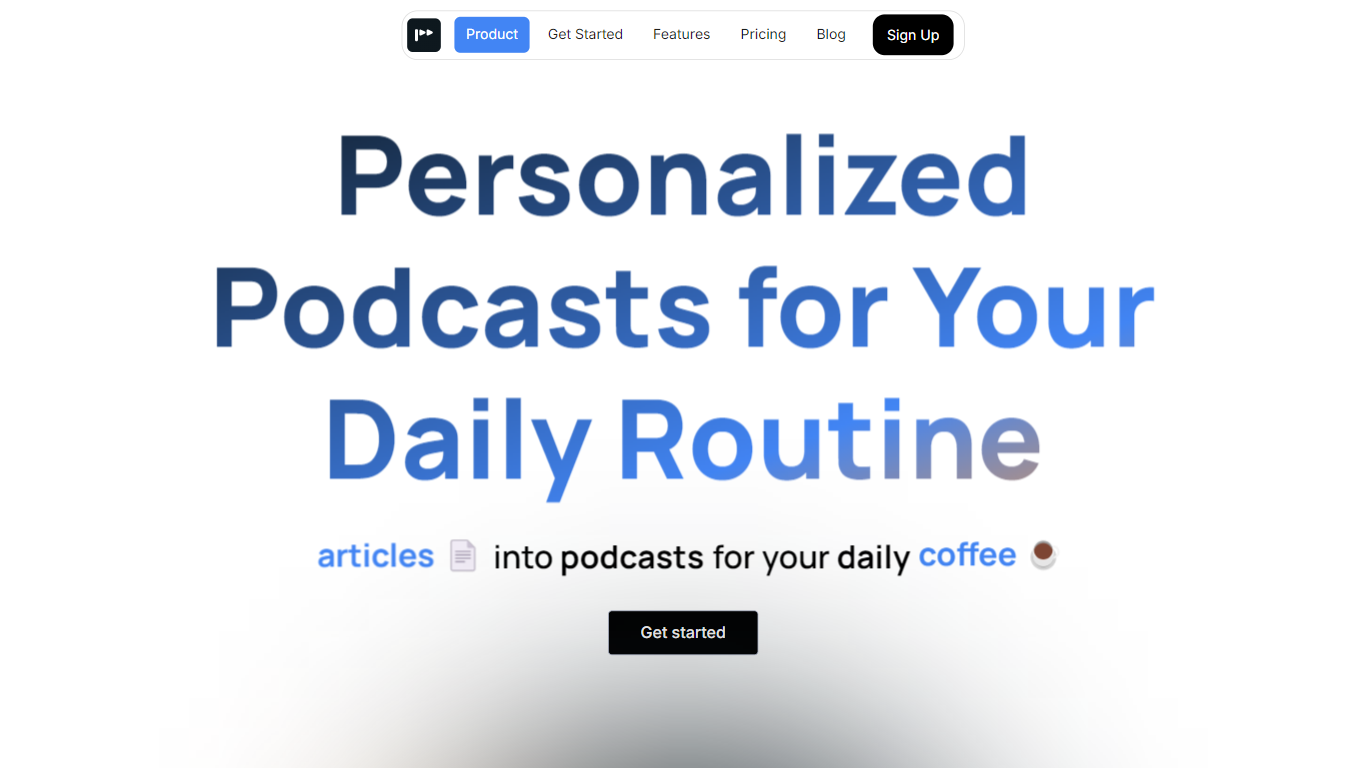

What is Tipp Studio (formerly Tipp)?
Tipp Studio turns written content from blogs, newsletters, and articles into professional podcast episodes for publishers and content creators. You import source material, the platform generates a spoken script, and you review and edit before publishing to Spotify, Apple Podcasts, YouTube, and other major platforms.
The workflow covers script generation, voice cloning, branded jingles, multilingual narration, and one-click distribution with RSS hosting included. That end-to-end scope is aimed at teams that want a production studio without building audio pipelines in-house.
It fits media companies, newsletter operators, and publishers who already produce written content and want to reach listeners on podcast platforms without hiring a full audio team.
ALBERT
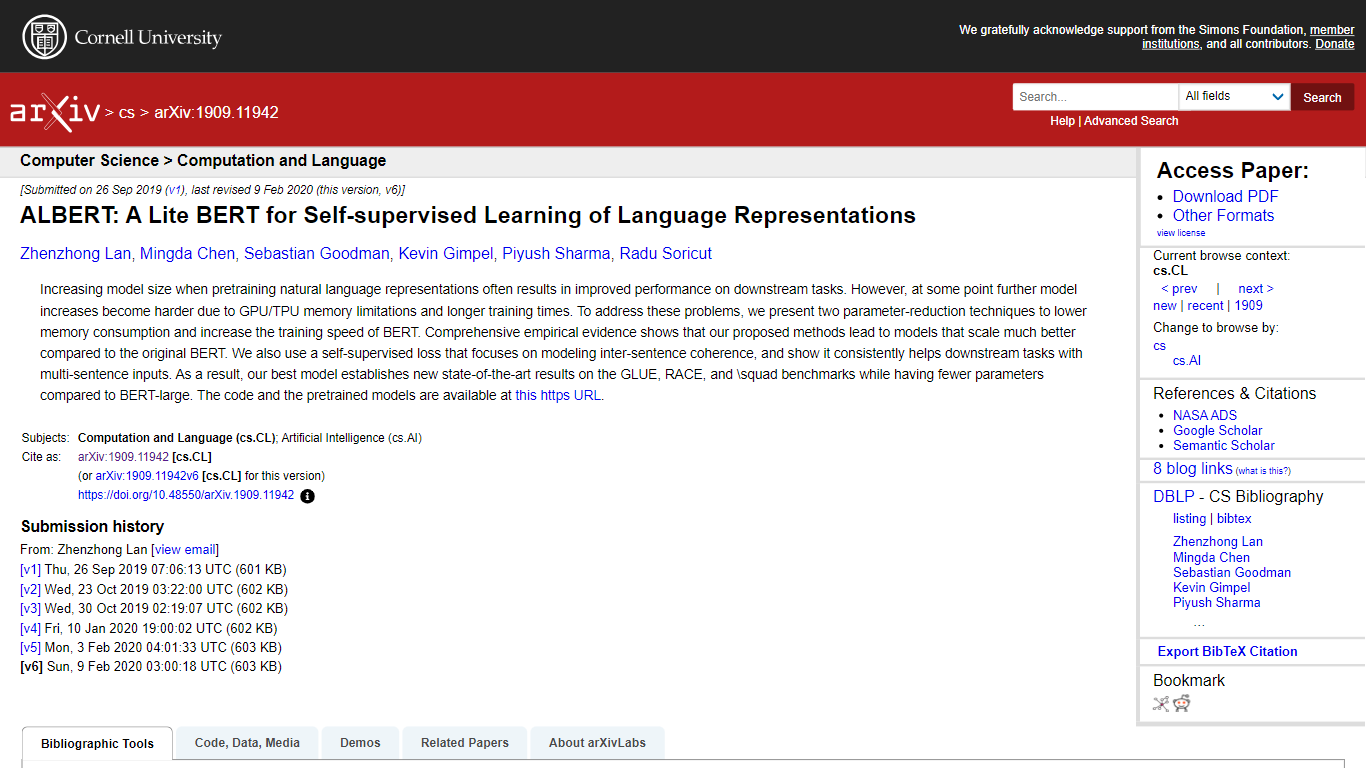
What is ALBERT?
ALBERT is an open source language model from Google Research that shrinks BERT's parameter count while matching or beating its benchmark scores. The name stands for A Lite BERT, and the architecture uses two tricks: factorized embedding parameterization splits the vocabulary matrix into smaller pieces, and cross-layer parameter sharing reuses weights across transformer layers.
Where BERT-large hits GPU memory walls during pretraining, ALBERT scales to larger hidden sizes with fewer total parameters. It also swaps BERT's next-sentence prediction loss for sentence-order prediction (SOP), which the authors found more effective for multi-sentence downstream tasks. The best ALBERT configuration set records on GLUE (89.4), RACE (89.4% accuracy), and SQuAD 2.0 (92.2 F1) at the time of publication.
Pretrained models and training code ship free on GitHub and load through Hugging Face Transformers. Researchers and NLP engineers use ALBERT when they need BERT-level performance on limited hardware or want a lighter model for fine-tuning on classification, question answering, and token-level tasks.
Tipp Studio (formerly Tipp) Upvotes
ALBERT Upvotes
Tipp Studio (formerly Tipp) Top Features
Starter plan covers 1-5 episodes per month at ???74.99
Import content from your blog, newsletter, or pasted articles
Clone your own voice and preview episodes before you publish
Add branded jingles and music to finished episodes
Translate and narrate content in multiple languages automatically
One-click publishing to Spotify, Apple Podcasts, YouTube, and more
Manage production at studio.tipp.so
ALBERT Top Features
Factorized embedding parameterization reduces memory vs standard BERT vocabulary matrices
Cross-layer parameter sharing cuts learnable weights across transformer layers
Sentence-order prediction (SOP) loss replaces BERT's next-sentence prediction
89.4% accuracy on RACE and 92.2 F1 on SQuAD 2.0 benchmark results
Pretrained models and code available on GitHub and Hugging Face Transformers
Tipp Studio (formerly Tipp) Category
- Large Language Model (LLM)
ALBERT Category
- Large Language Model (LLM)
Tipp Studio (formerly Tipp) Pricing Type
- Paid
ALBERT Pricing Type
- Free