UI to Code vs Codex
In the face-off between UI to Code vs Codex, which AI Code Assistant tool takes the crown? We scrutinize features, alternatives, upvotes, reviews, pricing, and more.
When we put UI to Code and Codex head to head, which one emerges as the victor?
If we were to analyze UI to Code and Codex, both of which are AI-powered code assistant tools, what would we find? The upvote count favors UI to Code, making it the clear winner. The upvote count for UI to Code is 6, and for Codex it's 4.
Feeling rebellious? Cast your vote and shake things up!
UI to Code
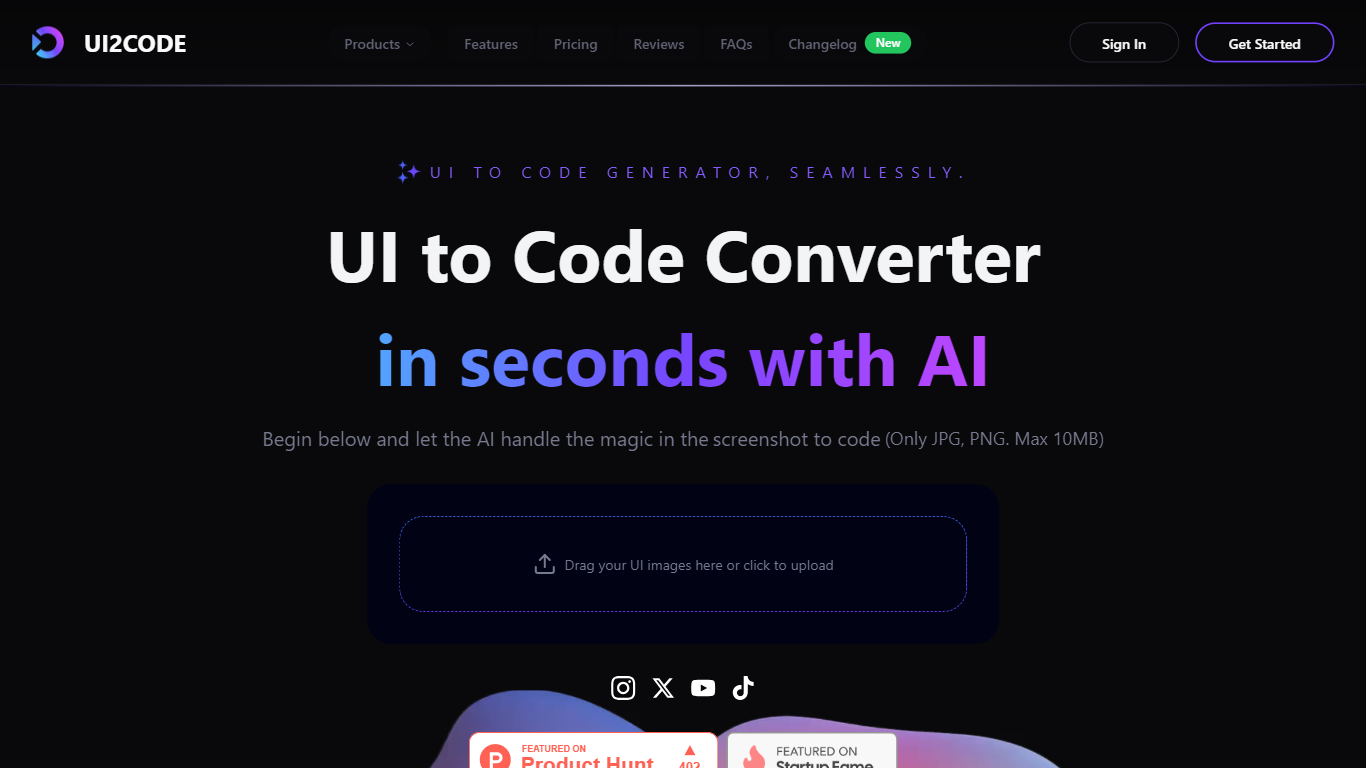

What is UI to Code?
UI to Code AI is a powerful tool designed to transform user interface designs into production-ready code without requiring any coding knowledge. The core functionality of this tool allows users to upload their design files, such as JPG or PNG images, and instantly receive clean, optimized code in various programming languages like Flutter, Swift, Kotlin, and HTML. This process is facilitated by advanced AI technology that automates the coding workflow, making it accessible to both designers and developers alike.
The target audience for UI to Code AI includes designers, developers, and anyone involved in creating user interfaces who may not have extensive coding skills. This tool is particularly beneficial for those who want to save time and reduce development costs by automating the coding process. By providing a user-friendly interface, it allows users to focus on their design work while the AI handles the technical aspects of code generation.
One of the unique value propositions of UI to Code AI is its ability to deliver accurate and efficient code generation in a matter of seconds. Users can expect high-quality output that requires minimal adjustments, making it a reliable choice for professionals in the field. The tool's ability to handle complex layouts and produce production-ready code sets it apart from other similar solutions in the market.
Key differentiators include the tool's multi-language support, which allows users to generate code in various popular programming languages, and its quick setup process that enables users to start generating code within just one minute. Additionally, the positive testimonials from users highlight the tool's effectiveness and user-friendliness, reinforcing its reputation as a game-changer in the coding landscape.
In terms of technical implementation, UI to Code AI leverages cutting-edge AI technology to interpret design inputs and convert them into precise code snippets. This innovative approach not only enhances the accuracy of the generated code but also streamlines the overall development process, making it an essential tool for modern designers and developers. The AI's ability to understand and translate complex images into functional code is a testament to its advanced capabilities and commitment to quality.
Codex
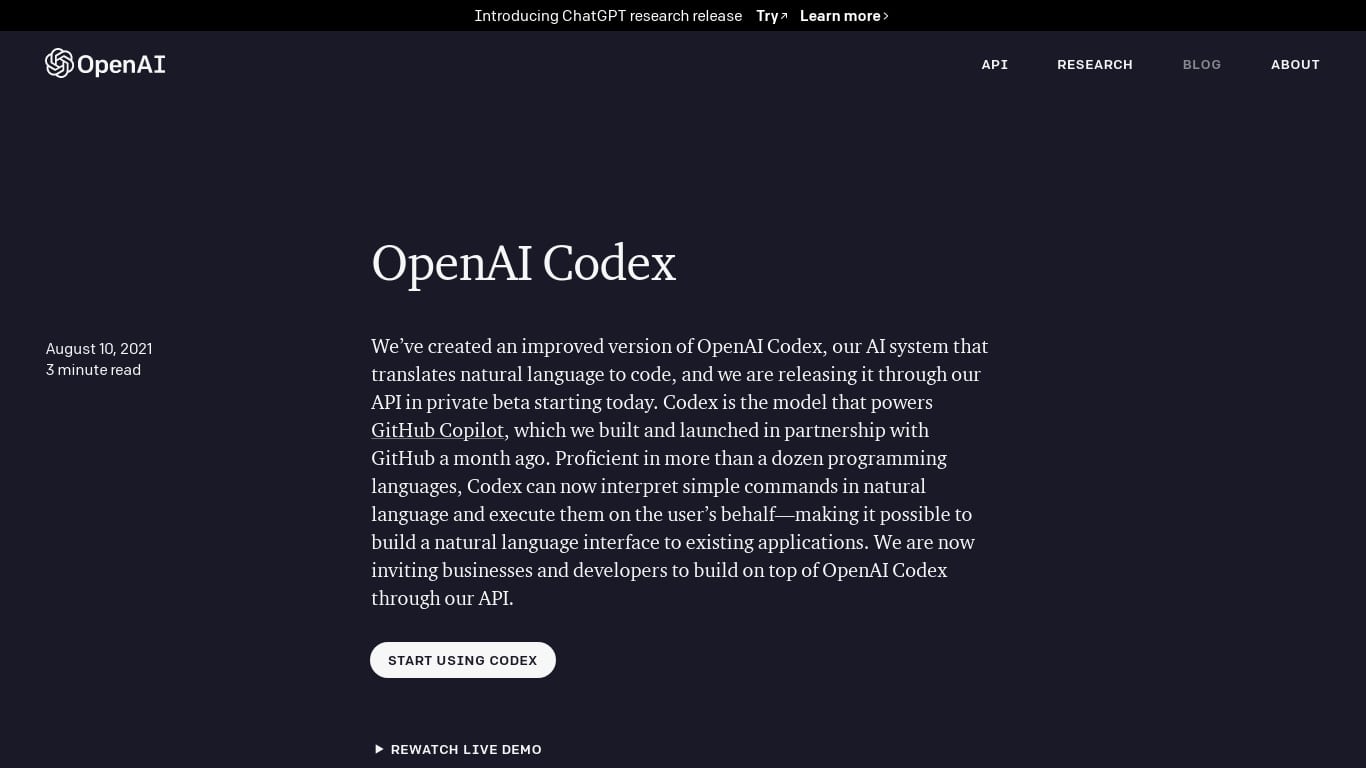
What is Codex?
OpenAI Codex is an AI system that translates natural language into code, now generally available with new features for developers and teams. It powers GitHub Copilot and supports over a dozen programming languages including Python, JavaScript, Go, and more. Codex can interpret simple English commands and execute them, enabling natural language interfaces to software and APIs.
The latest version, GPT-5-Codex, offers faster and more accurate coding assistance, accessible via an API and a new SDK that integrates the Codex agent into custom workflows and apps. Codex also features a Slack integration, allowing teams to delegate coding tasks and get answers directly within Slack channels.
Administrators benefit from enhanced tools like environment controls, usage monitoring, and analytics dashboards to manage Codex usage at scale. Codex is used globally by startups and enterprises alike to speed up code reviews, automate code cleanup, and reduce manual coding effort.
Technically, Codex has a larger memory for Python code (14KB) than its predecessor GPT-3, allowing it to consider more context when generating code. It runs as a cloud-based agent and also offers a local CLI tool for coding assistance in terminal environments.
OpenAI continues to improve Codex’s safety and reliability, scaling access carefully while supporting developers with documentation and community resources. Codex lowers barriers to programming by automating repetitive tasks and helping users map problems to existing code efficiently.
UI to Code Upvotes
Codex Upvotes
UI to Code Top Features
Instant Code Generation: Upload your design and receive ready-to-use code in seconds, saving you time and effort.
Multi-Language Support: Generate clean code in popular programming languages like Flutter, Swift, Kotlin, and HTML, catering to diverse development needs.
User-Friendly Interface: The platform is designed for ease of use, allowing anyone to upload designs and generate code without technical skills.
High Accuracy: The AI produces precise and efficient code, requiring minimal adjustments, which enhances productivity for developers.
Quick Setup: Get started in just one minute with a simple upload process, making it easy to integrate into your workflow.
Codex Top Features
🧑💻 Multi-language support: Works with Python, JavaScript, Go, and more to assist diverse coding needs.
⚙️ Codex SDK: Embed Codex’s coding agent into your own apps and workflows for custom automation.
💬 Slack integration: Assign coding tasks and get answers directly within Slack channels.
📊 Admin tools: Manage usage with environment controls and analytics dashboards for teams.
🚀 Code review automation: Speeds up pull request reviews and detects issues early to improve code quality.
UI to Code Category
- Code Assistant
Codex Category
- Code Assistant
UI to Code Pricing Type
- Freemium
Codex Pricing Type
- Freemium