
Last updated 08-10-2026
Category:
Reviews:
Join thousands of AI enthusiasts in the World of AI!
Klynk
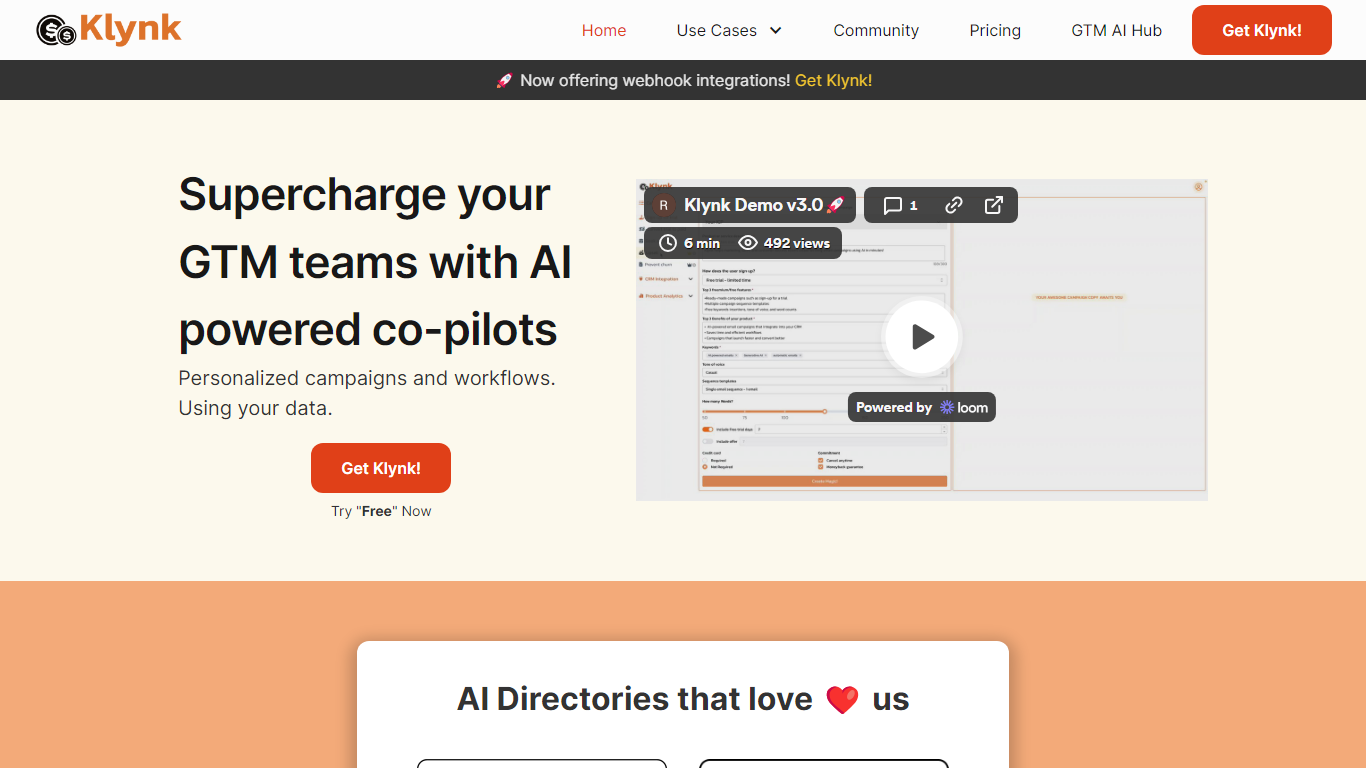
Klynk Orchestra is a modular customer success operations platform that coordinates onboarding, adoption tracking, renewal risk, and QBR prep from one foundation. Four modules replace scattered spreadsheets and manual follow-ups: Onboarding Orchestrator, CADR consumption reporting, Renewal Risk Escalator, and QBR Generator. A conversational insight layer ties CRM, support, and product usage data together so teams can ask what changed on an account without building another dashboard.
Generic CS platforms track health scores; Orchestra automates the workflows around those scores. Onboarding paths send smart nudges, CADR flags expansion signals from usage, and the renewal module surfaces risk 90 days before contract dates. That sequencing matters for lean teams that cannot babysit every account manually but still need executive-ready QBR narratives on short notice.
B2B SaaS customer success managers, CS ops leads, and RevOps teams on HubSpot or Salesforce are the natural buyers. FinTech and healthcare SaaS vendors with long onboarding cycles and consumption-based contracts benefit most from CADR and renewal modules. Pricing is quote-based after a 20-minute scoping call rather than self-serve checkout.
Onboarding Orchestrator with personalized steps, smart nudges, and an assistant that flags stalled paths to first value
CADR consumption and adoption reporting that surfaces expansion signals before revenue impact
Renewal Risk Escalator with 90-day early risk detection and built-in health scoring
QBR Generator that turns CRM and usage data into executive-ready quarterly review narratives
Conversational AI insight layer across CRM, support tickets, and product usage data
Native integrations with HubSpot and Salesforce for account and pipeline context
Modular rollout so teams can start with one or two Orchestra modules and expand later
Four focused CS modules cover onboarding through QBRs instead of one generic health score
90-day renewal risk detection gives teams lead time before contract conversations
Conversational insights explain usage changes without building custom BI reports
HubSpot and Salesforce connectivity fits common B2B SaaS stacks
Modular pricing lets smaller teams start with one workflow
No public pricing; every deal starts with a scoping call
Insight quality depends on clean CRM and product usage data feeds
Orchestra complements rather than replaces dedicated CS platforms like Gainsight
klynk.com redirects to an unrelated domain sale page, so klynk.ai is the canonical product URL
What is Klynk Orchestra?
Klynk Orchestra is Klynk's modular customer success operations platform. It includes Onboarding Orchestrator, CADR adoption reporting, Renewal Risk Escalator, and QBR Generator modules that automate high-impact CS workflows with conversational AI insights.
How does Klynk price Orchestra?
Klynk prices Orchestra based on the modules you enable and the number of customers you manage. Public list prices are not published; teams request a demo or book a 20-minute scoping call on klynk.ai/pricing for a custom quote.
Which CRMs does Klynk integrate with?
Klynk Orchestra works with HubSpot and Salesforce according to the product homepage. The insight layer connects CRM records with support and usage data so CSMs can query account changes in one place.
What does Klynk CADR track?
Klynk CADR reports consumption and adoption trends in near real time. It highlights expansion-ready accounts and explains usage shifts through conversational insights before downstream revenue metrics move.
How early does Klynk flag renewal risk?
Klynk Renewal Risk Escalator is built for 90-day early risk detection with health scoring. The module helps teams understand why accounts drift before formal renewal conversations start.
Can Klynk generate QBR decks automatically?
Yes, Klynk QBR Generator ingests account data and drafts clean quarterly business review narratives. An assistant helps teams explain outcomes and defend renewal decisions with data-backed storylines.