
Last updated 07-18-2026
Category:
Reviews:
Join thousands of AI enthusiasts in the World of AI!
SkootEco
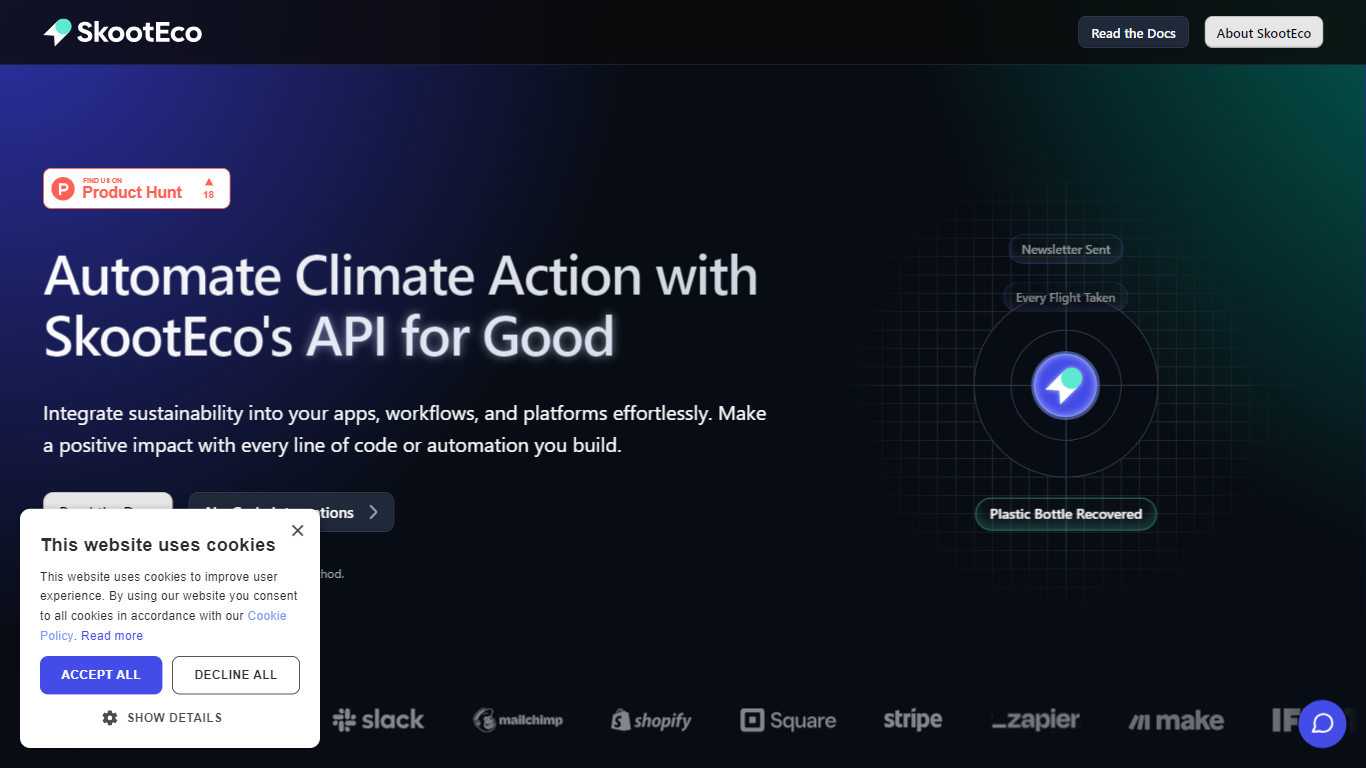
SkootEco is a developer platform for building climate-positive actions into apps, websites, and business workflows. Its REST API lets you fund tree planting, ocean plastic recovery, and verified carbon offset projects through a single allocation endpoint, then attribute each action to your SkootEco impact profile.
The developer portal also covers no-code routes through Zapier, Make, IFTTT, Pabbly, and direct integrations with tools like Shopify, Stripe, Mailchimp, and Strava. That makes it useful for product teams that want sustainability baked into checkout flows, signup events, or internal automations without maintaining custom infrastructure.
SkootEco works with certified partners including Eden, Veritree, Plastic Bank, Gold Standard, and Verra. Allocations can be shared with customer profiles, and impact totals surface on public impact profiles at skoot.eco.
REST API allocates trees, plastic bottles, and carbon offset through one PATCH endpoint
No-code integrations for Zapier, Make, IFTTT, and Pabbly with setup guides on the developer portal
Direct app connectors for Shopify, Stripe, Square, Mailchimp, and Strava
Impact profiles show cumulative trees planted, bottles recovered, and emissions offset
API tokens managed from the SkootEco dashboard with per-request and monthly allocation limits
Single API endpoint handles trees, plastic recovery, and carbon offset in one request.
No-code setup guides cover Zapier, Make, IFTTT, and Pabbly alongside direct commerce integrations.
Pay-as-you-go billing has no minimum charge when you make no allocations.
Requires an active payment method before you can generate API tokens.
Official per-unit prices are listed in GBP, which may require conversion for US-based teams.
Do I need a SkootEco account to use the API?
Yes. You need a SkootEco account, an active payment method, and a generated API token before making allocations or connecting no-code integrations.
How is SkootEco API pricing structured?
Pricing is pay-as-you-go. Official API docs list ??0.50 per tree, ??0.05 per plastic bottle, and ??0.015 per kg of carbon offset. Charges are billed monthly for allocations made in the previous month, with no minimum charge.
What allocation limits does the API enforce?
The API documentation sets per-request caps of 100 trees or bottles and 5 metric tons of carbon offset. Daily, weekly, and monthly limits also apply, topping out at 50,000 trees or bottles and 500 metric tons of offset per month.
Can I attribute allocations to a customer or collaborator?
Yes. Allocation requests accept a metadata.with field for another profile ID or email, so customer actions can appear on both profiles. Profile owners can also invite collaborators from the dashboard.
Which no-code platforms does SkootEco support?
The developer portal lists integration guides for Zapier, Make, IFTTT, and Pabbly, plus connectors for Mailchimp, Shopify, Square, Strava, and Stripe.
Where can I find API documentation and code examples?
Full API reference, authentication details, and cURL, JavaScript, and Python examples are published at skootuk.github.io/public-documentation. The developer portal links to those docs from every page.