
Last updated 07-30-2026
Category:
Reviews:
Join thousands of AI enthusiasts in the World of AI!
tinyAlbert (formerly tinyEinstein)
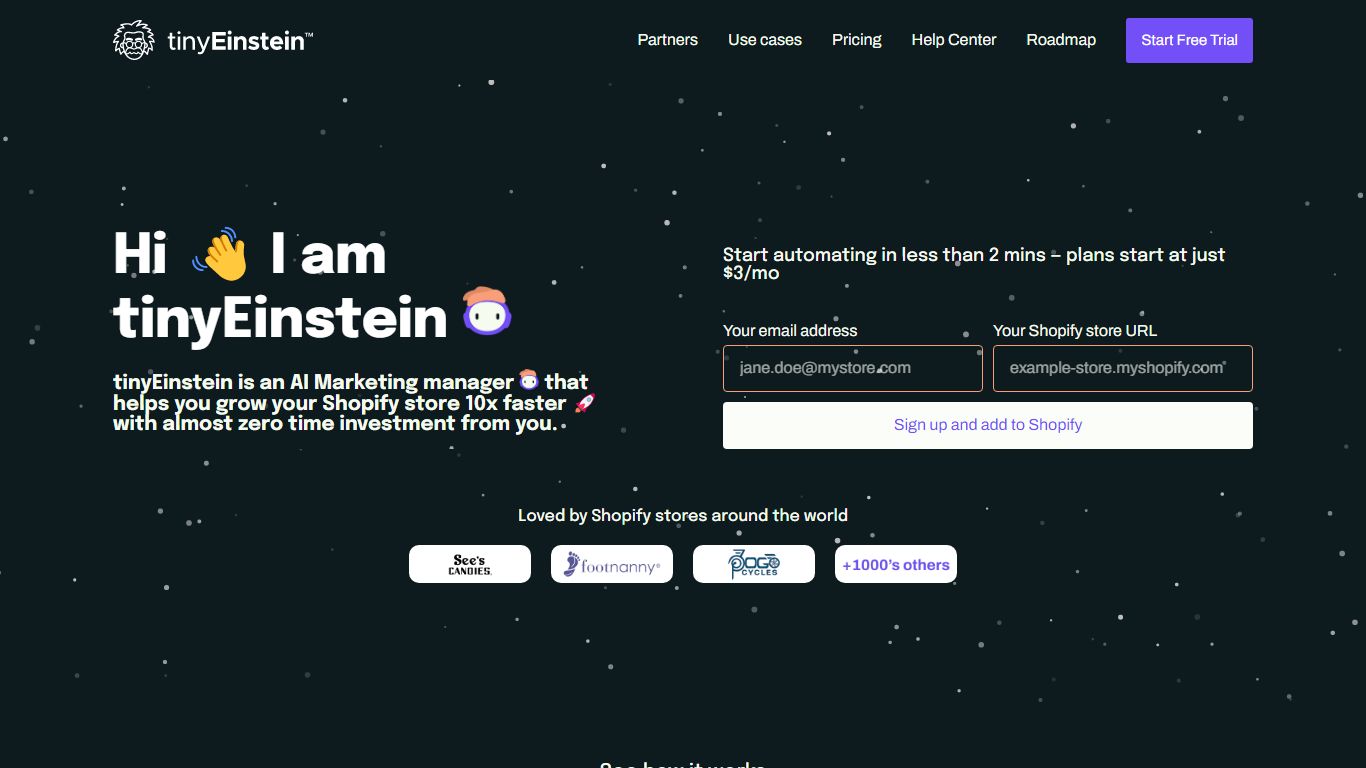
tinyAlbert plans, writes, and sends Shopify email campaigns on autopilot so store owners can skip agency timelines. Install it from the Shopify App Store, connect your store, and the AI handles abandoned cart recovery, welcome sequences, browse-abandon flows, win-back emails, and product review requests. Merchants who want revenue from email without building flows by hand get a manager-style workflow baked into the app.
Unlike general email platforms such as Mailchimp or Klaviyo, tinyAlbert only works inside Shopify. It pulls customer and order data from your store, segments audiences with AI, and ships pre-built lifecycle flows in minutes rather than days. Case studies on the site cite setup in under 20 minutes and holiday campaign calendars activated with one click, which is a narrower trade-off: you get Shopify-native automation fast, but the app does not serve WooCommerce, BigCommerce, or standalone sites.
The tool fits Shopify merchants, DTC brands, and small teams that need weekly newsletters and promotional sends without hiring an agency. OverActive Media, an esports merchandising company, reported saving 20 hours per week across four Shopify stores after adopting tinyAlbert for email automation.
AI Email Marketing plan starts at $3 per month for up to 100 contacts on Shopify
Pre-built flows for abandoned cart, welcome series, browse abandon, win-back, and product reviews
AI writes email copy and refreshes templates with one-click holiday campaign activation
Campaign calendar plans a year of promotional sends with pre-built seasonal templates
Analytics dashboard tracks delivery, revenue, and audience growth tied to Shopify orders
Rated 4.6 out of 5 on the Shopify App Store across 73 merchant reviews
Integrates with Gorgias, Recharge, Aftership, Meta Advertising, and Typeform
Shopify-native integration pulls customer and order data for segmented lifecycle emails.
Pre-built flows cover cart recovery, welcome, browse abandon, win-back, and product reviews out of the box.
Entry pricing at $3 per month with a 7-day trial keeps costs low for stores under 100 contacts.
AI generates copy and plans a campaign calendar so merchants skip agency timelines.
Works only with Shopify; no support for other e-commerce platforms.
Contact-based overage at $3 per 100 subscribers adds up quickly as your list grows.
Advanced customization may be limited compared to full-service ESPs like Klaviyo.
How much does tinyAlbert cost?
tinyAlbert starts at $3 per month for up to 100 contacts on the AI Email Marketing plan. If you exceed 100 contacts, tinyAlbert charges an extra $3 per month for each additional block of 100 contacts. Every plan includes a 7-day free trial.
Does tinyAlbert work outside Shopify?
No. tinyAlbert is designed specifically for Shopify stores and installs from the Shopify App Store. It uses your Shopify customer, product, and order data to build segmented email campaigns, so it does not support WooCommerce, BigCommerce, or standalone websites.
What email flows does tinyAlbert automate?
tinyAlbert automates abandoned cart recovery, welcome series, browse-abandon reminders, win-back campaigns, and product review requests. The AI segments audiences and personalizes copy for each flow so messages match where shoppers are in the purchase journey.
How long does tinyAlbert setup take?
tinyAlbert advertises getting stores running in about 30 minutes. Installation happens through the Shopify App Store in three steps: install the app, configure AI tuning, and start sending automated emails. A published case study reports full program setup in under 20 minutes.
Does tinyAlbert include a free trial?
Yes. tinyAlbert offers a 7-day free trial on its AI Email Marketing plan before billing begins. The Shopify App Store listing confirms the trial is available at the $3 per month entry tier with unlimited messages for up to 100 contacts.
What analytics does tinyAlbert provide?
tinyAlbert tracks campaign delivery, open rates, click-through rates, conversion rates, revenue linked to Shopify orders, and audience growth from a performance dashboard. Merchants can review individual campaign reports and use the data to adjust future sends.