ALBERT vs ZeroGPT
Explore the showdown between ALBERT vs ZeroGPT and find out which AI Large Language Model (LLM) tool wins. We analyze upvotes, features, reviews, pricing, alternatives, and more.
When comparing ALBERT and ZeroGPT, which one rises above the other?
When we contrast ALBERT with ZeroGPT, both of which are exceptional AI-operated large language model (llm) tools, and place them side by side, we can spot several crucial similarities and divergences. Interestingly, both tools have managed to secure the same number of upvotes. Join the aitools.fyi users in deciding the winner by casting your vote.
Disagree with the result? Upvote your favorite tool and help it win!
ALBERT
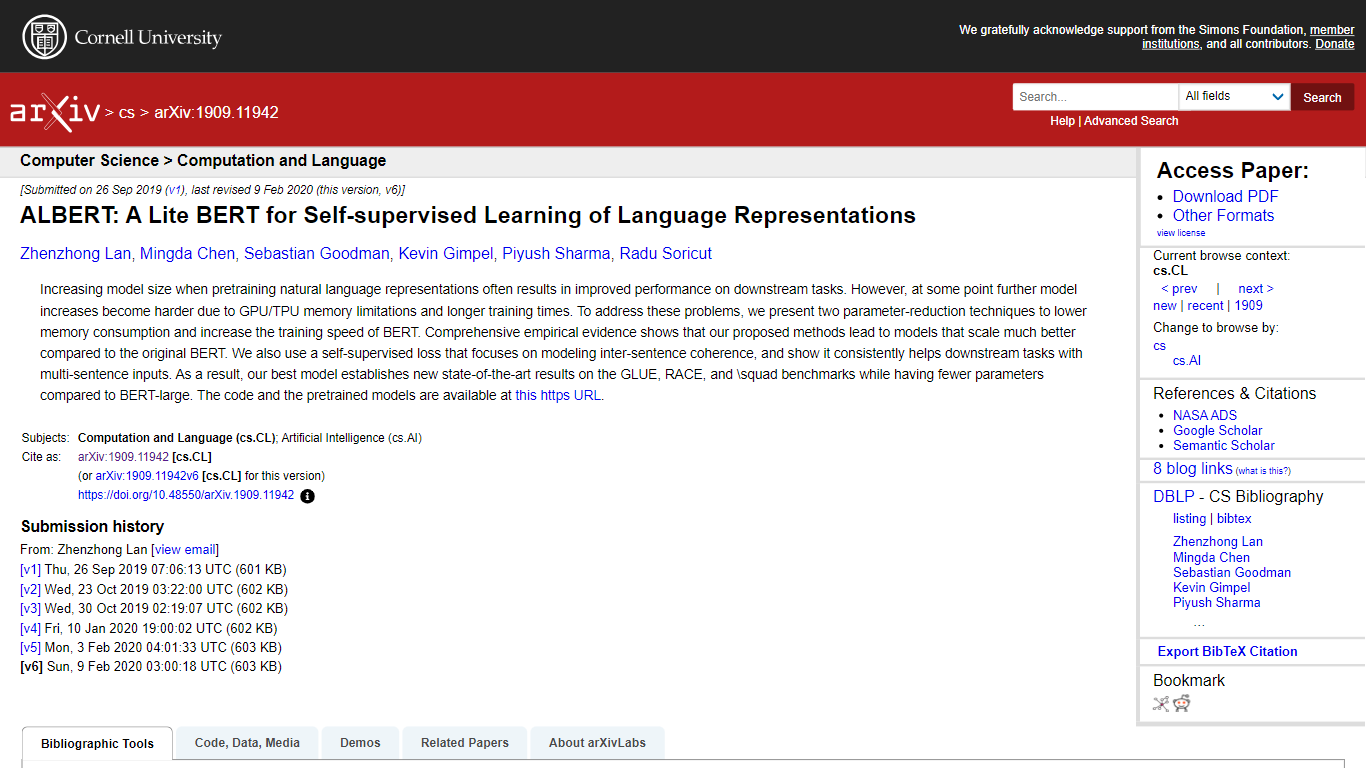

What is ALBERT?
ALBERT is an open source language model from Google Research that shrinks BERT's parameter count while matching or beating its benchmark scores. The name stands for A Lite BERT, and the architecture uses two tricks: factorized embedding parameterization splits the vocabulary matrix into smaller pieces, and cross-layer parameter sharing reuses weights across transformer layers.
Where BERT-large hits GPU memory walls during pretraining, ALBERT scales to larger hidden sizes with fewer total parameters. It also swaps BERT's next-sentence prediction loss for sentence-order prediction (SOP), which the authors found more effective for multi-sentence downstream tasks. The best ALBERT configuration set records on GLUE (89.4), RACE (89.4% accuracy), and SQuAD 2.0 (92.2 F1) at the time of publication.
Pretrained models and training code ship free on GitHub and load through Hugging Face Transformers. Researchers and NLP engineers use ALBERT when they need BERT-level performance on limited hardware or want a lighter model for fine-tuning on classification, question answering, and token-level tasks.
ZeroGPT
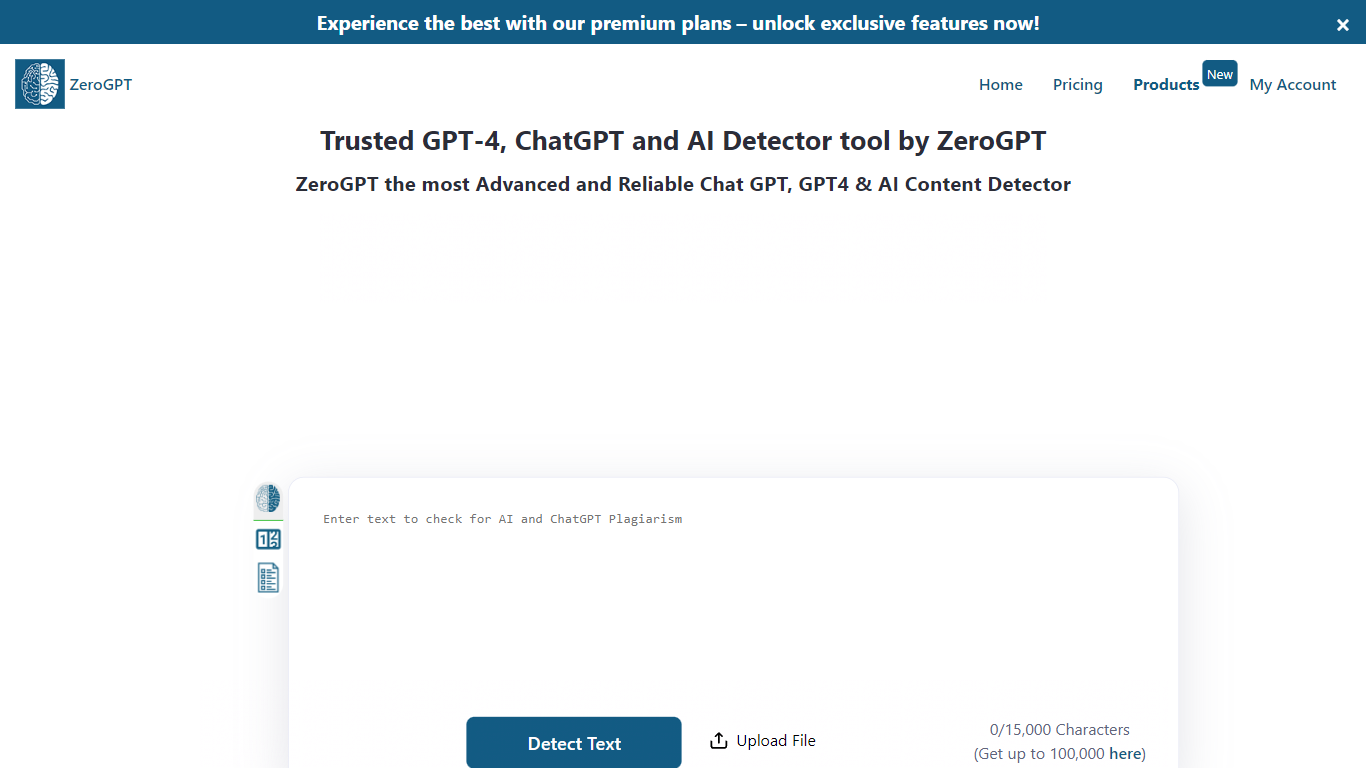
What is ZeroGPT?
ZeroGPT scans pasted text or uploaded files to estimate whether ChatGPT, GPT-5, Gemini, Claude, or other LLM models wrote it, highlighting AI sentences with percentage scores. The free detector handles up to 15,000 characters per check and sits inside a larger writing suite with humanizer, plagiarism, grammar, and summarizer tools.
Standalone AI detectors often flag whole documents without sentence-level detail, while plagiarism scanners ignore whether the prose itself came from a model. ZeroGPT combines DeepAnalyse highlighting, PDF detection reports, batch uploads, and companion tools like an AI image detector and ZeroCHAT assistant on the same domain.
Teachers, publishers, recruiters, and SEO teams use ZeroGPT when they need fast LLM screening before accepting submissions. Free accounts work without a card, premium MAX and EXPERT subscriptions unlock higher character limits such as 350,000 characters per scan, and pay-as-you-go API access is available for custom integrations.
ALBERT Upvotes
ZeroGPT Upvotes
ALBERT Top Features
Factorized embedding parameterization reduces memory vs standard BERT vocabulary matrices
Cross-layer parameter sharing cuts learnable weights across transformer layers
Sentence-order prediction (SOP) loss replaces BERT's next-sentence prediction
89.4% accuracy on RACE and 92.2 F1 on SQuAD 2.0 benchmark results
Pretrained models and code available on GitHub and Hugging Face Transformers
ZeroGPT Top Features
Free AI detector supports up to 15,000 characters per scan on the homepage
Premium tiers raise limits to 350,000 characters per check per upgrade messaging
DeepAnalyse highlights AI-written sentences with percentage gauges per document
Detects ChatGPT, GPT-5, Gemini, Grok, Claude, DeepSeek, and LLaMA family outputs
Batch file uploads process multiple documents from the user dashboard
Suite includes humanizer, plagiarism checker, paraphraser, grammar, translator, and ZeroCHAT
WhatsApp and Telegram bots expose detection and writing tools outside the browser
ALBERT Category
- Large Language Model (LLM)
ZeroGPT Category
- Large Language Model (LLM)
ALBERT Pricing Type
- Free
ZeroGPT Pricing Type
- Freemium