DeBERTa vs ggml.ai
Explore the showdown between DeBERTa vs ggml.ai and find out which AI Large Language Model (LLM) tool wins. We analyze upvotes, features, reviews, pricing, alternatives, and more.
In a face-off between DeBERTa and ggml.ai, which one takes the crown?
When we contrast DeBERTa with ggml.ai, both of which are exceptional AI-operated large language model (llm) tools, and place them side by side, we can spot several crucial similarities and divergences. The upvote count shows a clear preference for ggml.ai. ggml.ai has garnered 7 upvotes, and DeBERTa has garnered 6 upvotes.
Think we got it wrong? Cast your vote and show us who's boss!
DeBERTa
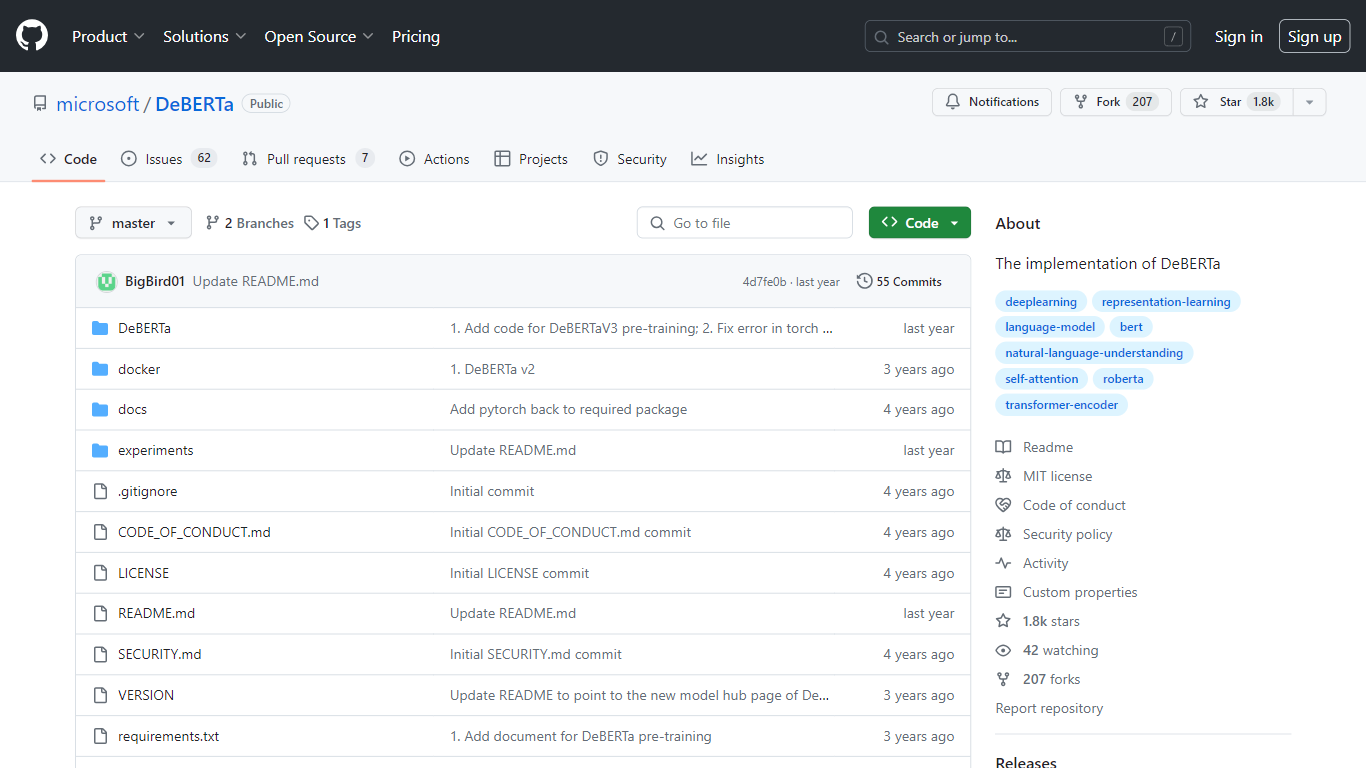

What is DeBERTa?
DeBERTa enhances natural language understanding by using a disentangled attention mechanism that separately encodes word content and position. This allows the model to better capture relationships between words in a sentence, improving context comprehension.
What distinguishes DeBERTa is its ELECTRA-style pre-training combined with gradient-disentangled embedding sharing. This approach increases training efficiency and model performance, enabling smaller models to outperform larger ones on benchmarks such as MNLI and SQuAD v2.0.
DeBERTa offers a variety of pre-trained models ranging from 22 million to 1.5 billion parameters, including multilingual versions supporting over 100 languages. It supports integration with PyTorch, Docker, and pip, and provides scripts and documentation for pre-training and fine-tuning.
The tool has achieved state-of-the-art results on benchmarks like SuperGLUE, surpassing human performance with its large-scale models. Its balance of size, efficiency, and accuracy makes it suitable for both research and practical NLP applications.
Maintained on GitHub by Microsoft researchers, DeBERTa encourages community contributions and offers support for collaboration and inquiries.
ggml.ai
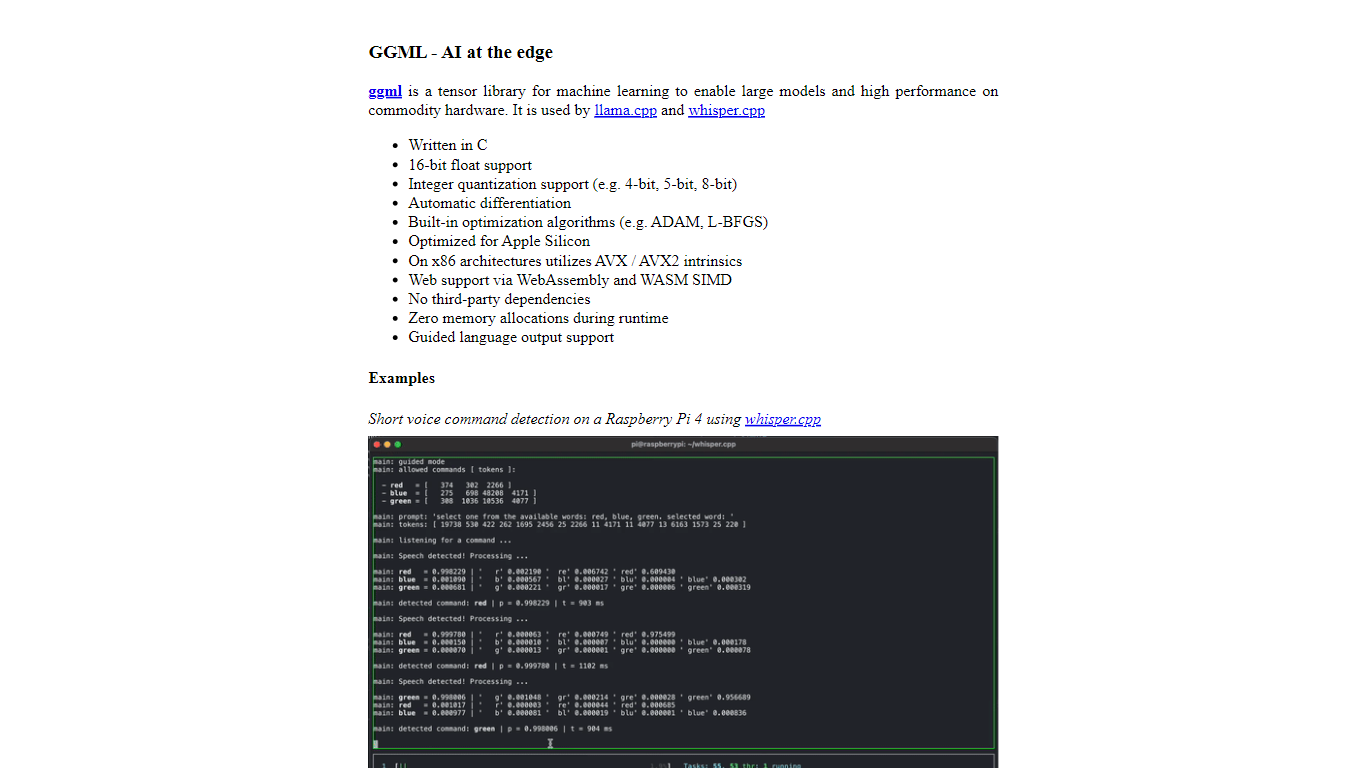
What is ggml.ai?
ggml runs large language and speech models on everyday CPUs and GPUs through a compact C tensor library built for on-device inference. ML engineers and app developers adopt it via llama.cpp and whisper.cpp when they want LLaMA or Whisper workloads without cloud-only dependencies.
Frameworks like PyTorch optimize for training clusters and heavy runtimes. ggml keeps the core library minimal with zero runtime memory allocations, no third-party dependencies, and integer quantization so llama.cpp can serve Meta LLaMA weights on laptops and Apple Silicon.
The ggml.ai company was founded in 2023 by Georgi Gerganov to support the library and was acquired by Hugging Face in 2026. The core ggml project stays MIT licensed with open development on GitHub.
DeBERTa Upvotes
ggml.ai Upvotes
DeBERTa Top Features
Disentangled attention separates word content and position for better context understanding 📚
ELECTRA-style pre-training boosts training efficiency and model accuracy ⚡
Wide range of pre-trained models from 22M to 1.5B parameters for flexible use 🧩
Multilingual support covering over 100 languages for global applications 🌍
Easy integration with PyTorch, Docker, and pip for quick deployment 🚀
Pre-trained models available on Hugging Face and GitHub releases
Detailed documentation and fine-tuning scripts included
ggml.ai Top Features
Powers llama.cpp for Meta LLaMA inference and whisper.cpp for OpenAI Whisper speech models
Written in C with zero runtime memory allocations during inference
Integer quantization support for smaller models on commodity hardware
No third-party dependencies in the core tensor library
Cross-platform low-level implementation with broad hardware support
MIT licensed open-core library with public development on GitHub
DeBERTa Category
- Large Language Model (LLM)
ggml.ai Category
- Large Language Model (LLM)
DeBERTa Pricing Type
- Free
ggml.ai Pricing Type
- Free