GigaChat vs ggml.ai
In the battle of GigaChat vs ggml.ai, which AI Large Language Model (LLM) tool comes out on top? We compare reviews, pricing, alternatives, upvotes, features, and more.
Between GigaChat and ggml.ai, which one is superior?
Upon comparing GigaChat with ggml.ai, which are both AI-powered large language model (llm) tools, The upvote count shows a clear preference for ggml.ai. ggml.ai has received 7 upvotes from aitools.fyi users, while GigaChat has received 6 upvotes.
You don't agree with the result? Cast your vote to help us decide!
GigaChat
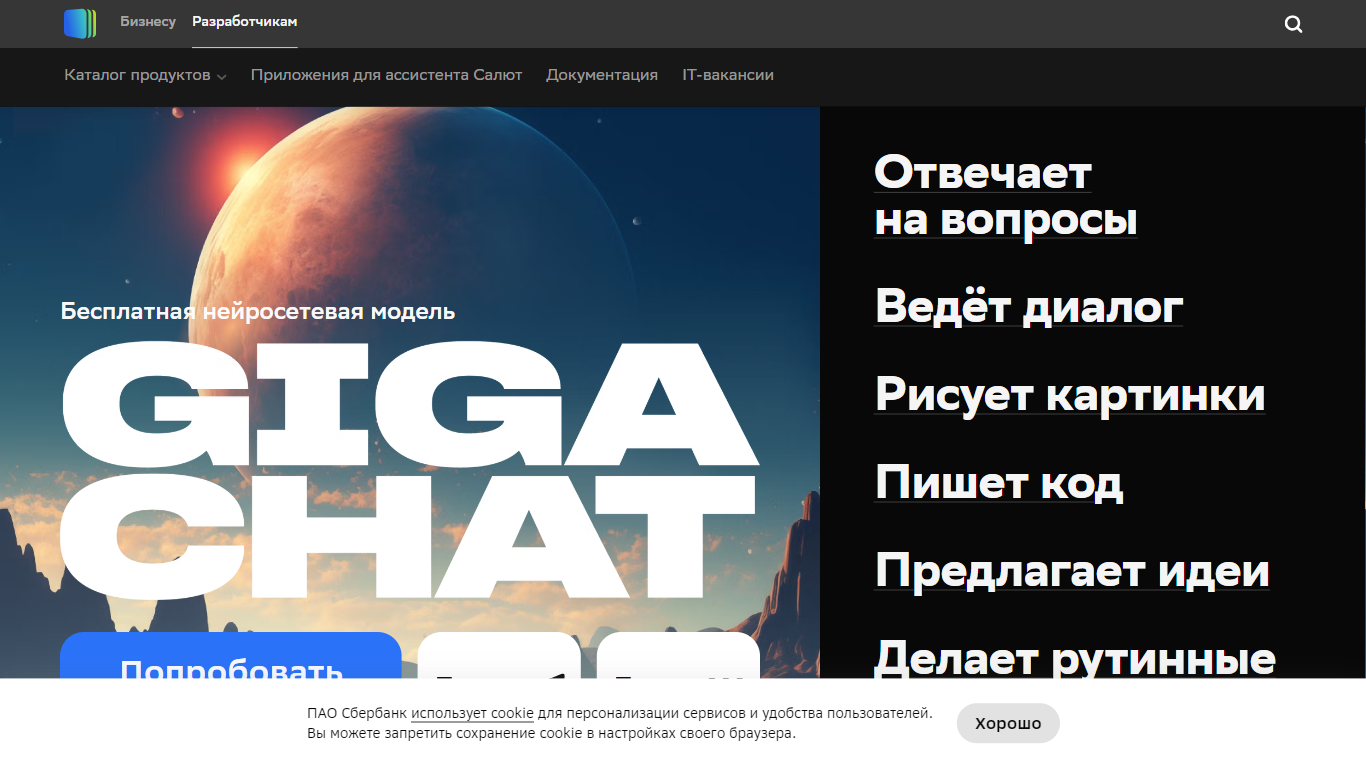

What is GigaChat?
GigaChat is a Russian-language multimodal neural network developed by Sber that supports a wide range of tasks including text and image generation from prompts, and interactive dialogue. It is designed to serve both businesses and developers by providing advanced AI capabilities accessible via APIs and integration tools. The platform offers a conversational agent that can simulate human-like interactions, answer questions, and assist with creative content such as scripting for animations.
The technology behind GigaChat emphasizes multimodality, allowing it to process and generate content across different media types, enhancing its versatility for various applications. Sber also provides AI assistants under the brand name 'Салют' which can be integrated into business workflows to improve customer engagement and automate routine tasks.
GigaChat targets developers, enterprises, and creative professionals who need intelligent conversational agents or content generation tools in Russian. Its value lies in combining natural language understanding with multimodal generation, enabling richer and more context-aware interactions.
Technically, GigaChat is accessible through Sber's developer portal, offering APIs that facilitate embedding its capabilities into applications and services. This approach supports scalable deployment and customization according to specific business needs.
Overall, GigaChat stands out for its focus on the Russian language and multimodal AI, making it a unique offering for users seeking advanced neural network solutions in this linguistic and cultural context.
ggml.ai
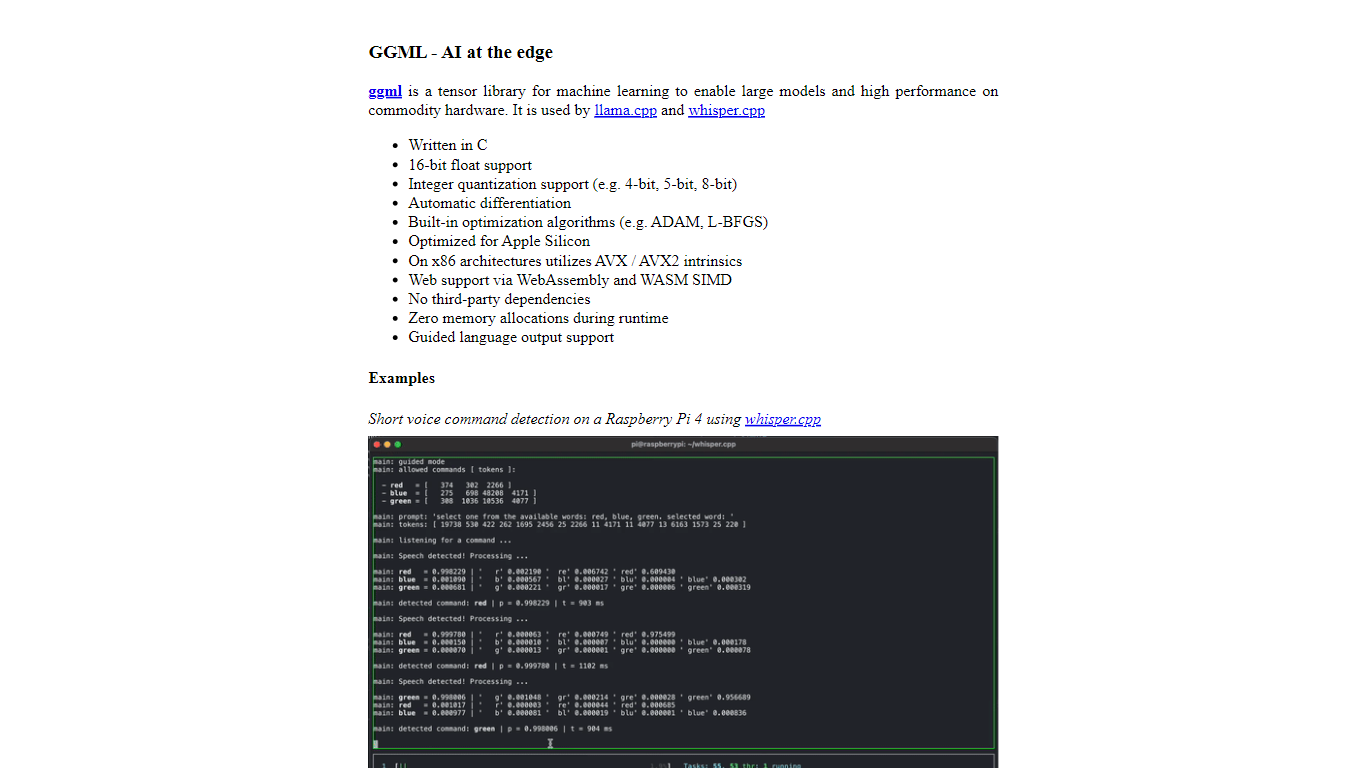
What is ggml.ai?
ggml runs large language and speech models on everyday CPUs and GPUs through a compact C tensor library built for on-device inference. ML engineers and app developers adopt it via llama.cpp and whisper.cpp when they want LLaMA or Whisper workloads without cloud-only dependencies.
Frameworks like PyTorch optimize for training clusters and heavy runtimes. ggml keeps the core library minimal with zero runtime memory allocations, no third-party dependencies, and integer quantization so llama.cpp can serve Meta LLaMA weights on laptops and Apple Silicon.
The ggml.ai company was founded in 2023 by Georgi Gerganov to support the library and was acquired by Hugging Face in 2026. The core ggml project stays MIT licensed with open development on GitHub.
GigaChat Upvotes
ggml.ai Upvotes
GigaChat Top Features
🤖 Multimodal AI capabilities generate text and images from prompts
💬 Human-like conversational agent for interactive dialogues
🔧 API access for easy integration into apps and services
📈 AI assistants 'Салют' automate customer engagement tasks
🎨 Supports creative content like animation scripting and storytelling
ggml.ai Top Features
Powers llama.cpp for Meta LLaMA inference and whisper.cpp for OpenAI Whisper speech models
Written in C with zero runtime memory allocations during inference
Integer quantization support for smaller models on commodity hardware
No third-party dependencies in the core tensor library
Cross-platform low-level implementation with broad hardware support
MIT licensed open-core library with public development on GitHub
GigaChat Category
- Large Language Model (LLM)
ggml.ai Category
- Large Language Model (LLM)
GigaChat Pricing Type
- Freemium
ggml.ai Pricing Type
- Free