OneOver vs ggml.ai
Dive into the comparison of OneOver vs ggml.ai and discover which AI Large Language Model (LLM) tool stands out. We examine alternatives, upvotes, features, reviews, pricing, and beyond.
When comparing OneOver and ggml.ai, which one rises above the other?
When we compare OneOver and ggml.ai, two exceptional large language model (llm) tools powered by artificial intelligence, and place them side by side, several key similarities and differences come to light. In the race for upvotes, ggml.ai takes the trophy. The upvote count for ggml.ai is 7, and for OneOver it's 6.
Think we got it wrong? Cast your vote and show us who's boss!
OneOver

What is OneOver?
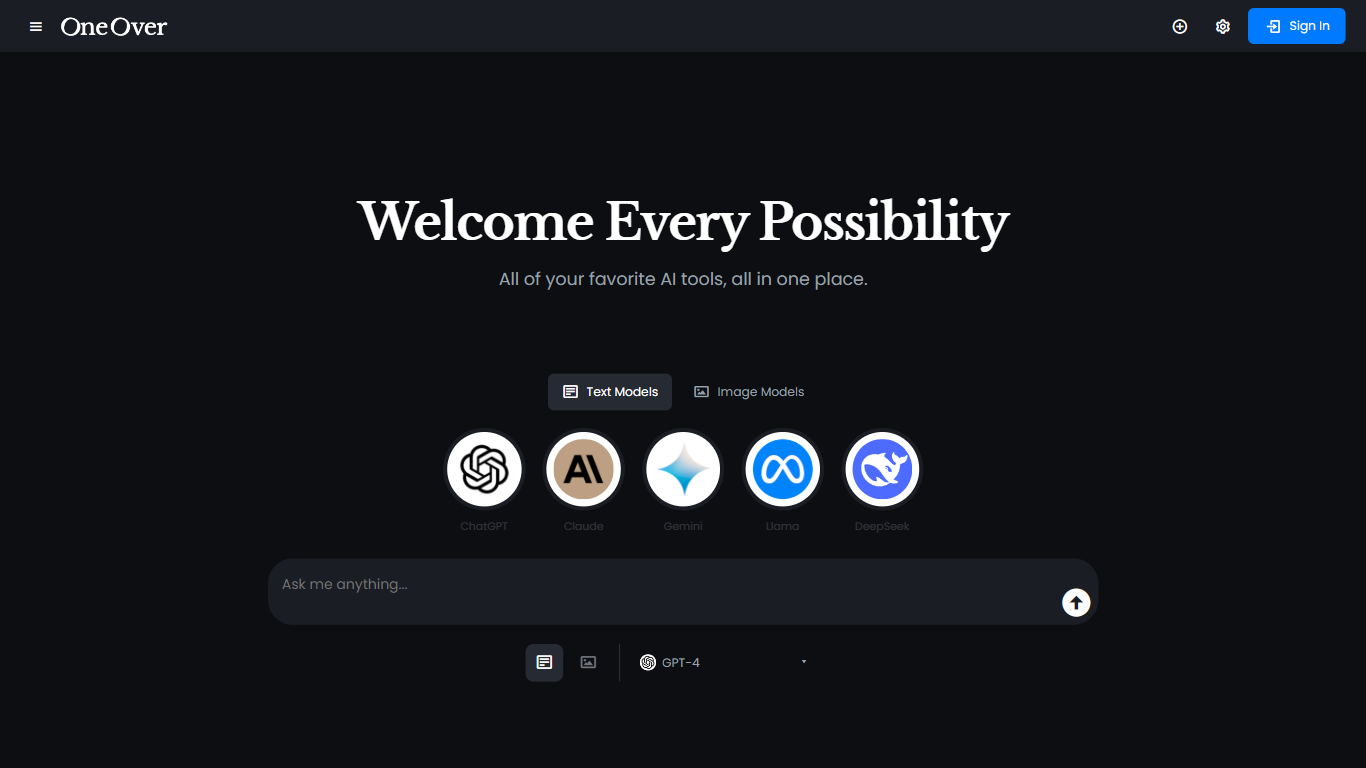
OneOver is a creative studio that puts multi-model chat, image generation, video, voice, and music in one browser workspace. You can run GPT, Claude, Gemini, Grok, and dozens of other models in a single thread, attach PDFs and images, flip on web search, and swap models without losing context. Guests get five chat messages before signup, and new accounts receive 50 one-time starter credits.
Where most tools make you pick one provider and buy separate subscriptions for images or video, OneOver routes everything through one shared credit balance. Subscription refills, plan bonuses, and pay-as-you-go packs all spend across chat, diffusion, video, speech, music, and playground mini apps. Switching from GPT-5.4 Nano to Claude Opus 5 is a dropdown change in the same conversation, not a copy-paste hop between sites.
Creators and marketers use OneOver to draft copy, iterate visuals, and turn prompts or photos into short clips from one library. Developers can hit the same model routes through a REST API with streaming support. Pro and Studio also ship seat-based team plans that pool monthly credits with member soft limits and one invoice.
ggml.ai
What is ggml.ai?
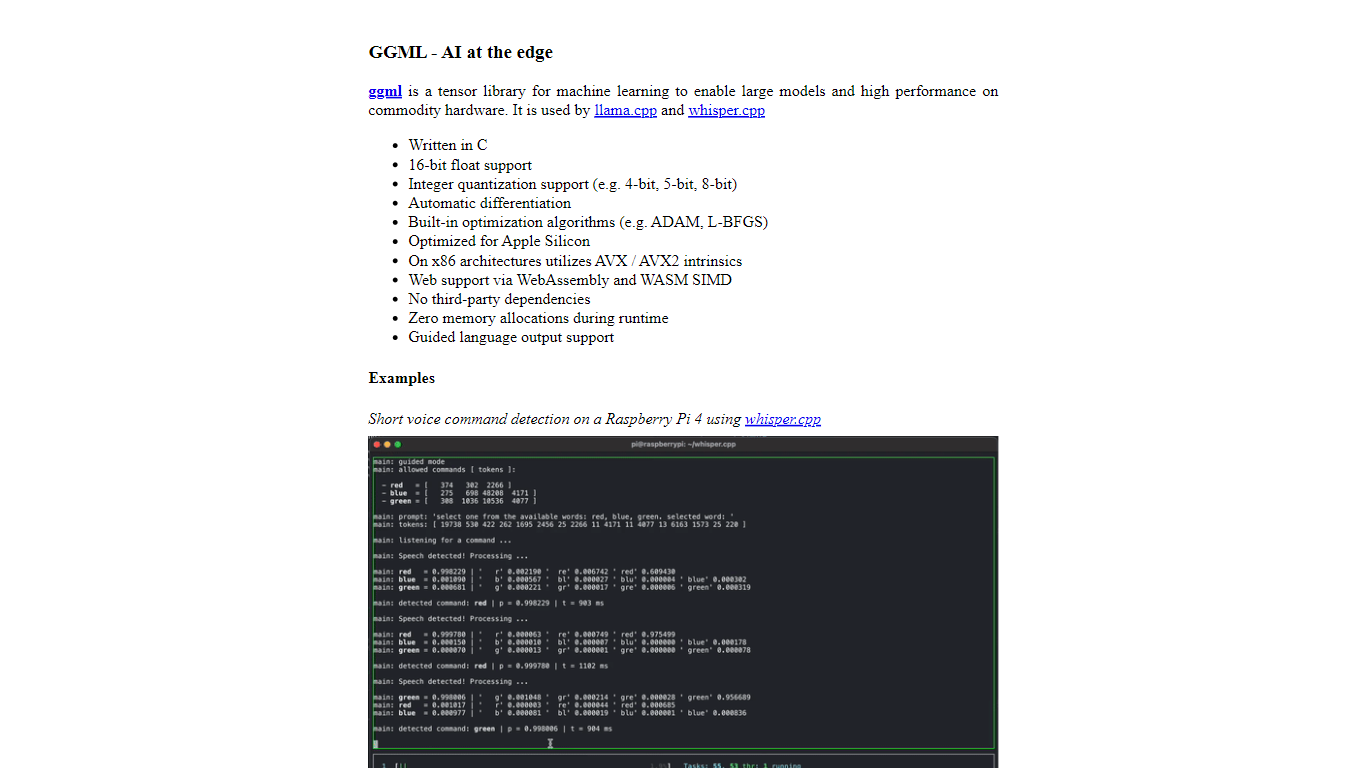
ggml runs large language and speech models on everyday CPUs and GPUs through a compact C tensor library built for on-device inference. ML engineers and app developers adopt it via llama.cpp and whisper.cpp when they want LLaMA or Whisper workloads without cloud-only dependencies.
Frameworks like PyTorch optimize for training clusters and heavy runtimes. ggml keeps the core library minimal with zero runtime memory allocations, no third-party dependencies, and integer quantization so llama.cpp can serve Meta LLaMA weights on laptops and Apple Silicon.
The ggml.ai company was founded in 2023 by Georgi Gerganov to support the library and was acquired by Hugging Face in 2026. The core ggml project stays MIT licensed with open development on GitHub.
OneOver Upvotes
ggml.ai Upvotes
OneOver Top Features
Switch between GPT-5.6 Sol, Claude Opus 5, Gemini 3.6 Flash, and Grok 4.6 in one thread without losing context
Pro includes 1,400 credits per month (1,000 base plus 400 bonus) for chat, images, and short video work
Text-to-speech and text-to-music generators sit beside image and video studios in the same credit pool
Pay-as-you-go packs start at $5 for 500 credits that never expire and stack with subscription balances
REST API covers chat, image generation, and usage metering with streaming and one-field model swaps
Ten playground mini apps include Meme Generator, Upscaler, and Homework Helper with costs from 1 credit
ggml.ai Top Features
Powers llama.cpp for Meta LLaMA inference and whisper.cpp for OpenAI Whisper speech models
Written in C with zero runtime memory allocations during inference
Integer quantization support for smaller models on commodity hardware
No third-party dependencies in the core tensor library
Cross-platform low-level implementation with broad hardware support
MIT licensed open-core library with public development on GitHub
OneOver Category
- Large Language Model (LLM)
ggml.ai Category
- Large Language Model (LLM)
OneOver Pricing Type
- Freemium
ggml.ai Pricing Type
- Free