Pythia vs Stellaris AI
When comparing Pythia vs Stellaris AI, which AI Large Language Model (LLM) tool shines brighter? We look at pricing, alternatives, upvotes, features, reviews, and more.
In a comparison between Pythia and Stellaris AI, which one comes out on top?
When we put Pythia and Stellaris AI side by side, both being AI-powered large language model (llm) tools, Interestingly, both tools have managed to secure the same number of upvotes. You can help us determine the winner by casting your vote and tipping the scales in favor of one of the tools.
You don't agree with the result? Cast your vote to help us decide!
Pythia

What is Pythia?
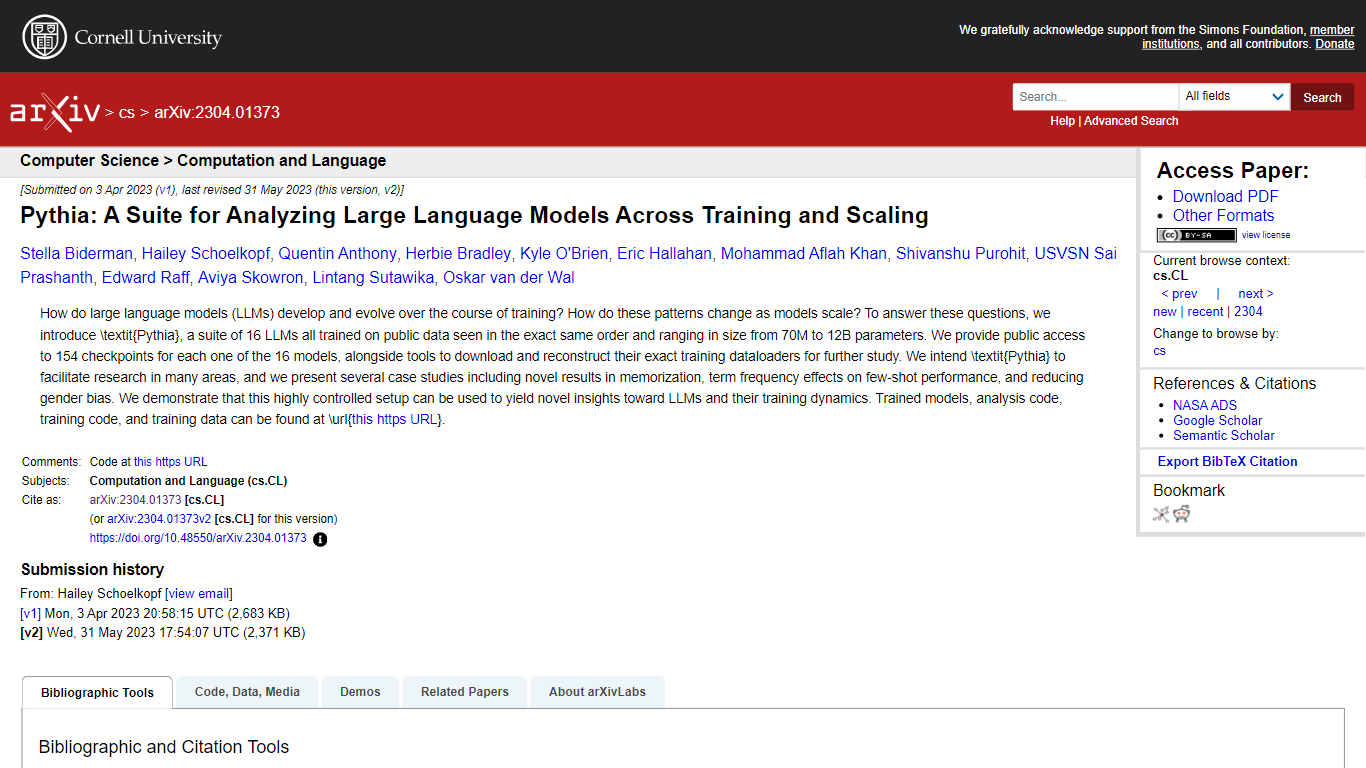
Researchers studying transformer training need checkpoints taken throughout pretraining, not just a finished weight file. Pythia delivers that by training matched LLM families on public data in a fixed order, then releasing weights, checkpoints, training code, and dataloader tools so you can inspect behavior at specific steps.
Where most LLM releases ship one finished checkpoint, Pythia publishes 154 snapshots per model and keeps data order constant across sizes. That control makes it useful for memorization studies, scaling comparisons, and causal training interventions, but it is not aimed at plug-and-play chat deployment the way instruction-tuned assistants are.
The suite targets machine learning researchers, interpretability labs, and alignment teams who need reproducible training trajectories. Typical work includes comparing checkpoints for memorization, testing how term frequency affects few-shot scores, and reproducing published case studies from the repository.
Stellaris AI
What is Stellaris AI?
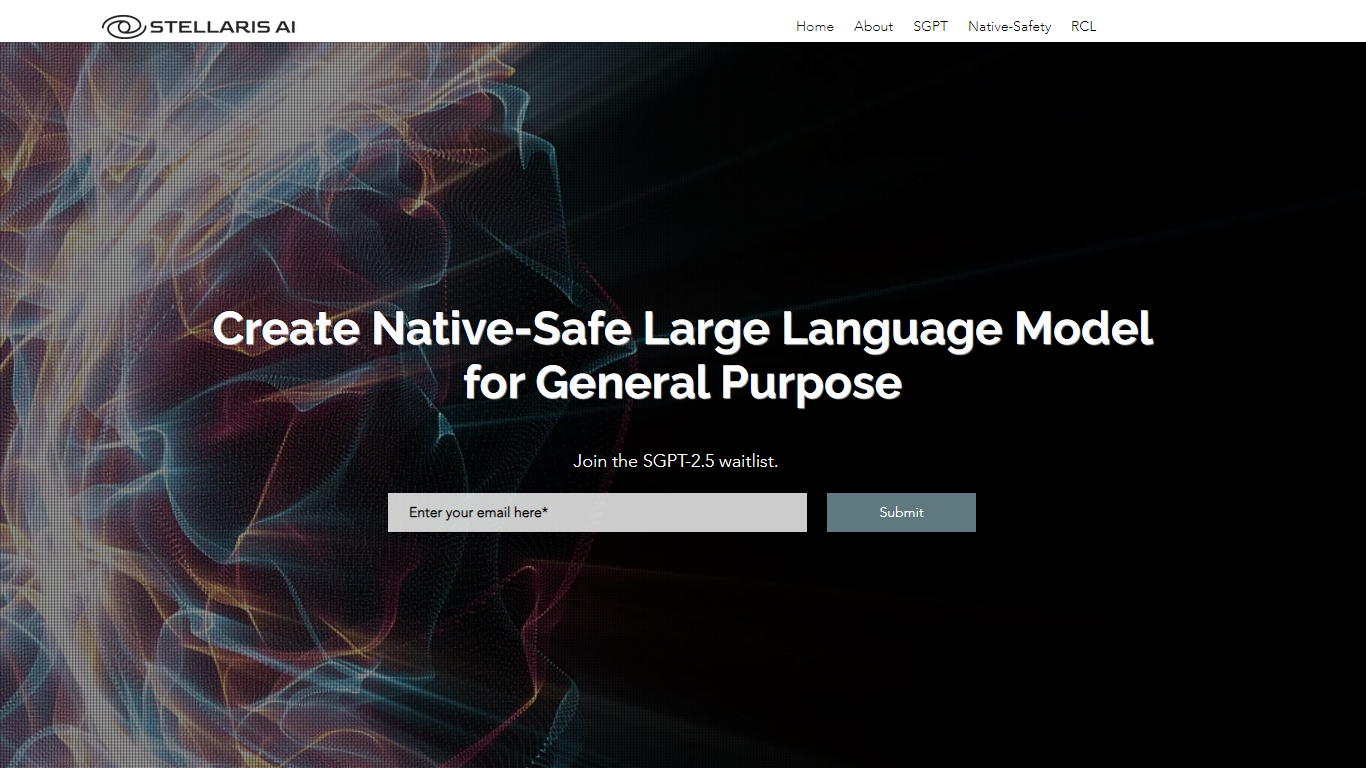
Stellaris AI builds large language models marketed around native safety and human-like reasoning for real-world tasks. Its flagship SGPT line targets text and code generation, knowledge Q&A, logical reasoning, and analytics at a scale the company describes as hundreds of billions of parameters. The public site centers on a waitlist for SGPT-4.5 rather than a self-serve chat product you can open today.
Where many LLM labs bolt safety filters on after training, Stellaris AI frames safety as part of the model stack through strict source referencing and harm minimization in the architecture. It also highlights Real-time Context Learning (RCL) for adapting answers with live knowledge, a combination aimed at teams that want cited outputs instead of unchecked generation.
Researchers, enterprise AI teams, and early adopters join the SGPT-4.5 waitlist for first access. The company cites 10+ years of research and three core product pillars: Stellaris GPT, Native Safety, and RCL.
Pythia Upvotes
Stellaris AI Upvotes
Pythia Top Features
154 checkpoints per model at steps 0, 1, 2, 4, 8, 16, 32, 64, 128, 256, 512, 1000, then every 1000 steps
16 model variants across 8 sizes from 70M to 12B, each with standard and deduped Pile training runs
Every model sees about 300 billion tokens in the same data order during training
Weights load from Hugging Face with revision tags such as step3000 via GPTNeoXForCausalLM
Apache 2.0 license covers the repository code and released model weights
Stellaris AI Top Features
SGPT models described at 100B+ parameters for text, code, and reasoning tasks
Native Safety framework with strict source referencing and harm minimization
Real-time Context Learning (RCL) for live knowledge integration
Three product pillars: Stellaris GPT, Native Safety, and RCL
SGPT-4.5 waitlist open for early access signups on the homepage
Pythia Category
- Large Language Model (LLM)
Stellaris AI Category
- Large Language Model (LLM)
Pythia Pricing Type
- Free
Stellaris AI Pricing Type
- Freemium