RLAMA vs phi-2
Compare RLAMA vs phi-2 and see which AI Large Language Model (LLM) tool is better when we compare features, reviews, pricing, alternatives, upvotes, etc.
Which one is better? RLAMA or phi-2?
When we compare RLAMA with phi-2, which are both AI-powered large language model (llm) tools, There's no clear winner in terms of upvotes, as both tools have received the same number. Join the aitools.fyi users in deciding the winner by casting your vote.
Does the result make you go "hmm"? Cast your vote and turn that frown upside down!
RLAMA

What is RLAMA?
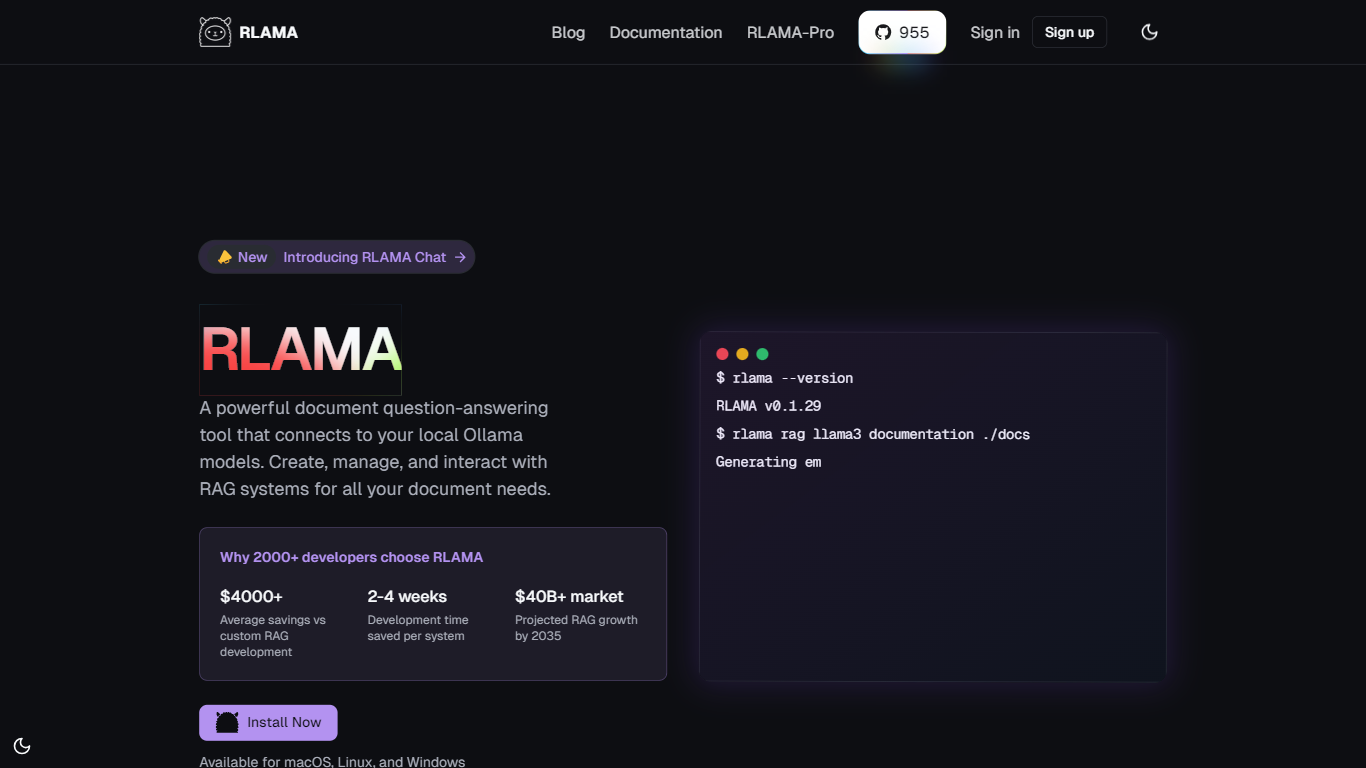
RLAMA builds local RAG systems and multi-agent crews from your terminal on macOS, Linux, or Windows. You index folders of PDFs, Markdown, and code files, then query them through Ollama, OpenAI, or Hugging Face models without sending data to external servers. The open-source project also includes a visual RAG builder on rlama.dev.
Most RAG tools stop at document Q&A. RLAMA adds agent roles, tool wiring, and crew workflows so one terminal session can chain researchers, writers, and coders through sequential or parallel steps. Directory watching keeps RAG indexes fresh when files change, and an HTTP API exposes the same systems to other apps.
Developers building private knowledge bases, research teams indexing papers, and engineers who want offline document search use RLAMA for local embeddings and chunking. The project maintainers note active development is paused, but the open-source CLI and docs remain available for install.
phi-2
What is phi-2?
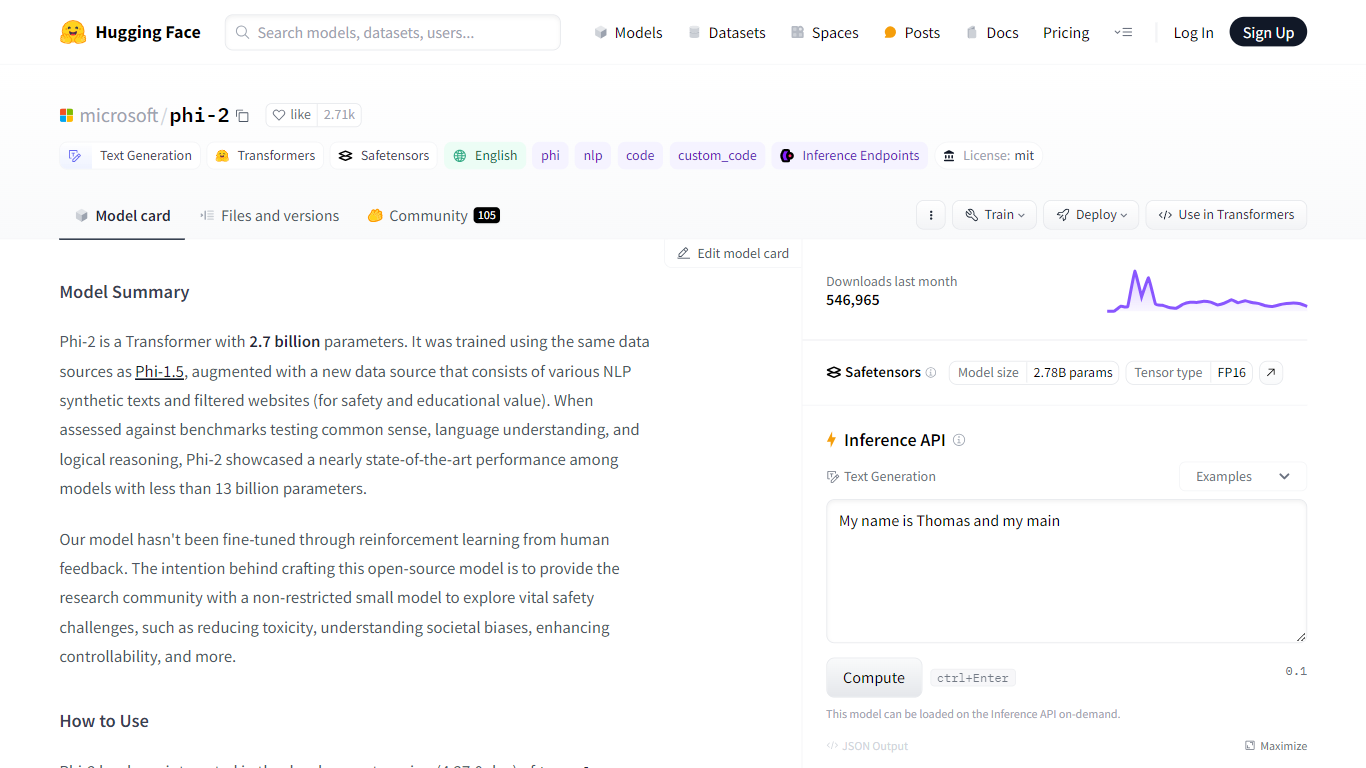
Phi-2 is a Transformer-based language model developed by Microsoft with 2.7 billion parameters, designed for English text generation tasks including natural language processing and coding. It was trained on a large dataset combining synthetic NLP texts and filtered web content to enhance safety and educational value. The model performs strongly on benchmarks for common sense reasoning, language understanding, and logical reasoning, ranking near state-of-the-art among models under 13 billion parameters.
Unlike some models, Phi-2 has not been fine-tuned with reinforcement learning from human feedback, making it a base model intended for research and experimentation rather than direct production use. It supports multiple prompt formats such as question-answering, chat dialogues, and code generation, offering flexibility for developers and researchers exploring AI safety, bias reduction, and controllability.
Phi-2 is integrated into the Hugging Face Transformers library (version 4.37.0 and above) and can be deployed locally or via various inference providers. It supports efficient loading and serving through tools like vLLM and SGLang, and is compatible with quantized versions for lightweight applications. The model uses the safetensors format for secure and fast tensor storage.
Users should be aware of limitations including occasional inaccurate code or factual outputs, limited scope in code generation mainly focused on Python and common libraries, verbosity in responses, and potential societal biases despite safety-focused training. It is recommended as a starting point for further fine-tuning and evaluation rather than a turnkey solution.
The model is licensed under the MIT license, promoting open science and community collaboration. It is suitable for AI researchers, developers, and organizations interested in exploring foundational language models with a focus on safety and transparency.
RLAMA Upvotes
phi-2 Upvotes
RLAMA Top Features
CLI creates RAG indexes from folders with hybrid chunking defaults of 1000 tokens and 200 overlap
Supports 30+ file types including PDF, DOCX, Markdown, and common code extensions
Agent and crew commands assign roles like researcher, writer, and coder with RAG or web search tools
100% local processing option with Ollama so documents never leave your machine
Visual RAG builder on rlama.dev configures models, sources, and chunking without typing commands
Directory watch commands auto-index new files added to a watched folder
HTTP API server exposes RAG systems to other applications on a custom port
phi-2 Top Features
Flexible prompt formats for QA, chat, and code generation 🗣️
Integrated with Hugging Face Transformers for easy deployment 🤗
Supports efficient local serving with vLLM and SGLang 🖥️
Uses safetensors format for secure and fast tensor storage 🔒
Open-source MIT license encourages research and customization 📜
RLAMA Category
- Large Language Model (LLM)
phi-2 Category
- Large Language Model (LLM)
RLAMA Pricing Type
- Freemium
phi-2 Pricing Type
- Freemium