
Last updated 06-27-2026
Category:
Reviews:
Join thousands of AI enthusiasts in the World of AI!
Kling 3 AI
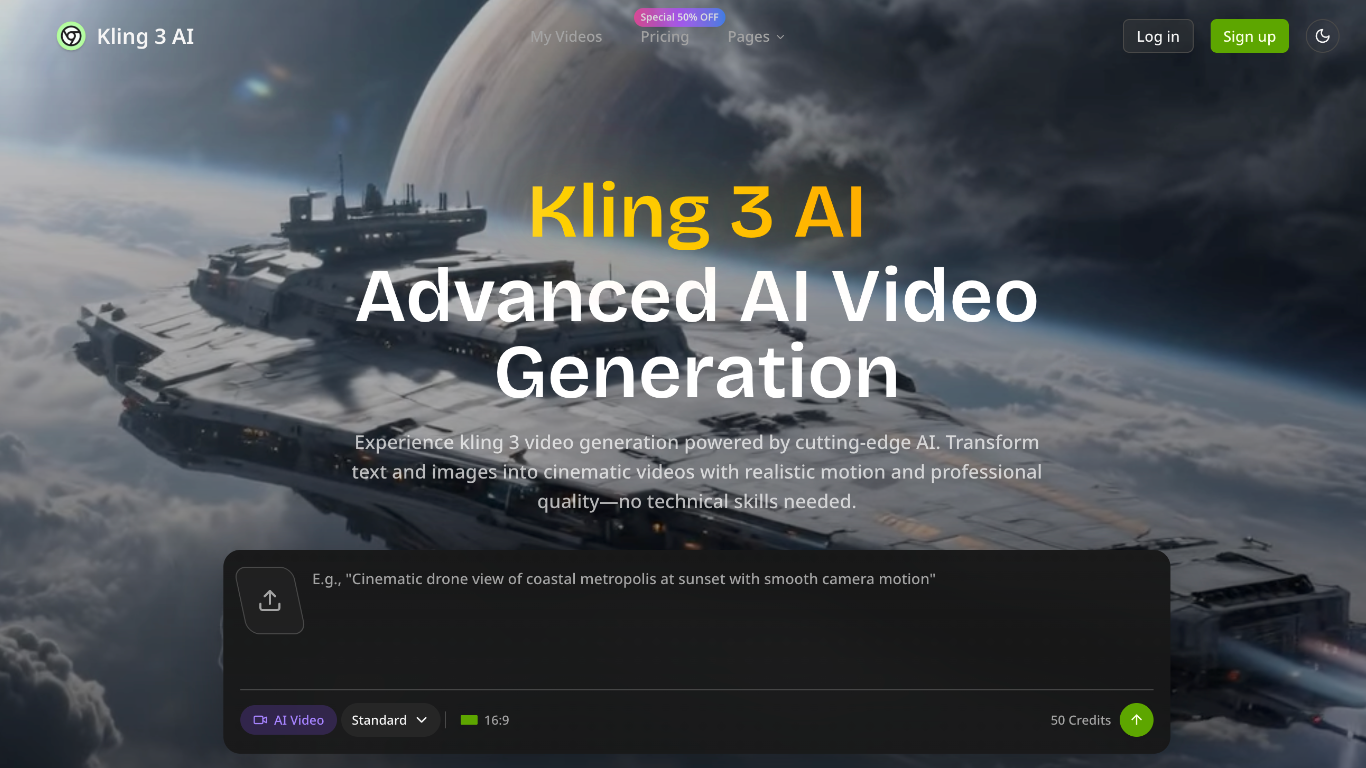
Kling 3 AI is an informational hub for Kling 3.0, the latest generation of the Kling video model built for cinematic, story-driven clips. The site walks through text-to-video, image-to-video, lip sync, and motion control workflows, with showcase galleries and version history from Kling 1.6 through Kling O1. It targets filmmakers, ad creators, and social video producers who want longer, more coherent scenes than typical short clip generators.
What sets Kling 3.0 apart on paper is how it treats a video like a mini production. Multi-shot storyboarding keeps shot order and camera transitions consistent, including dialogue patterns like shot-reverse-shot. Native audio-visual generation aligns dialogue, motion, and sound cues together, and the model is built to hold characters and objects steady across frames.
Kling3.ai does not run generation on its own domain. The About page states it showcases Kling 3.0 capabilities and routes creators to supported third-party studios, primarily Elser AI, for actual rendering. Kling 3.0 was described as expected to release publicly soon, with early access and free trial messaging on the site.
Native 4K output with sharper text rendering for production-ready clips
Audio and video generate together for tighter lip sync and sound cues
Multi-shot storyboards with shot-reverse-shot dialogue patterns
Characters and objects stay consistent across longer multi-shot sequences
Text-to-video and image-to-video paths from one workflow hub
Physics-aware motion with gravity and object interaction simulation
Covers text-to-video, image-to-video, lip sync, and motion control in one hub.
Multi-shot storyboarding and subject consistency target narrative filmmaking use cases.
Native audio-visual sync and 4K output are positioned for production-ready workflows.
Free trial messaging and early-access CTAs lower the barrier to test Kling 3.0.
Video generation happens on third-party platforms like Elser AI, not on Kling3.ai itself.
Kling 3.0 was still described as expected to release publicly soon at time of research.
No pricing page on Kling3.ai, so plan costs live on external creation platforms.
The site is not the official Kling model developer website.
What is Kling 3.0?
Kling 3.0 is the latest generation of the Kling video model, described on Kling3.ai as a unified system for cinematic motion, native audio, physics, and story structure. Kling 3 is the shorter product name for the same version.
Does Kling3.ai generate videos directly?
No. Kling3.ai states it does not directly provide AI video generation. The site showcases Kling 3.0 features and routes users to supported third-party platforms such as Elser AI to create videos.
Does Kling 3 support text-to-video and image-to-video?
Yes. Kling3.ai documents both text-to-video and image-to-video workflows. Text-to-video starts from written scene prompts, while image-to-video animates uploaded stills like portraits or product shots.
Can Kling 3 create multi-shot or longer videos?
Yes. Kling 3.0 is built for multi-shot sequences and longer-form videos with consistent subjects and smooth transitions between scenes, according to the Kling3.ai homepage and FAQ.
Will Kling 3.0 have a free trial?
Kling3.ai states that when Kling 3.0 is released, free unlimited access will be shared on the site. The homepage also promotes a free trial path through linked creation platforms.
Is Kling3.ai the official Kling website?
No. Kling3.ai says it is not the official website of the Kling model developer and does not claim ownership of the Kling brand. It presents Kling 3.0 technology and creative workflows for creators and studios.
How is Kling 3.0 different from Kling 2.6?
Kling3.ai notes that Kling 2.6 introduced native audio and improved motion sync. Kling 3.0 adds multi-shot storyboarding, stronger subject consistency, enhanced physics, and more cinematic narrative control.