
Last updated 08-09-2026
Category:
Reviews:
Join thousands of AI enthusiasts in the World of AI!
Miros
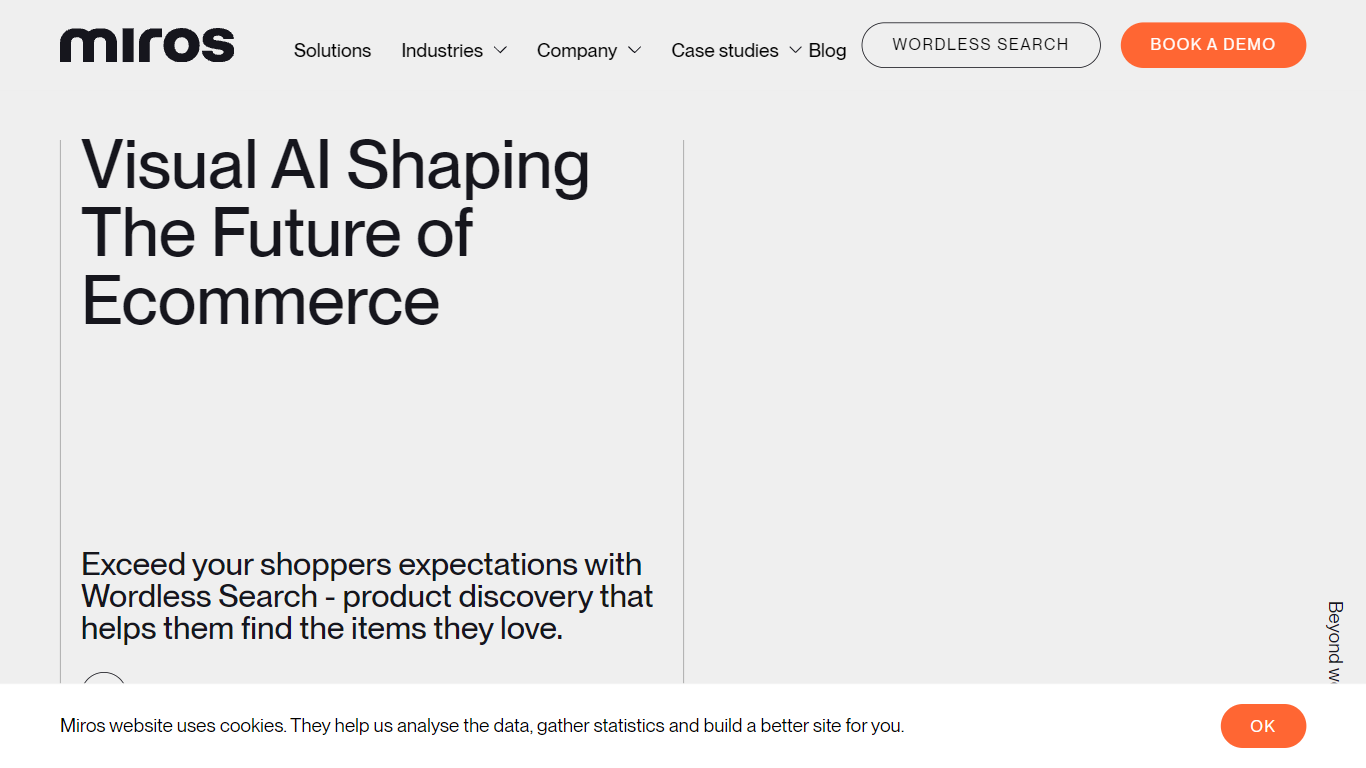
Miros plugs a visual intent layer into e-commerce storefronts so shoppers find products they cannot describe in words. Its Wordless Search product watches scroll speed, clicks, dwell time, and ignored items to build a live preference profile, then surfaces matching SKUs across search, browse, recommendations, and shop-the-look widgets.
Keyword search and chatbots assume shoppers can type what they want. Miros targets categories where most intent is visual, citing 86% apparel shopping intent as non-verbal and 85% of fashion shoppers skipping the search bar entirely. Retailers running head-to-head tests report up to 296% higher conversion versus Algolia and GMV lifts between 7% and 31% depending on category.
Fashion, footwear, furniture, decor, and second-hand marketplaces are the sweet spot. Integration takes about two weeks with less than one engineering man-week on the retailer side via JavaScript widgets or a GraphQL API, and Miros works alongside existing Algolia or Elasticsearch setups rather than replacing them.
Wordless Search infers intent from scroll velocity, clicks, and dwell time without typed queries
Randomized A/B tests report up to 296% higher conversion versus Algolia across 100K sessions
API responses run in 50 to 300 milliseconds with support for catalogs over 1 billion items
Typical retailer integration goes live in 2 weeks with under one engineering man-week required
Works alongside Algolia, Elasticsearch, or existing search instead of forcing a full replacement
AI extracts thousands of visual attributes per product image so teams skip manual tagging
Infers intent from behavior when shoppers cannot describe visual products in words.
Published case studies show double-digit GMV and conversion lifts across fashion and furniture retailers.
Modular deployment works next to Algolia or Elasticsearch rather than forcing a rip-and-replace.
No manual product tagging because the AI reads visual attributes straight from images.
Public pricing is not listed; every tier requires a sales conversation.
Best suited to visual catalogs, so text-heavy or commodity SKUs see less impact.
Average sales cycle runs about 36 days from demo to production according to the site.
What is Miros Wordless Search?
Miros Wordless Search is a visual product discovery layer that reads browsing behavior like scrolls, clicks, and dwell time to guess what a shopper wants. It surfaces matching items across search, browse, and recommendation widgets without requiring typed queries.
Does Miros replace my existing search provider?
No. Miros is modular and runs alongside Algolia, Elasticsearch, or whatever search stack you already use. Retailers can start with one surface like recommendations and expand later without ripping out current tools.
How long does Miros take to integrate?
Miros typically goes live in about 2 weeks and needs less than one engineering man-week on the retailer side. You embed JavaScript widgets or connect through the GraphQL API, and Miros builds a demo on your catalog before you commit.
Which e-commerce categories benefit most from Miros?
Miros targets visually complex catalogs such as fashion, footwear, furniture, decor, and stock imagery. The company cites 86% of apparel shopping intent as visual and reports the biggest lifts in those categories.
Will Miros slow down my storefront?
Miros reports API response times between 50 and 300 milliseconds. The JavaScript widgets are designed to stay lightweight so page load performance stays within normal e-commerce ranges.
How can I get Miros pricing?
Miros publishes Starter, Premium, and Enterprise tiers on its pricing page but does not list dollar amounts publicly. You request a personalized demo through miros.ai/contact.html and the sales team quotes based on catalog size and modules.