
Last updated 08-12-2026
Category:
Reviews:
Join thousands of AI enthusiasts in the World of AI!
OpenClaw
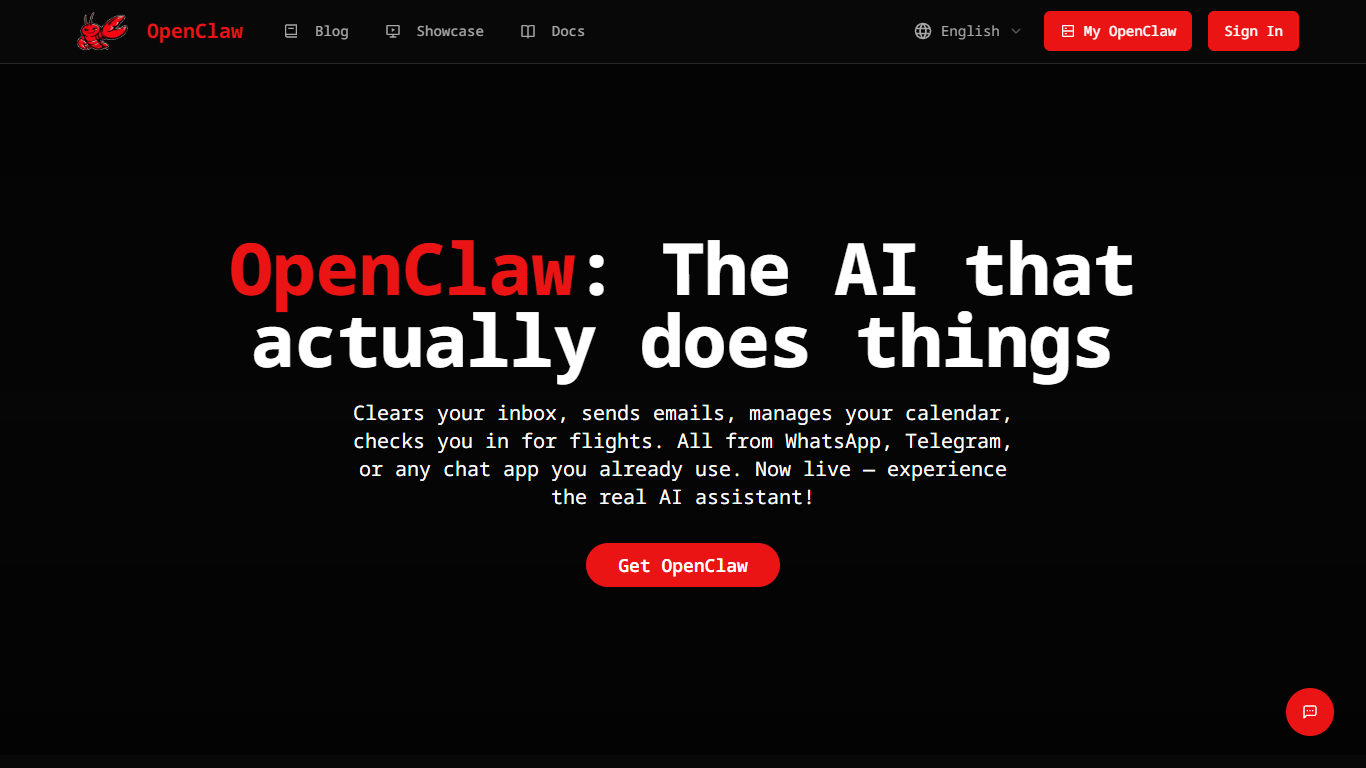
OpenClaw is a hosted personal assistant that runs in a dedicated cloud sandbox and talks to you through WhatsApp, Telegram, Discord, Slack, Signal, or iMessage. You message it like a coworker, and it can clear inboxes, send email, manage calendars, check in for flights, browse the web, and run shell commands in its private instance.
Most chatbots only reply when you ask. OpenClaw also runs cron jobs, heartbeats, and background tasks so it can summarize email overnight, watch webhooks, or open pull requests while you sleep. Each subscriber gets an isolated gateway instance with persistent memory, file access, and a shared model pool instead of sharing one tenant with strangers.
Developers and power users pair it with community skills or custom Markdown workflows for stock alerts, Obsidian note lookups, and reimbursement forms. Setup takes about 60 seconds: subscribe, start your instance from My OpenClaw, paste the gateway token, and pick a model in WebChat without provisioning servers or API keys yourself.
Dedicated cloud sandbox instance per subscriber with isolated memory and files
Built-in shared model pool lists GPT-5.5, Claude Opus 4.8, and Gemini 3.5 Flash
Annual plan includes $40 per month in auto-refreshing API credits for 12 months
API Bundle Annual includes $120 per month in API credits at $53.94 per month billed annually
Works across WhatsApp, Telegram, Discord, Slack, Signal, and iMessage in DMs or groups
Runs proactive cron jobs, heartbeats, and webhook listeners around the clock
Runs in a private sandbox instead of a shared multi-tenant assistant
Bundles API credits so you skip key management on supported plans
Talks through six chat apps including WhatsApp and Telegram
Supports proactive cron jobs and webhook-driven background work
Setup guide targets under 60 seconds from subscription to first chat
Only annual subscription tiers with bundled credits are listed on the pricing page
Model names and capabilities depend on OpenClaw's managed shared pool
Heavier usage requires the higher API Bundle tier at $53.94 per month annually
Which chat apps work with OpenClaw?
OpenClaw connects to WhatsApp, Telegram, Discord, Slack, Signal, and iMessage. You can talk to your instance in direct messages or group chats from the apps you already use daily.
Does OpenClaw include API credits?
Yes. OpenClaw subscription plans bundle LLM API credits so you do not paste your own keys. The Annual plan refreshes $40 of credits each month for 12 months, while the API Bundle Annual plan refreshes $120 monthly for heavier usage.
How do you set up an OpenClaw instance?
After subscribing, open My OpenClaw, click Start OpenClaw, then open the Web UI and paste your gateway token. OpenClaw writes the managed model provider automatically when your plan includes built-in credits.
What models ship with OpenClaw?
OpenClaw lists three shared pool models on its site: GPT-5.5, Claude Opus 4.8, and Gemini 3.5 Flash. You pick among them in WebChat or the Control UI without manual provider setup.
Can OpenClaw run tasks without a prompt?
Yes. OpenClaw supports background cron jobs, heartbeat checks, and webhook triggers so it can monitor apps, summarize inboxes, or file pull requests on a schedule instead of waiting for your next message.
Is each OpenClaw instance private?
OpenClaw assigns one dedicated gateway sandbox per subscriber. Your conversations, files, and credentials stay in that instance rather than mixing with other users on a shared host.